Editorial

Field Notes

Analysis on geopolitical risk, sector exposure, and what boards and CROs actually need from intelligence.

Political Risk Assessment Without a Political Risk Team

Political Risk Assessment Without a Political Risk Team

Fewer than one in five companies have a dedicated geopolitics function, yet most now rank political risk among their top five threats. Here is a process a two- or three-person team can actually run.

Shekhar Attri · September 15, 2026

Trade War Supply Chain Risk: Planning for the Round, Not the Announcement

Trade War Supply Chain Risk: Planning for the Round, Not the Announcement

China matched five US tariff moves in ten weeks in 2025, each paired with its own export control response. The headline is one data point; the sequence is what breaks a supply chain plan.

Shekhar Attri · September 15, 2026

How Geopolitical Risk Reaches a Company's P&L

How Geopolitical Risk Reaches a Company's P&L

Nvidia disclosed a $5.5 billion charge six days after Washington restricted an export license. Most finance teams have no process built for a six-day channel.

Jay Bimbrah · September 15, 2026

Supplier Concentration Risk: When Your Second Source Is the Same Country

Supplier Concentration Risk: When Your Second Source Is the Same Country

Honda halted Mexican production in November 2025 after a single Chinese factory stopped shipping chips, even though its suppliers were 'diversified' on paper. The redundancy was never real.

Jay Bimbrah · September 1, 2026

What Prices Move First When Geopolitical Risk Hits Financial Markets

What Prices Move First When Geopolitical Risk Hits Financial Markets

War-risk insurance on Red Sea tankers jumped from 0.3% to over 1% of hull value in three days after a July 2026 Houthi blockade declaration, weeks before sovereign credit spreads moved.

Shekhar Attri · September 1, 2026

US China Technology Risk: A Bifurcation Checklist for Product Teams

US China Technology Risk: A Bifurcation Checklist for Product Teams

Nvidia cut memory out of a chip to stay under an export threshold. ByteDance handed 80 percent of TikTok's US venture to non-Chinese owners. Both are the same decision, made by different teams.

Jay Bimbrah · August 31, 2026

Secondary Sanctions: Not the Target, Still Exposed

Secondary Sanctions: Not the Target, Still Exposed

In April 2026 the U.S. Treasury designated a Chinese refinery and forty shipping firms that had never touched a U.S. bank account. That is what secondary sanctions are built to do.

Jay Bimbrah · August 31, 2026

AI Geopolitical Risk: The Stack Has a Geography

AI Geopolitical Risk: The Stack Has a Geography

Compute, model weights, data and talent do not carry the same geopolitical exposure, and treating AI risk as one category means missing which layer is actually moving.

Shekhar Attri · August 31, 2026

Difference Between Country Risk and Geopolitical Risk: The Unit of Analysis Problem

Difference Between Country Risk and Geopolitical Risk: The Unit of Analysis Problem

Fitch upgraded Egypt's credit rating in November 2024, the same month the Suez Canal was losing more than half its revenue to Red Sea attacks. Two different questions, two different answers.

Shekhar Attri · August 31, 2026

Semiconductor Geopolitical Risk Sits Past the Fab, Not Inside It

Semiconductor Geopolitical Risk Sits Past the Fab, Not Inside It

A single Japanese chemical company holds more than nine tenths of the film that binds an AI chip's package together, and it just cut shipments to China by 30 percent.

Jay Bimbrah · August 31, 2026

What Is Geopolitical Risk, and What Does Your Risk Register Call It Instead

What Is Geopolitical Risk, and What Does Your Risk Register Call It Instead

Ask a board which committee owns geopolitical risk and the most common answer, in a 2025 survey of large-cap companies, was more than one committee at once.

Shekhar Attri · August 31, 2026

Manufacturing Geopolitical Risk Turns Every Plant Decision Into a Timing Bet

Manufacturing Geopolitical Risk Turns Every Plant Decision Into a Timing Bet

In the same week of January 2026, Volkswagen shelved a US plant over tariff costs and GM committed four billion dollars to expand one. Both companies read the same policy environment.

Jay Bimbrah · August 31, 2026

Geopolitical Supply Chain Risk Doesn't Stop at Tier One

Geopolitical Supply Chain Risk Doesn't Stop at Tier One

Honda cut 110,000 vehicles from a shipment forecast over a chipmaker it had never signed a contract with. The exposure sat three tiers back, inside an ownership rule almost nobody was tracking.

Shekhar Attri · August 31, 2026

What Geoeconomic Fragmentation Actually Costs a Company

What Geoeconomic Fragmentation Actually Costs a Company

The IMF now describes a multipolar trading system in its own outlook. For a company, that shows up as a customs hold, a payment routed through an extra bank, and two compliance calendars for one product.

Jay Bimbrah · August 31, 2026

LNG Geopolitical Risk Starts With the Contract, Not the Chokepoint

LNG Geopolitical Risk Starts With the Contract, Not the Chokepoint

Three cargoes already headed for Europe changed course toward Asia in early March 2026. Whether a buyer could make that call depended on one line in the contract.

Shekhar Attri · August 31, 2026

Sanctions Risk Beyond the Screening List: What Ownership Chains Hide From a List Match

Sanctions Risk Beyond the Screening List: What Ownership Chains Hide From a List Match

A $215.9 million penalty hit a fund whose ownership never crossed the 50 percent line. A clean SDN match was not the end of the sanctions question.

Jay Bimbrah · August 31, 2026

OPEC Geopolitical Risk: Reading Production Decisions as a Corporate Planning Signal

OPEC Geopolitical Risk: Reading Production Decisions as a Corporate Planning Signal

Seven OPEC+ producers raised output for the sixth month running on 3 August 2026. The headline number is the least useful part of what that decision tells a planning team.

Jay Bimbrah · August 31, 2026

The Country Risk Rating Calendar Problem: Why Sovereign Scores Don't Move Between Crises

The Country Risk Rating Calendar Problem: Why Sovereign Scores Don't Move Between Crises

South Korea's sovereign rating from S&P has not moved since August 2016. It survived a martial law declaration, an impeachment and a president's removal from office without a flicker.

Shekhar Attri · August 30, 2026

Energy Security Risk Is a Government Word for Your Commercial Problem

Energy Security Risk Is a Government Word for Your Commercial Problem

Germany wrote a law that puts industry behind households in a gas shortage. The EU wrote one that makes storage operators disclose who owns them. Neither reads as a corporate risk until it is.

Jay Bimbrah · August 23, 2026

Geopolitical Risk Examples: Six Corporate Losses With the Mechanism Named

Geopolitical Risk Examples: Six Corporate Losses With the Mechanism Named

Nvidia took a $5.5 billion charge. Renault booked a $1.39 billion loss. Six real losses, each traced from the triggering document to the balance sheet line it hit.

Shekhar Attri · August 23, 2026

How to Measure Geopolitical Risk: What's a Number and What's a Guess

How to Measure Geopolitical Risk: What's a Number and What's a Guess

Fewer than one in five companies run a dedicated geopolitics function, and most still cannot connect a geopolitical reading to a business metric. Here is what is countable and what is a judgment call.

Jay Bimbrah · August 23, 2026

Correspondent Banking Risk: The Quiet Map of Who Gets Cut Off

Correspondent Banking Risk: The Quiet Map of Who Gets Cut Off

A four-year study found exporting firms lost 57 percent of export revenue after their correspondent bank account closed. The exposure sits inside a payment corridor a treasury team never chose.

Shekhar Attri · August 23, 2026

Sixty-Eight Nations Vote in October on What a Second Means: The Decision Latency Problem Hiding Inside a Science Story

Sixty-Eight Nations Vote in October on What a Second Means: The Decision Latency Problem Hiding Inside a Science Story

On 13 to 15 October 2026, all 68 Metre Convention nations vote in Versailles to retire the leap second, and the harder risk, a negative leap second, has never once been tested.

Shekhar Attri · August 21, 2026

The Geopolitical Risk Country Coverage Gap: Why Most Companies Track a Handful of Countries and Miss the Rest

The Geopolitical Risk Country Coverage Gap: Why Most Companies Track a Handful of Countries and Miss the Rest

Only 14 percent of companies track exposure to their own highest-ranked risks. Barrick's 2025 Mali gold seizures show what happens when the rest of the map goes unwatched too long.

Shekhar Attri · August 14, 2026

The Geopolitical Risk Management Strategy: A Practical Guide to the Four Stages

The Geopolitical Risk Management Strategy: A Practical Guide to the Four Stages

Most geostrategic risk programs stop at assessment. GM's $4 billion tariff miss and Chevron's Venezuela whiplash show what happens when monitoring, reporting, and response never get built.

Jay Bimbrah · August 14, 2026

The Geopolitical Sanctions Gap: Why Periodic Trade Compliance Reviews Miss What Real-Time Tracking Catches

The Geopolitical Sanctions Gap: Why Periodic Trade Compliance Reviews Miss What Real-Time Tracking Catches

OFAC gave companies exposed to Rosneft and Lukoil a single 30-day wind-down window in 2025. A quarterly compliance review would have missed the deadline before it started.

Jay Bimbrah · August 10, 2026

Geopolitical Risk Is Now a Line Item: What Currency and Valuation Teams Keep Missing

Geopolitical Risk Is Now a Line Item: What Currency and Valuation Teams Keep Missing

Shein's IPO valuation fell from $98 billion to a $40-50 billion target as tariff policy hit its numbers. Currency and valuation models still treat that risk as background noise.

Shekhar Attri · August 10, 2026

Geopolitical Exposure Across Sectors: Energy, Finance, Technology, and Defence Compared

Geopolitical Exposure Across Sectors: Energy, Finance, Technology, and Defence Compared

The WEF ranked geoeconomic confrontation the top global risk for 2026. Energy, finance, technology, and defence firms are each absorbing it through a different mechanism.

Shekhar Attri · August 6, 2026

Hiring, Outsourcing, or Buying Geopolitical Risk Intelligence: The Real Cost Comparison

Hiring, Outsourcing, or Buying Geopolitical Risk Intelligence: The Real Cost Comparison

HSBC cut its geopolitical risk team in July 2025 while JPMorganChase built a new one. Most companies never run the real cost gap between hiring, outsourcing, and subscribing.

Jay Bimbrah · August 5, 2026

Geopolitical Risk Is Not Financial Risk, and Most Companies Learn the Difference Too Late

Geopolitical Risk Is Not Financial Risk, and Most Companies Learn the Difference Too Late

BP wrote off close to $25 billion within days of Russia's invasion of Ukraine, a shock its balance sheet never modeled. Fewer than one in five companies has a process built for that risk.

Jay Bimbrah · August 4, 2026

Building a Real Geopolitical Risk Assessment: The Inputs Most Companies Skip

Building a Real Geopolitical Risk Assessment: The Inputs Most Companies Skip

Sri Lanka's sovereign rating sat at CCC for months before its April 2022 default. Companies that price country exposure off one letter grade inherit the same timing gap every time.

Shekhar Attri · August 3, 2026

Data Localization Fragments the Multinational: A Geoeconomic Reading of the Cross-Border Data Wars

Data Localization Fragments the Multinational: A Geoeconomic Reading of the Cross-Border Data Wars

When Apple moved Chinese iCloud encryption keys onto servers run by a state-linked operator in 2018, it wasn't a privacy footnote. It was a template for how localization law converts infrastructure into a state lever.

Shekhar Attri · July 27, 2026

False Redundancy: The Geopolitical Risk Inside Multi-Region Cloud Architecture

False Redundancy: The Geopolitical Risk Inside Multi-Region Cloud Architecture

Three 2025 hyperscaler outages and a French certification rule show multi-region cloud deployments often share one identity layer, control plane, or jurisdiction underneath.

Shekhar Attri · July 25, 2026

Geopolitical Demand Destruction: How Political Boycotts Hit the P&L Before the Headlines Fade

Geopolitical Demand Destruction: How Political Boycotts Hit the P&L Before the Headlines Fade

Berjaya Foods' Starbucks franchise in Malaysia lost 46% of revenue in six months. Standard demand models never saw it coming because the trigger was diplomatic, not economic.

Jay Bimbrah · July 24, 2026

The Six-Stage Geoeconomic Ladder Behind Every Digital Platform Ban

The Six-Stage Geoeconomic Ladder Behind Every Digital Platform Ban

TikTok, X, and four national regulators show that platform bans are the last of six visible, trackable steps, never the first.

Shekhar Attri · July 24, 2026

The Geopolitical Illusion of Subsea Cable Redundancy

The Geopolitical Illusion of Subsea Cable Redundancy

Two Baltic Sea cables were severed by two different ships five weeks apart in 2024, proving that counting cables does not measure resilience when routes share one corridor.

Shekhar Attri · July 23, 2026

Grey-Zone Operations and the Geopolitical Threat Reaching Your Corporate Perimeter

Grey-Zone Operations and the Geopolitical Threat Reaching Your Corporate Perimeter

A Willis Research Network report in February 2026 stated that grey-zone aggression, dismissed five years ago as a shipping and aviation problem, is now a material threat to businesses across energy, ports, logistics, defence manufacturing, and retail supply chains.

Shekhar Attri · July 22, 2026

Geopolitical Risk and the Duty of Care Gap: When Travel Risk Intelligence Becomes a Legal Liability

Geopolitical Risk and the Duty of Care Gap: When Travel Risk Intelligence Becomes a Legal Liability

The 2015 Dusek v StormHarbour ruling found that liability begins not when an employer sends someone into danger, but when they fail to ask whether the danger exists. ISO 31030 has since operationalised that principle into a benchmark most travel risk programmes are not meeting.

Shekhar Attri · July 21, 2026

Twenty-Four Months to Replace One Supplier: The Geopolitical Cost of Aerospace Qualification Time

Twenty-Four Months to Replace One Supplier: The Geopolitical Cost of Aerospace Qualification Time

Boeing paid $4.7 billion to reabsorb a fuselage supplier rather than wait out a requalification clock that runs 12 to 24 months. Most risk registers never price that clock in.

Shekhar Attri · July 21, 2026

The Geopolitical Exposure Map Automakers Still Don't Have

The Geopolitical Exposure Map Automakers Still Don't Have

A single Commerce Department rule now sets a 2027 deadline for connected-vehicle software while a 25 percent Section 232 tariff, a Euro 7 type-approval gate, and Beijing's battery-technology export controls converge on the same vehicle program.

Jay Bimbrah · July 21, 2026

China's Rare Earth Export Controls and the Geopolitical Risk Your Procurement Team Is Not Pricing

China's Rare Earth Export Controls and the Geopolitical Risk Your Procurement Team Is Not Pricing

China's April 2025 rare earth licensing regime is not a trade tension issue. It is a structural supply constraint with a November 2026 cliff that most procurement and risk teams have not built into their planning.

Jay Bimbrah · July 20, 2026

The Geopolitical Blind Spot Two Tiers Back: Mapping Pharma's Hidden Supply Chain Dependencies

The Geopolitical Blind Spot Two Tiers Back: Mapping Pharma's Hidden Supply Chain Dependencies

A dozen FDA-listed amoxicillin manufacturers still rationed supply in 2022 because nearly all of them drew 6-APA from the same five Chinese producers, one tier the contract never showed.

Shekhar Attri · July 20, 2026

What Insurance Markets Price Before Analysts Publish: War-Risk Premiums as a Geopolitical Intelligence Signal

What Insurance Markets Price Before Analysts Publish: War-Risk Premiums as a Geopolitical Intelligence Signal

Lloyd's repriced Hormuz war-risk within 48 hours of March 2026 airstrikes. Published analysis took days. Insurance markets are a leading geopolitical intelligence signal that most risk functions are not monitoring.

Jay Bimbrah · July 20, 2026

The Geopolitical Blind Spot in AI Inventories: Why Use Case, Not Model Name, Decides Regulatory Exposure

The Geopolitical Blind Spot in AI Inventories: Why Use Case, Not Model Name, Decides Regulatory Exposure

The same model inventoried once by vendor contract carries a 2025 prohibition test in Brussels, a 2026 impact-assessment deadline in Denver, and near-zero exposure in a marketing use case down the hall.

Shekhar Attri · July 19, 2026

What the WEF Global Risks Report Does Not Tell Boards: Five Gaps and the Case for Geopolitical Intelligence

What the WEF Global Risks Report Does Not Tell Boards: Five Gaps and the Case for Geopolitical Intelligence

WEF's Global Risks Report 2026 drew on surveys from over 1,300 experts and is the most widely cited risk document in corporate board packs. It was designed for a different audience and a different purpose.

Jay Bimbrah · July 18, 2026

APAC's Geopolitical Risk Mispricing: Why Corporate Risk Registers Are Running a Region-Wide Blind Spot

APAC's Geopolitical Risk Mispricing: Why Corporate Risk Registers Are Running a Region-Wide Blind Spot

G4S's 2025 World Security Report found APAC company executives face the world's highest risk of targeted violence. That finding does not appear in most APAC risk registers, which still score the region below the Middle East and Eastern Europe.

Shekhar Attri · July 17, 2026

OPL 245 and the Geopolitical Cost of a Thirty-Year Licence Standoff

OPL 245 and the Geopolitical Cost of a Thirty-Year Licence Standoff

Nigeria split the OPL 245 oilfield into four licences in March 2026, ending a dispute that outlasted five governments and shows how fiscal-term reviews double as sovereign bargaining tools.

Jay Bimbrah · July 17, 2026

Geopolitical Confrontation and the Decision Latency Problem: Why Intelligence Arrives After the Window Closes

Geopolitical Confrontation and the Decision Latency Problem: Why Intelligence Arrives After the Window Closes

Geoeconomic confrontation ranked first in the WEF Global Risks Report 2026. The more operationally relevant finding: nearly half of CROs cannot translate that risk into guidance their organisations can act on before the decision window closes.

Shekhar Attri · July 16, 2026

When Country Risk Said Monitor: Three Cases for Geostrategic Consequence-Chain Analysis

When Country Risk Said Monitor: Three Cases for Geostrategic Consequence-Chain Analysis

The IIA's 2026 APAC report found most organisations have not implemented leading practices for geopolitical risk management. Russia 2022, Hormuz 2026, and China rare earth controls 2025 show what that gap produces.

Shekhar Attri · July 14, 2026

Grid Intrusions as Geopolitical Signal: What State-Linked OT Cyberattacks Reveal Before the Headlines Do

Grid Intrusions as Geopolitical Signal: What State-Linked OT Cyberattacks Reveal Before the Headlines Do

CISA's April 2026 warning on Iranian-affiliated actors exploiting grid PLCs landed in week six of the US-Israel-Iran conflict. That timing, not the malware, is the signal energy risk teams keep missing.

Jay Bimbrah · July 14, 2026

Geopolitical Disruption and the Force Majeure Gap: What March 2026 Revealed About Contract Risk

Geopolitical Disruption and the Force Majeure Gap: What March 2026 Revealed About Contract Risk

QatarEnergy's March 2026 force majeure declaration exposed the same contract failure across four continents: clauses drafted for peacetime, triggered with no intelligence lead time.

Jay Bimbrah · July 12, 2026

The Geopolitical Grid: How AI Data Center Power Demand Is Rationing National Electricity Capacity

The Geopolitical Grid: How AI Data Center Power Demand Is Rationing National Electricity Capacity

In June 2026, FERC gave all six US grid operators 60 days to fix data center interconnection rules, the same month Texas logged a 438-gigawatt queue that is 90 percent data centers.

Jay Bimbrah · July 8, 2026

How to Brief the Board on Geopolitical Risk

How to Brief the Board on Geopolitical Risk

82% of boards now receive regular political risk briefings. Only 30% of CEOs can see their own exposure. The briefing format, not the appetite, is what fails.

Shekhar Attri · July 3, 2026

Geopolitical Risk Software Is Measuring the Wrong Thing

Geopolitical Risk Software Is Measuring the Wrong Thing

EY found board action on political risk tripled since 2021, yet only 30% of CEOs can see their own exposure. The tooling, not the attention, is the gap.

Shekhar Attri · July 3, 2026

Best Practices for Evaluating Geopolitical Risk Intelligence Platforms in 2026

Best Practices for Evaluating Geopolitical Risk Intelligence Platforms in 2026

72% of executives now call geopolitical instability a top economic risk, up 21 points in one quarter. Most platform evaluations still score coverage. That is the wrong test.

Jay Bimbrah · July 3, 2026

Export Controls Are Now a Geopolitical Supply-Chain Problem

Export Controls Are Now a Geopolitical Supply-Chain Problem

BIS Entity List growth, the deemed export doctrine, and a $300M Seagate penalty signal a shift in export control enforcement that sits well outside what most supply chain risk systems are built to detect.

Jay Bimbrah · July 2, 2026

What Geopolitical Watch Indicators Actually Do in a Live Risk Process

What Geopolitical Watch Indicators Actually Do in a Live Risk Process

Most corporate watch indicator lists describe conditions rather than triggering thresholds. Here is why they rarely produce action, and what calibrated indicators are actually designed to do.

Shekhar Attri · July 1, 2026

How to Report Geopolitical Risk to an Executive Committee

How to Report Geopolitical Risk to an Executive Committee

Boards receive geopolitical briefings regularly but act on them intermittently. A four-part briefing structure that translates intelligence into mandatory decision points rather than standing awareness items.

Jay Bimbrah · July 1, 2026

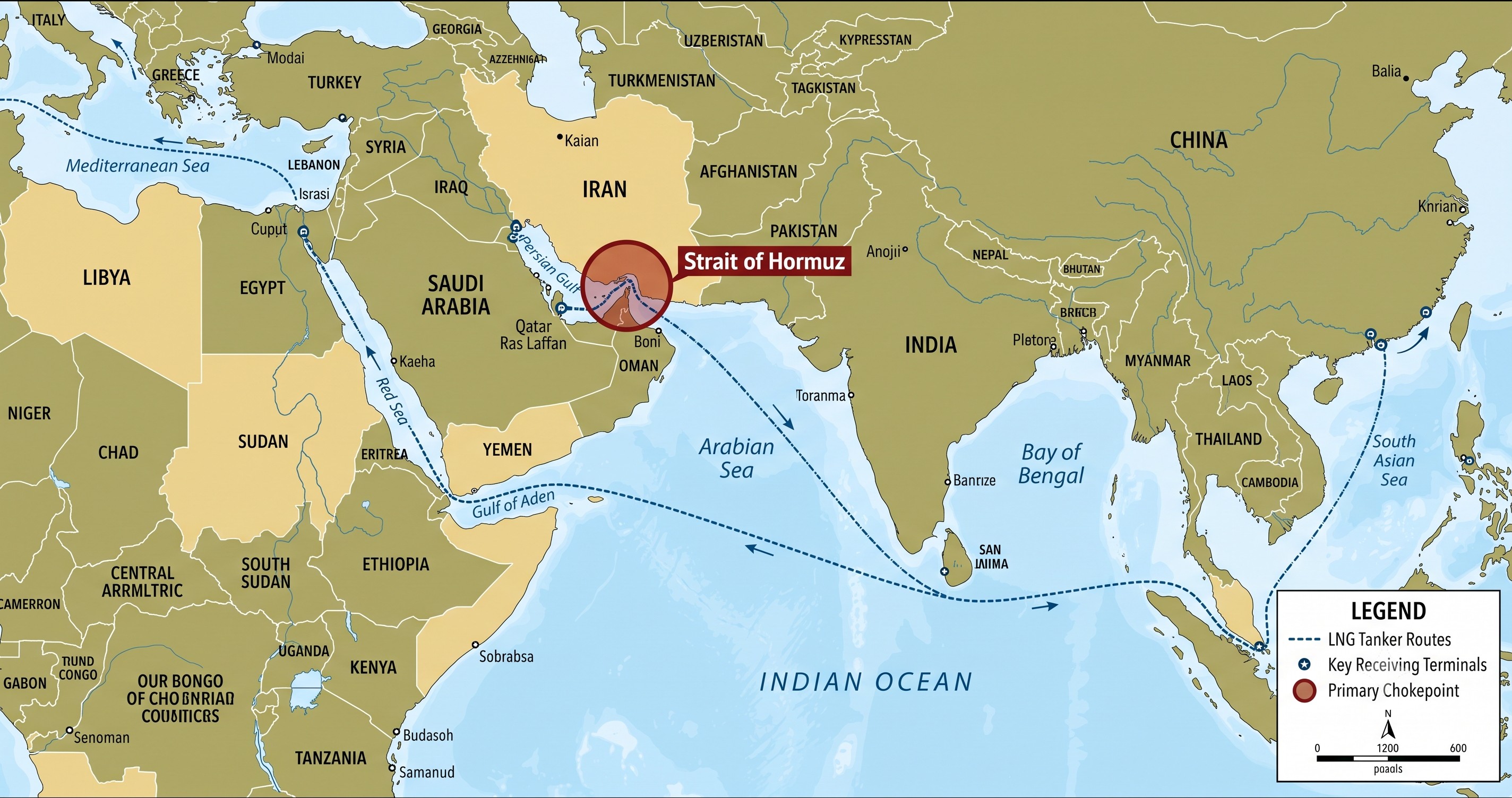
Strait Risk, LNG Routing, and the Energy Decision Window

Strait Risk, LNG Routing, and the Energy Decision Window

When Iran closed the Strait of Hormuz in March 2026, energy companies had a narrow window to exercise supply alternatives before logistics and contract options foreclosed. Japan had prepared. Most European buyers had not.

Shekhar Attri · July 1, 2026

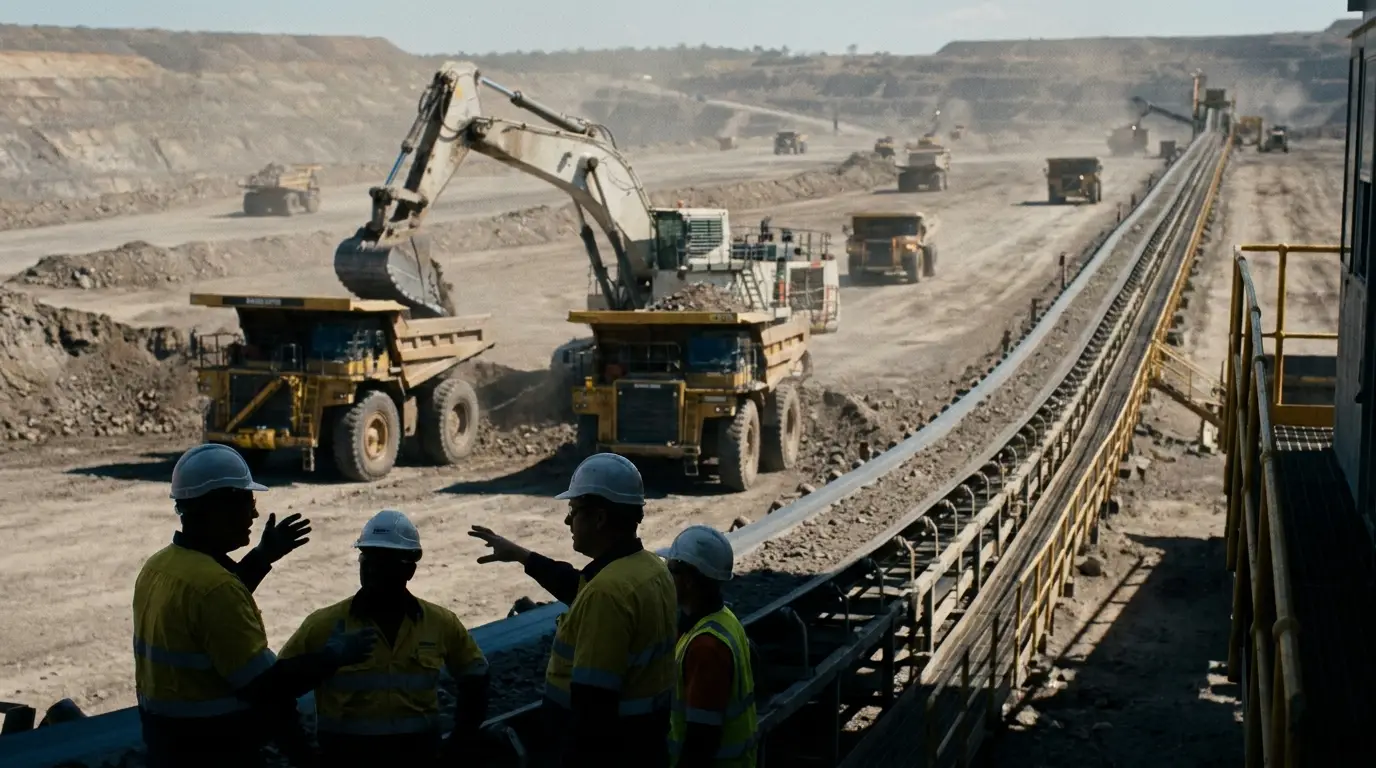
Critical Minerals Supply Chain Risk and the Energy Exposure

Critical Minerals Supply Chain Risk and the Energy Exposure

The energy transition does not reduce geopolitical risk. China refines 91% of rare earth elements and over 90% of battery-grade graphite. That processing concentration is the risk map most supply chain assessments do not yet reach.

Shekhar Attri · July 1, 2026

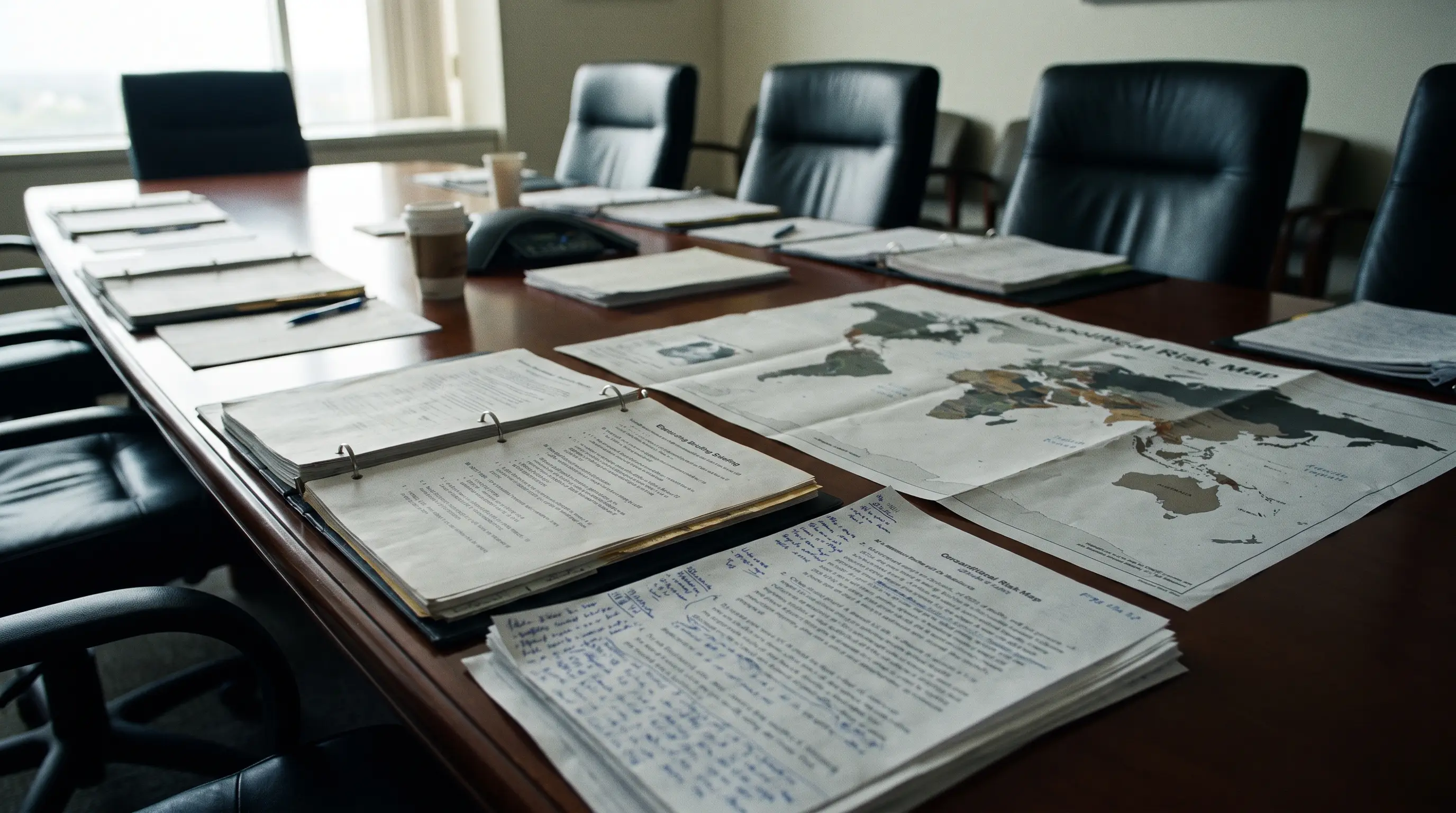
How to Build a Board-Ready Geopolitical Risk Briefing

How to Build a Board-Ready Geopolitical Risk Briefing

Boards are now expected to govern geopolitical risk under SEC disclosure requirements. Most are still receiving situation reports instead of decision briefs. The format difference determines whether the board can act.

Shekhar Attri · June 30, 2026

Why Country Risk Reports Fail CROs

Why Country Risk Reports Fail CROs

Country risk reports are built for annual review cycles. When the Strait of Hormuz closed in March 2026, CROs relying on quarterly vendor scores had already missed the decision window.

Jay Bimbrah · June 30, 2026