

TL;DR: The US, EU and UK can give three different answers about the same company, because they list different parties, license on different timetables and calculate ownership differently. Sanctions compliance that screens against one regime and assumes the other two agree is answering the wrong question.
Key takeaways:
- OFAC's General License 130B lets US persons deal with Lukoil's Bulgarian refinery and three related companies until 24 April 2027, while the UK licence covering the same refinery expires on 29 October 2026.
- When the EU adopted its 19th package on 23 October 2025, it chose not to asset-freeze Lukoil's global business, eight days after the UK and one day after the US had blocked the company.
- India's Nayara Energy, about 49 percent owned by Rosneft, is listed by the EU and the UK but did not appear on OFAC's SDN list on 22 October 2026.
- OFAC and the EU add together stakes held by different listed owners. The UK generally does not, and applies a separate control test instead.
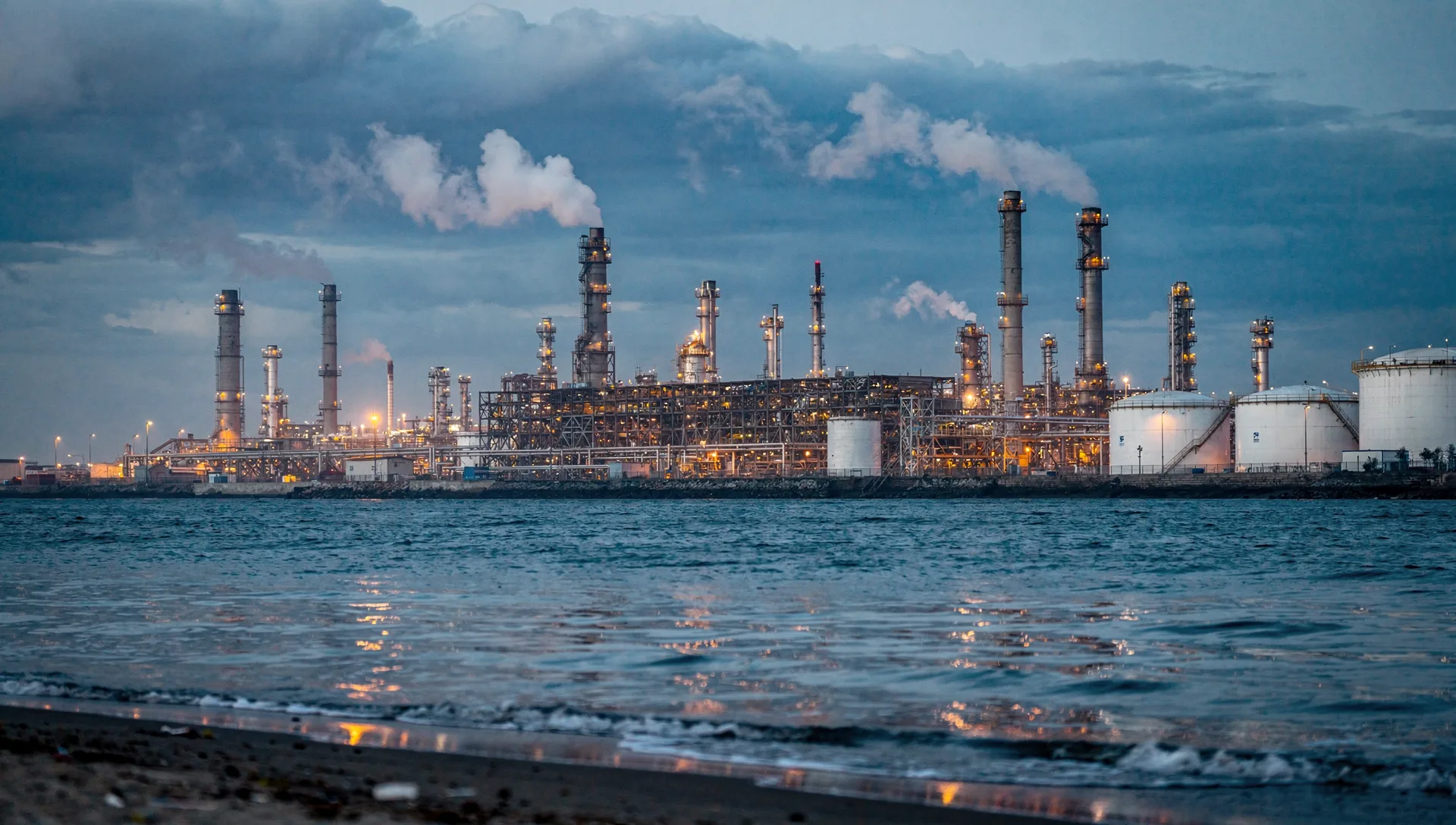
On 15 October 2026 the US Treasury moved the expiry of its licence for Lukoil Neftohim Burgas, Bulgaria's Lukoil-owned refinery, out to 24 April 2027.[^1][^2] The British licence for the same refinery ends on 29 October 2026, and Bulgaria has asked London to line its date up with Washington's.[^2][^3] A New York bank and a London bank paying Burgas this month face different deadlines.
One Refinery, Three Legal Answers
Each regime reached Lukoil's Bulgarian business by its own route, on its own date.
- United States. OFAC designated Lukoil and Rosneft on 22 October 2025 and stated that every entity owned 50 percent or more by either company is blocked.[^5] The Bulgarian companies were caught by that rule rather than named, which is why they need General License 130B to keep trading with US persons.[^1][^14]
- United Kingdom. The UK designated Lukoil and Rosneft a week earlier, on 15 October 2025.[^6][^7] OFSI issued its Bulgarian general licence on 14 November 2025, has amended it three times and extended it twice, and in August 2026 added a notification requirement for entities that rely on it.[^3][^4] The US licence carries no such requirement.[^1]
- European Union. The EU's 19th package of 23 October 2025 did not asset-freeze Lukoil's global business.[^7] Its 20th package of 23 April 2026 added Russian refining and upstream subsidiaries of Lukoil to the freeze list, and the published summaries name subsidiaries, not the parent.[^8]
- The net position. A US person relies on a licence that runs to April 2027. A UK person relies on a different licence that ends on 29 October 2026 unless London extends it. An EU person works from whatever the EU list says about the specific affiliate it is paying.
Three governments took separate policy decisions about the same company on different dates, and each decision binds a different group of people.
Sanctions Screening Gets the Ownership Math Wrong
Licence dates are the visible gap. The quieter one is how each regime decides that an unlisted company belongs to a listed one.
OFAC and OFSI set out the difference themselves in a joint comparison guide published on 23 June 2026.[^9] OFAC blocks any entity owned 50 percent or more by blocked persons, "either individually or in the aggregate," and its rule covers ownership only, not control. A UK designation reaches entities in which a designated person holds more than 50 percent of the shares or voting rights. OFSI generally does not add together stakes held by different designated persons unless they have a joint arrangement, but it treats control, such as the right to appoint most of the board, as a separate route to being sanctioned.[^9][^10]
The EU sits closer to Washington on the arithmetic and closer to London on control. The Council's best practices, revised on 3 July 2024, set the ownership threshold at 50 percent or more, tell firms to aggregate stakes held by different listed persons, and list control criteria such as the power to appoint a majority of the board.[^11]
The Council's own worked example shows where the regimes part. A company owned 30 percent by one listed person and 25 percent by another is, in principle, owned by designated persons under EU guidance.[^11] Under OFAC's rule the same company is blocked, because 55 percent in aggregate passes 50. Under the UK test it is generally not sanctioned on ownership grounds, since neither owner alone holds more than half, though it can still be caught if either owner controls it.[^9]
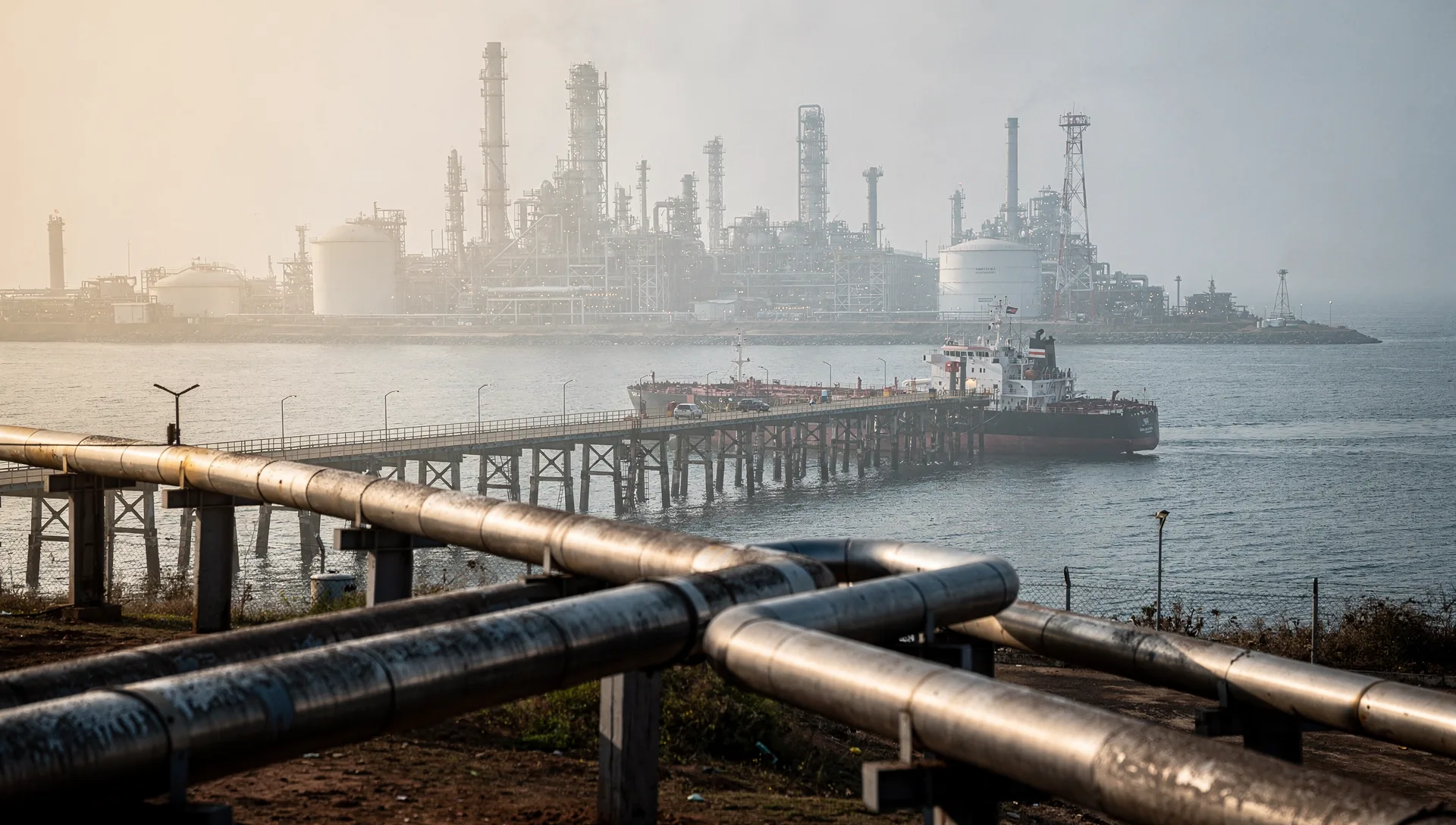
Nayara Energy shows the gap running the other way. Rosneft, blocked by the US since October 2025, holds about 49 percent of the Indian refiner.[^12][^13] That stake sits below OFAC's 50 percent line, and neither Nayara nor its other main shareholder, United Capital Partners, appeared in OFAC's SDN or consolidated list files on 22 October 2026.[^13][^14] The EU listed Nayara directly on 18 July 2025, and the UK followed on 15 October 2025.[^7][^12] A screen that relies on the US list, and on the 50 percent rule to catch subsidiaries, clears a counterparty that two other regimes have frozen. The ownership-chain piece covers how OFAC reaches below 50 percent when it finds concealed control. The narrower point here is that the threshold is not even the same number in London.

Running One Counterparty Against Three Rulebooks
The joint guide lists other differences in what each regulator expects. US persons must report rejected transactions to OFAC, and OFSI has no equivalent duty.1 OFAC can reduce a base penalty by up to 50 percent for a qualifying voluntary disclosure, against up to 30 percent at OFSI, and UK sanctions law has no limitation period for enforcement.2
What the record shows: between October 2025 and October 2026, the three regimes listed Lukoil on different dates, licensed its Bulgarian companies to different expiry dates and reached different results on Nayara. What we infer: this divergence is a policy outcome, not a lag that closes once the slowest regime catches up. The tracking-gap piece treats regime differences as a timing problem, but the Nayara case has stayed split for more than a year. What we recommend: keep a separate answer for each regime with jurisdiction over a payment, each with its own legal basis, licence reference and expiry date.
That record has to start with whose people touch the transaction. A UK subsidiary of a US group, or a US citizen working inside an EU bank, can bring two rulebooks into a single payment. The ownership answer then gets calculated more than once: with aggregation for the US and the EU, and on individual holdings plus control for the UK. Every licence the answer depends on needs a review date set before it lapses, because the earliest expiry among them is the date your exposure changes.
This is where geopolitical risk shows up in a compliance file. The question is less which country a counterparty sits in than which governments your own staff and entities answer to, and that list differs by branch. The financial services page has the wider sector view.
Fortius Intel note: Treat a licence expiry in one regime as a live event even when another regime has already extended. Any business with a UK nexus that still deals with Lukoil's Bulgarian companies should confirm before 29 October 2026 whether OFSI has renewed licence INT/2025/7895596, and should have a plan for the payments it cannot make if it has not.
Methodology: this analysis draws on OFAC general licences, press releases and SDN list files, OFSI licence notices, the June 2026 OFAC-OFSI comparison guide, the EU Council's 2024 sanctions best practices, and reporting or analysis from Covington, Steptoe, Reed Smith, DLA Piper, Akin Gump, FesenkoLaw, SeeNews, BTA, S&P Global, Euromaidan Press and Al Jazeera, with each dated fact checked against at least two independent sources where a second source exists.
Footnotes
-
OFAC and OFSI, "U.S. and UK Economic Sanctions Authorities: A Comparative Overview," 23 June 2026, https://assets.publishing.service.gov.uk/media/6a3a4c4f00ff27f06e3efc8b/OFAC-OFSI_Comparison_Guide.pdf (retrieved 22 October 2026). Source for: OFAC's 50 Percent Rule applying to ownership of 50 percent or more, individually or in the aggregate, and speaking only to ownership, not control; the UK test of more than 50 percent of shares or voting rights; OFSI generally not aggregating different designated persons' holdings absent a joint arrangement; the UK control test; and OFAC's reporting requirement for rejected transactions, with no OFSI equivalent. ↩
-
DLA Piper, "OFAC and OFSI publish joint comparative guidance on US and UK sanctions," 14 July 2026, https://www.dlapiper.com/en-us/insights/publications/2026/07/ofac-and-ofsi-publish-joint-comparative-guidance-on-us-and-uk-sanctions (retrieved 22 October 2026). Source for: cross-check of the aggregation and control differences; penalty reductions for voluntary disclosure of up to 50 percent at OFAC and up to 30 percent at OFSI; and UK sanctions law having no limitation period. ↩
About the author
Jay Bimbrah, Co-Founder & COO. A former Scotland Yard counter-terrorism investigator, Jay has advised EMEA tier-1 banks and Lloyd's market firms on distinguishing real exposure from theoretical risk.