
Field Notes
Supplier Risk Management Has a Blind Spot: The Supplier's Own Government

TL;DR: China's state-owned COSCO Shipping spent more than a year trying to convert an invited minority stake in a Panama ports consortium into majority control, stalling a 22.8 billion dollar deal for reasons that had nothing to do with either party's finances. Supplier risk management built around credit scores and payment history has no field for that kind of exposure, and a revised Chinese law taking effect October 1, 2026 widens the legal grounds for requisitioning exactly the kind of civilian capacity a foreign company's China-based supplier represents.
Key takeaways:
- COSCO Shipping Ports, wholly owned by the Chinese state, was invited into the CK Hutchison Panama ports consortium for a 20 to 30 percent stake in 2025 and by December had demanded majority control and veto rights instead, a demand CK Hutchison could not say was COSCO's own position or a requirement from Beijing.[^1]
- Panama's Supreme Court voided the underlying concessions and the government physically seized the Balboa and Cristobal terminals, leaving the original March 2025 sale unresolved as of February 2026.[^2]
- The US now charges 50 dollars per net ton per voyage on vessels owned or operated by Chinese entities, a fee triggered purely by ownership and flag, not by any vessel's condition or its operator's payment record.[^3]
- China's revised National Defense Mobilization Law, adopted August 29, 2026 and effective October 1, 2026, expands state authority to requisition civilian production capacity, transportation and technology, naming AI, drones and robotics directly.[^4][^5]
CK Hutchison agreed to sell its stake in the Panama Canal's two busiest ports for 22.8 billion dollars in March 2025, and Beijing objected before the deal closed. Within months the buyer consortium had invited in a state-owned Chinese carrier as a partner, and by December that carrier was demanding majority control of the whole group rather than the minority stake first on offer.[^1] Fifteen months on, the sale still has not closed.
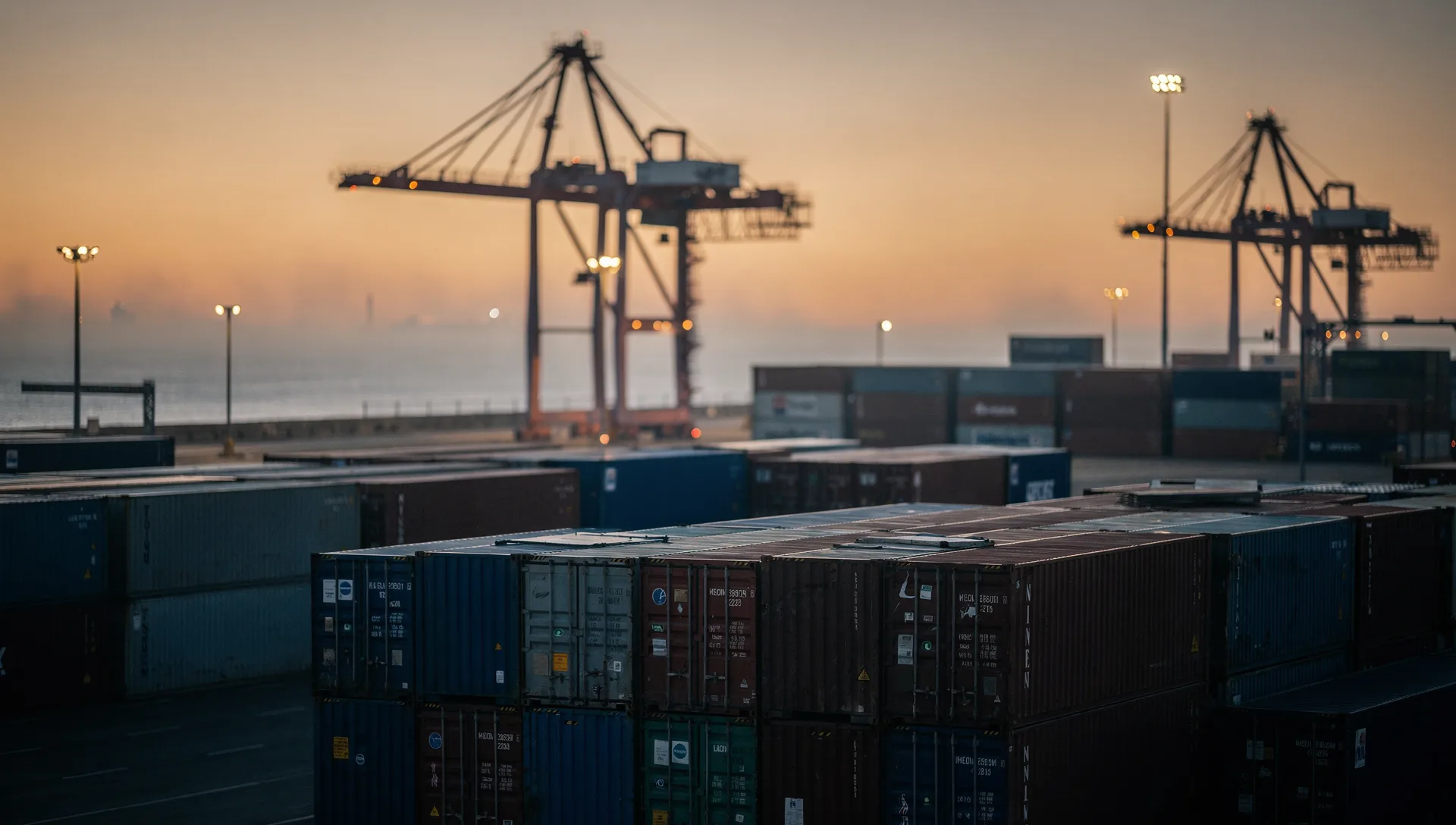
The Port Deal That Would Not Close
None of this turns on CK Hutchison's balance sheet or COSCO's payment history. The stalled deal is a counterparty-structure problem: a would-be partner whose ownership sits with a government that has its own interest in who controls a chokepoint on a major shipping lane. COSCO Shipping Ports is wholly state-owned, and the sale had to clear Beijing's own merger review before it could proceed, a step no financial due diligence checklist anticipates.[^1] Panama escalated in parallel: the country's Supreme Court declared the underlying concession unconstitutional on January 30, 2026, and the government then moved in and physically occupied the Balboa and Cristobal terminals rather than wait for the ownership fight to resolve.[^2][^8] By January 2026, CK Hutchison was proposing to split the ports into regional parcels, with ownership structures set by geography and political alignment instead of the single sale first announced. The stakes are not confined to one operator's shareholders. The Panama Canal carries roughly 5 percent of global maritime trade, and close to three-quarters of that volume is headed to or from the United States, so a fight over who controls the terminals at either end sits directly inside the shipping lane a great many companies' own supply chains already depend on.[^7] A conventional counterparty risk process, built to flag late payments, weak credit ratings and covenant breaches, would have cleared every party in this chain months before the geopolitical risk actually showed up.
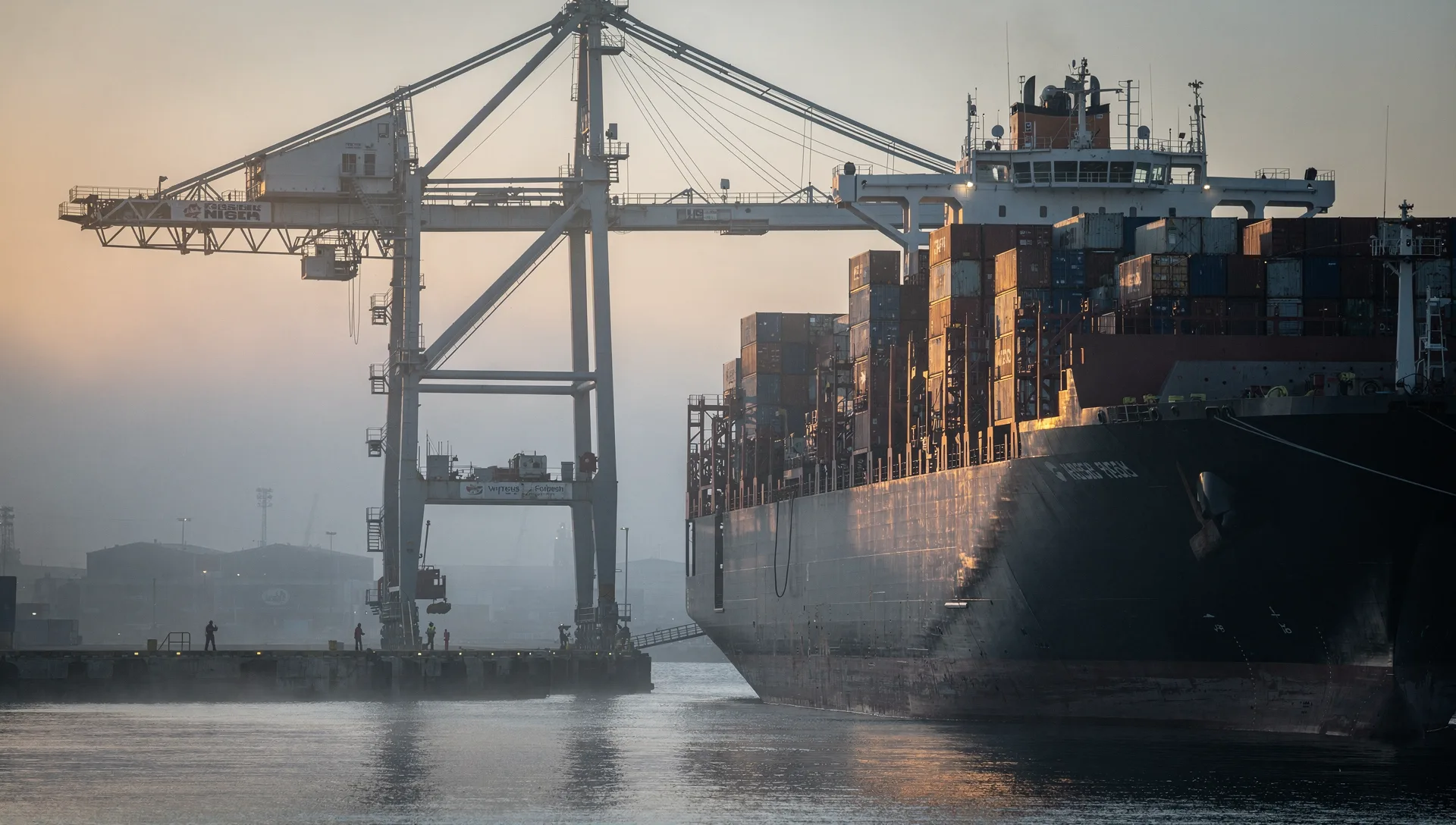
Building a Supply Chain Risk Screen the Balance Sheet Can't Run
Financial health checks catch the supplier about to miss a payment or default on a loan. They were never built to catch a supplier whose government can order it to stop shipping, and that gap is a blind spot most supply chain risk processes still carry.
- Board seats and veto rights outrank stake size. COSCO's actual demand was not a bigger slice of equity. It was majority control and veto rights over the consortium, a form of governance leverage that a simple percentage-ownership check would miss even where one exists.[^1]
- A second state-owned entity showed up to back the first. China Merchants, a separate Chinese state-owned shipping and logistics group, joined the talks in April 2026 to help finance COSCO's side of the deal, a pattern a single-counterparty ownership check is not built to catch.[^6]
- Governments already screen suppliers this way; companies mostly do not. The US charges 50 dollars per net ton per voyage on any vessel owned or operated by a Chinese entity, a fee set by ownership and flag alone, rising toward 140 dollars per ton by 2028, with no bearing on the vessel's condition or the operator's payment history.[^3] A private-sector supplier screen built the same way would ask who controls the entity before it asks whether the entity pays its invoices.
- Ownership exposure does not stay fixed. A supplier that looks privately run today can become a directed instrument of state policy tomorrow if the law underneath it changes, which is exactly what is happening in China this year.[^4][^5]

What a Requisition Law Does to Operational Resilience Planning
China's legislature adopted a revised National Defense Mobilization Law on August 29, 2026, the first update since the law's original 2010 version, and it takes effect October 1, 2026.1 The revision expands the state's authority to requisition and convert civilian resources, including industrial production capacity, transportation, technology and personnel, for national defense use, and it names AI, drones, robotics and satellite communications directly as fields where the state wants mobilization capability to reach.2 A company that sources components, assembly capacity or software development from a mainland Chinese supplier in any of those fields is reading about its own supplier base, not an abstract policy update.
What the record shows is a law, passed and dated, that broadens the legal basis for redirecting Chinese civilian industrial capacity toward defense purposes in an emergency.12 What we infer is that a foreign company sourcing from a China-based supplier now sits one legal change closer to that supplier's capacity being redirected without its consent, since the text does not exempt facilities with foreign customers or foreign equity. What we recommend is treating supplier concentration in mainland China the way a treasury team treats a counterparty credit limit: a number reviewed against a named threshold on a set schedule, not a fact noted once during onboarding and left alone.
The Panama case and the mobilization law are not the same kind of event. One is a live commercial negotiation stalled by an ownership demand; the other is a statute that has not yet been tested, and neither is proof that a given supplier will be requisitioned or blocked tomorrow. Both sat outside anything a financial health check was built to see, and both were visible months ahead of time to anyone reading the primary source rather than a supplier's latest balance sheet.
Fortius Intel note: A supplier's balance sheet tells you whether it can pay. It does not tell you who can order it to stop. Those are two different questions, and most procurement processes still only ask the first one.
Methodology: this piece draws on trade press and Bloomberg-sourced reporting on the CK Hutchison-COSCO Panama ports negotiation, USTR's Section 301 port fee action and law-firm summaries of its implementation, and Chinese state media and independent reporting on China's revised National Defense Mobilization Law, cross-checked across independent outlets before use.
Footnotes
-
China Daily, "China revises defense mobilization law to boost security, modernize capabilities," 29 August 2026, https://www.chinadaily.com.cn/a/202608/29/WS6a927860e4b06d4aa055b26e.html (retrieved 11 September 2026). Source for: the 29 August 2026 adoption date, the 1 October 2026 effective date, and the description of the law as the first revision since its original 2010 adoption. ↩ ↩2
-
UPI, "China moves to overhaul national defense mobilization law," 28 August 2026, https://www.upi.com/Top_News/World-News/2026/08/28/national-defense-mobilization-law-revision/4371787946777/ (retrieved 11 September 2026). Source for: the expanded state authority to requisition civilian industrial production capacity, transportation, technology and personnel, and the specific naming of AI, drones, robotics and satellite communications. ↩ ↩2
About the author
Shekhar Attri, Co-Founder & CTO. An Indian Army Special Forces veteran with 21 years of service and a gallantry medal, Shekhar's corporate security advisory work spans Singapore, India, the Philippines, and the UAE, alongside PhD research on machine intelligence under incomplete information.