
Field Notes
Sixty-Eight Nations Vote in October on What a Second Means: The Decision Latency Problem Hiding Inside a Science Story
TL;DR: From 13 to 15 October 2026, all 68 Member States of the Metre Convention meet in Versailles to vote on retiring the leap second, letting UTC drift from Earth's actual rotation by up to an hour before correction becomes mandatory. The vote does not remove the harder problem underneath it: a negative leap second, subtracting rather than adding a second, has never once been added or tested, and Earth's rotation has been setting speed records rather than slowing down.
Key takeaways:
- The 28th General Conference on Weights and Measures meets 13 to 15 October 2026 in Versailles, where Draft Resolution C proposes continuous UTC effective 20 May 2027, allowing the UT1-UTC gap to reach 3,600 seconds before correction.
- Earth's rotation set its fastest-day record on 5 July 2024, at 1.66 milliseconds under 24 hours, and came close again on 10 July 2025 at 1.38 milliseconds under.
- A negative leap second has never been added or tested anywhere, and BIPM's director has called the problems it could create unprecedented.
- MiFID II's RTS 25 ties trading-firm clock accuracy, down to 100 microseconds, to a definition of UTC this vote is about to change.
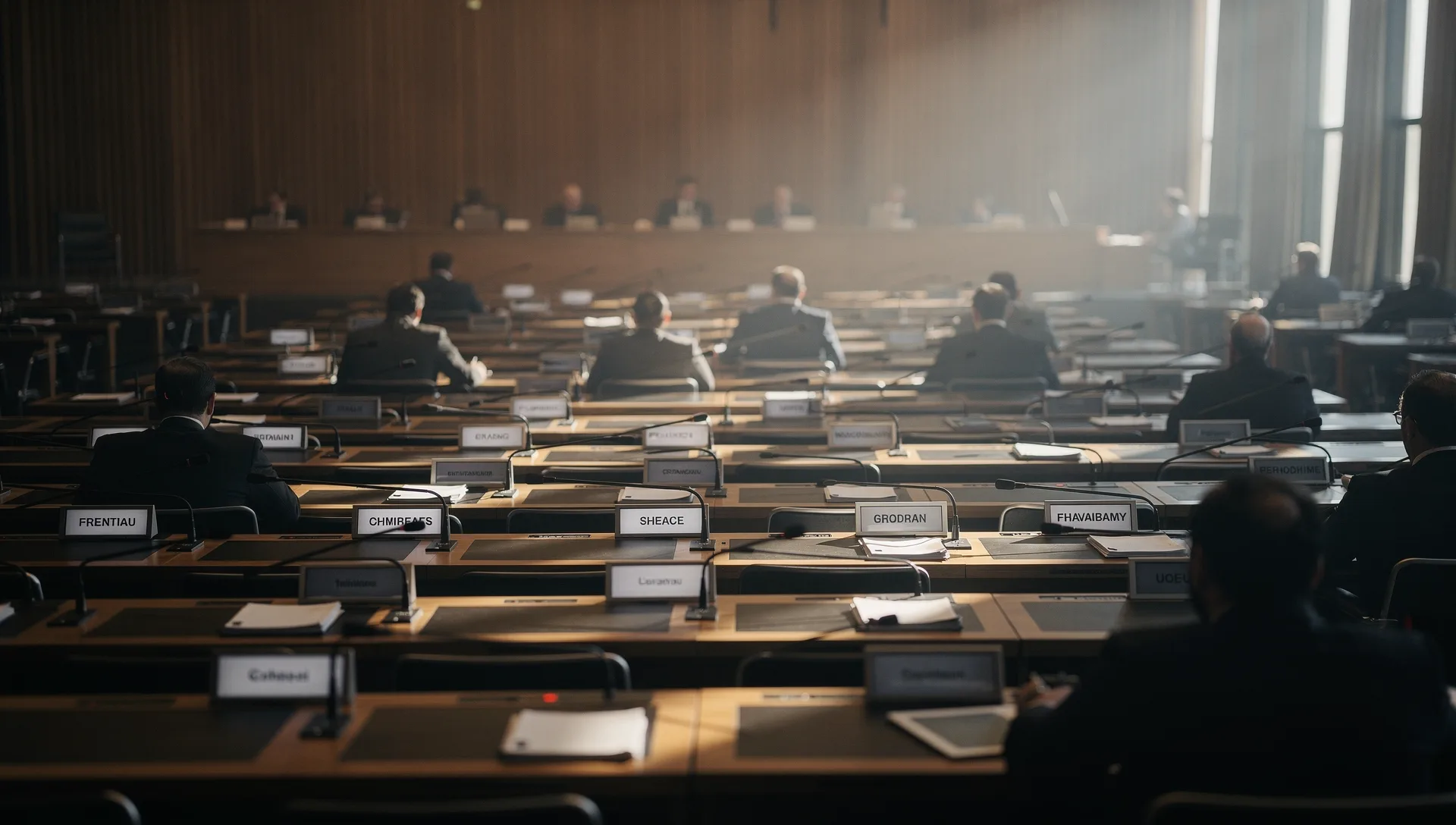
From 13 to 15 October 2026, delegates from all 68 Member States of the Metre Convention gather at the Palais des Congrès de Versailles for the 28th General Conference on Weights and Measures, and one item on the agenda is whether civil clocks keep absorbing leap seconds at all.[^1] Draft Resolution C proposes ending the practice: continuous UTC would take effect on 20 May 2027, letting the gap between UTC and Earth's measured rotation, UT1, grow to as much as 3,600 seconds before any correction is required.[^2]
What the Vote at Versailles Actually Changes
The leap second has run one direction only since it began. Every one of the 27 leap seconds inserted since 1972 added a second, because Earth's rotation was slowing relative to the atomic clock that defines the second.[^3] Draft Resolution C does not touch that clock. It changes how long the world tolerates a mismatch before fixing it.
- The correction window widens, not the physics. The old system corrected within a second, roughly annually. The new one corrects within an hour, on a horizon BIPM expects to run for a century or more.[^2]
- A second agenda item is a different fight. Draft Resolution B, on redefining the second itself using optical frequency standards, targets adoption at the 2030 meeting and does not change UTC continuity.[^2]
- Sixty-eight votes decide a mechanism nearly no corporate risk register tracks. The Metre Convention's membership, not any single industry's standards body, sets the rule every regulated clock in finance, telecoms and aviation points back to.[^4]
[Image A]
The Negative Leap Second Nobody Has Ever Tested
What the record shows: Earth's rotation, which spent decades slowing down and prompting the leap seconds added since 1972, has been speeding up. 5 July 2024 set the fastest-day record, 1.66 milliseconds under the standard 86,400-second day, and 10 July 2025 came close behind it at 1.38 milliseconds under.[^5] If the trend holds, timekeepers eventually subtract a second instead of adding one.
What we infer: that subtraction has no operational history to draw on. BIPM director Patrizia Tavella has said plainly that "a negative leap second has never been added or tested, so the problems it could create are without precedent."[^6] Geophysicist Duncan Agnew, who studies the rotation trend, puts it more bluntly: most systems can accept an added second, but few if any allow for removing one.[^6] Reporting in July 2026 put BIPM's own estimate at roughly 30 percent and Agnew's at roughly 40 percent for the odds a negative leap second is still needed before 2035, even after the October vote.[^3]
What we recommend: treat continuous UTC as a deferral, not a resolution. The 3,600-second tolerance buys time. It does not retire the negative-second scenario.
[Image B]
What Inherits a Moved Deadline: MiFID Clocks and Embedded Systems
The committee votes on paper. Every system built on the assumption that a second is a fixed, symmetrical unit finds out over the wire. Two past incidents show the pattern, both from adding a second, the easy direction. On 30 June 2012, that day's leap second triggered a Linux kernel bug that took down Qantas's Altea check-in system nationwide, forcing manual processing at desks across the network.1 On 1 January 2017, the same class of bug hit Cloudflare's DNS service. Its Go-based routing software assumed time only moves forward, and the leap second's backward tick made a random-number function panic. Roughly 0.2 percent of DNS queries and under 1 percent of HTTP requests across Cloudflare's 102 data centres failed until engineers shipped a one-character fix.2
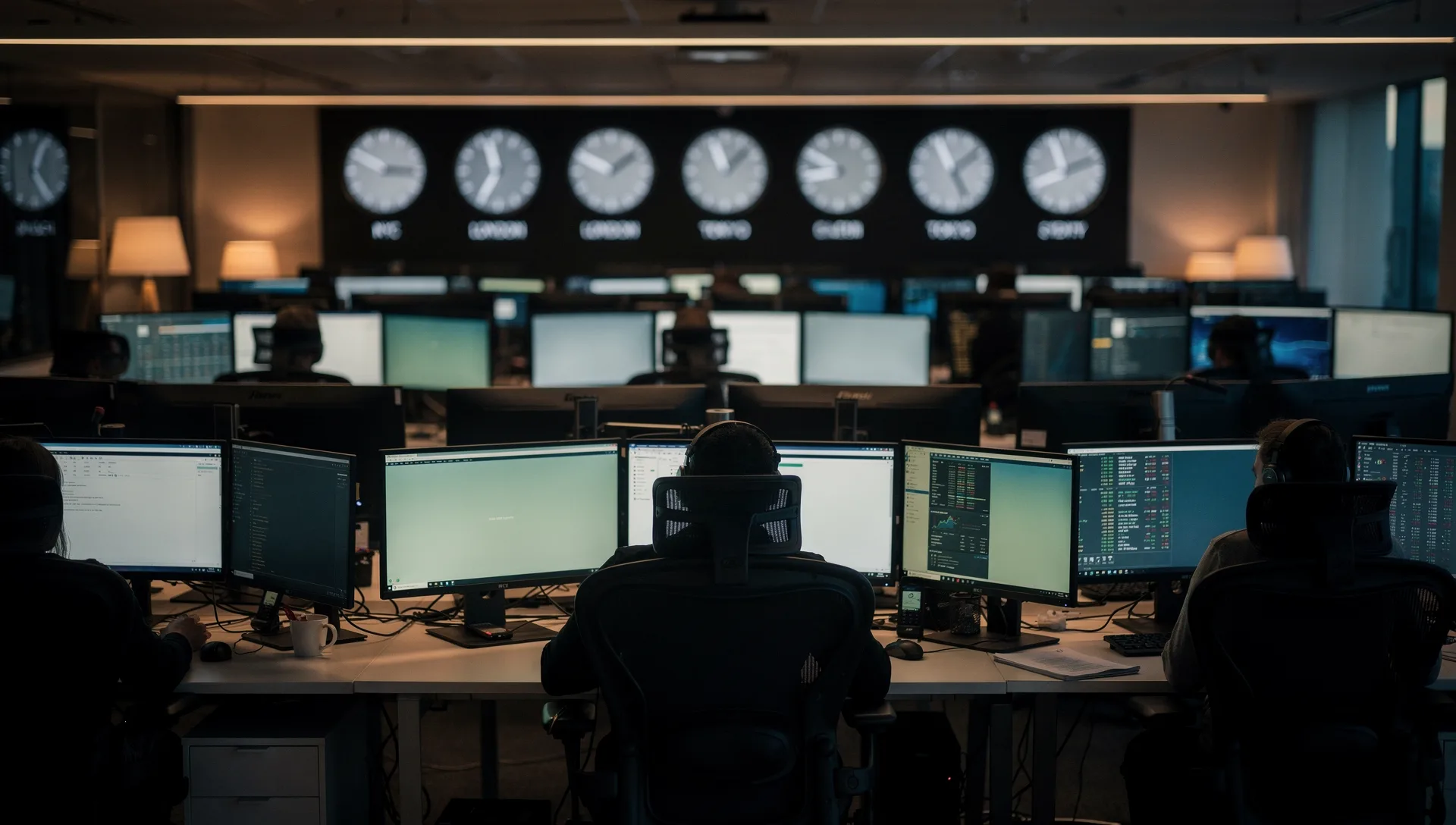
Financial regulation already assumes the second is stable in a way this vote quietly disturbs. MiFID II's RTS 25 requires trading venues and firms to document traceability to UTC, with tiered accuracy bands by activity, down to 100 microseconds and one-microsecond granularity for high-frequency algorithmic trading.3 Continuous UTC keeps the label the same while changing how far it may drift from the planet it describes, and no compliance calendar currently asks whether that changes a firm's own clock-sync attestation.
Most geopolitical risk programs are not built to flag a scheduled, publicly announced committee vote as a risk event, because nothing about it looks like a surprise. That is exactly why it gets missed. A vote eight years in the making is not a decision latency problem because no one saw it coming. It is one because no one assigned a date to check what depends on the answer.
[Image C]
Fortius Intel note: The 20 May 2027 effective date will arrive whether or not a given company has looked at it. What separates a survivable committee vote from a quiet outage is not the vote itself. It is whether the audit of leap-second-dependent code, MiFID clock-sync attestations and firmware trust-anchor lists already has a date of its own, sitting somewhere more durable than this article.
Sourced from BIPM's 28th CGPM convocation and draft resolutions documents, Tech Times' July 2026 reporting on Earth rotation records and the October 2026 vote, Popular Science's July 2025 rotation-record reporting, NPR's 2024 interview with BIPM director Patrizia Tavella and geophysicist Duncan Agnew, The Register's reporting on the 2017 Cloudflare leap second incident, iTnews' reporting on the 2012 Qantas outage, and published guidance on MiFID II RTS 25 clock synchronization requirements.
Footnotes
-
iTnews, "Qantas outage pinpointed on leap second Linux bug," 4 July 2012. https://www.itnews.com.au/news/qantas-outage-pinpointed-on-leap-second-linux-bug-307379 (retrieved 2026-08-20). Source for: the 30 June 2012 leap second triggering a Linux kernel bug that took down Qantas's Altea check-in system nationwide. ↩
-
The Register, "Cloudflare falls over as leap second bites Java bug in Go," 4 January 2017. https://www.theregister.com/2017/01/04/cloudflare_trips_over_leap_second/ (retrieved 2026-08-20). Source for: the 1 January 2017 Cloudflare DNS incident, its Go-based RRDNS software's lack of monotonic time handling, the scope of affected queries across 102 data centres, and the single-character code fix. ↩
-
Online NTP Validator, "MiFID II Clock Synchronization: RTS 25 Business Clock Accuracy (2017/574)." https://www.online-ntp-validator.com/mifid-ii-clock-synchronization-rts-25.html (retrieved 2026-08-20); corroborated on the core UTC traceability obligation by EDMA, "Briefing document on MiFID II clock synchronisation," November 2016, Article 4. https://www.edmae.org/wp-content/uploads/2017/01/EDMA-Briefing-doc-on-MiFID-II-clock-sync-Nov-2016.pdf (retrieved 2026-08-20). Source for: RTS 25's requirement that trading venues and firms document traceability to UTC, and the 100-microsecond accuracy and one-microsecond granularity tier for high-frequency algorithmic trading. ↩
About the author
Shekhar Attri, Co-Founder & CTO. An Indian Army Special Forces veteran with 21 years of service and a gallantry medal, Shekhar's corporate security advisory work spans Singapore, India, the Philippines, and the UAE, alongside PhD research on machine intelligence under incomplete information.