Editorial

Field Notes: Energy

Field Notes on energy geopolitical risk: chokepoints, sanctions, OPEC+ moves, critical minerals and grid exposure, written for risk and operations leaders.

EnergySector

Oil, gas, power and the chokepoints that move them.

Trade Compliance Needs a Forward Pipeline, Not Just a Watchlist

Trade Compliance Needs a Forward Pipeline, Not Just a Watchlist

One 2025 export rule gave zero notice and reversed in six weeks. Another gave over a year. Trade compliance needs to tell the two apart before they publish.

Shekhar Attri · October 21, 2026

LNG Geopolitical Risk Starts With the Contract, Not the Chokepoint

LNG Geopolitical Risk Starts With the Contract, Not the Chokepoint

Three cargoes already headed for Europe changed course toward Asia in early March 2026. Whether a buyer could make that call depended on one line in the contract.

Shekhar Attri · August 31, 2026

OPEC Geopolitical Risk: Reading Production Decisions as a Corporate Planning Signal

OPEC Geopolitical Risk: Reading Production Decisions as a Corporate Planning Signal

Seven OPEC+ producers raised output for the sixth month running on 3 August 2026. The headline number is the least useful part of what that decision tells a planning team.

Jay Bimbrah · August 31, 2026

Energy Security Risk Is a Government Word for Your Commercial Problem

Energy Security Risk Is a Government Word for Your Commercial Problem

Germany wrote a law that puts industry behind households in a gas shortage. The EU wrote one that makes storage operators disclose who owns them. Neither reads as a corporate risk until it is.

Jay Bimbrah · August 23, 2026

The Geopolitical Sanctions Gap: Why Periodic Trade Compliance Reviews Miss What Real-Time Tracking Catches

The Geopolitical Sanctions Gap: Why Periodic Trade Compliance Reviews Miss What Real-Time Tracking Catches

OFAC gave companies exposed to Rosneft and Lukoil a single 30-day wind-down window in 2025. A quarterly compliance review would have missed the deadline before it started.

Jay Bimbrah · August 10, 2026

Geopolitical Exposure Across Sectors: Energy, Finance, Technology, and Defence Compared

Geopolitical Exposure Across Sectors: Energy, Finance, Technology, and Defence Compared

The WEF ranked geoeconomic confrontation the top global risk for 2026. Energy, finance, technology, and defence firms are each absorbing it through a different mechanism.

Shekhar Attri · August 6, 2026

Grey-Zone Operations and the Geopolitical Threat Reaching Your Corporate Perimeter

Grey-Zone Operations and the Geopolitical Threat Reaching Your Corporate Perimeter

A Willis Research Network report in February 2026 stated that grey-zone aggression, dismissed five years ago as a shipping and aviation problem, is now a material threat to businesses across energy, ports, logistics, defence manufacturing, and retail supply chains.

Shekhar Attri · July 22, 2026

What Insurance Markets Price Before Analysts Publish: War-Risk Premiums as a Geopolitical Intelligence Signal

What Insurance Markets Price Before Analysts Publish: War-Risk Premiums as a Geopolitical Intelligence Signal

Lloyd's repriced Hormuz war-risk within 48 hours of March 2026 airstrikes. Published analysis took days. Insurance markets are a leading geopolitical intelligence signal that most risk functions are not monitoring.

Jay Bimbrah · July 20, 2026

OPL 245 and the Geopolitical Cost of a Thirty-Year Licence Standoff

OPL 245 and the Geopolitical Cost of a Thirty-Year Licence Standoff

Nigeria split the OPL 245 oilfield into four licences in March 2026, ending a dispute that outlasted five governments and shows how fiscal-term reviews double as sovereign bargaining tools.

Jay Bimbrah · July 17, 2026

Grid Intrusions as Geopolitical Signal: What State-Linked OT Cyberattacks Reveal Before the Headlines Do

Grid Intrusions as Geopolitical Signal: What State-Linked OT Cyberattacks Reveal Before the Headlines Do

CISA's April 2026 warning on Iranian-affiliated actors exploiting grid PLCs landed in week six of the US-Israel-Iran conflict. That timing, not the malware, is the signal energy risk teams keep missing.

Jay Bimbrah · July 14, 2026

When Country Risk Said Monitor: Three Cases for Geostrategic Consequence-Chain Analysis

When Country Risk Said Monitor: Three Cases for Geostrategic Consequence-Chain Analysis

The IIA's 2026 APAC report found most organisations have not implemented leading practices for geopolitical risk management. Russia 2022, Hormuz 2026, and China rare earth controls 2025 show what that gap produces.

Shekhar Attri · July 14, 2026

The Geopolitical Grid: How AI Data Center Power Demand Is Rationing National Electricity Capacity

The Geopolitical Grid: How AI Data Center Power Demand Is Rationing National Electricity Capacity

In June 2026, FERC gave all six US grid operators 60 days to fix data center interconnection rules, the same month Texas logged a 438-gigawatt queue that is 90 percent data centers.

Jay Bimbrah · July 8, 2026

Strait Risk, LNG Routing, and the Energy Decision Window

Strait Risk, LNG Routing, and the Energy Decision Window

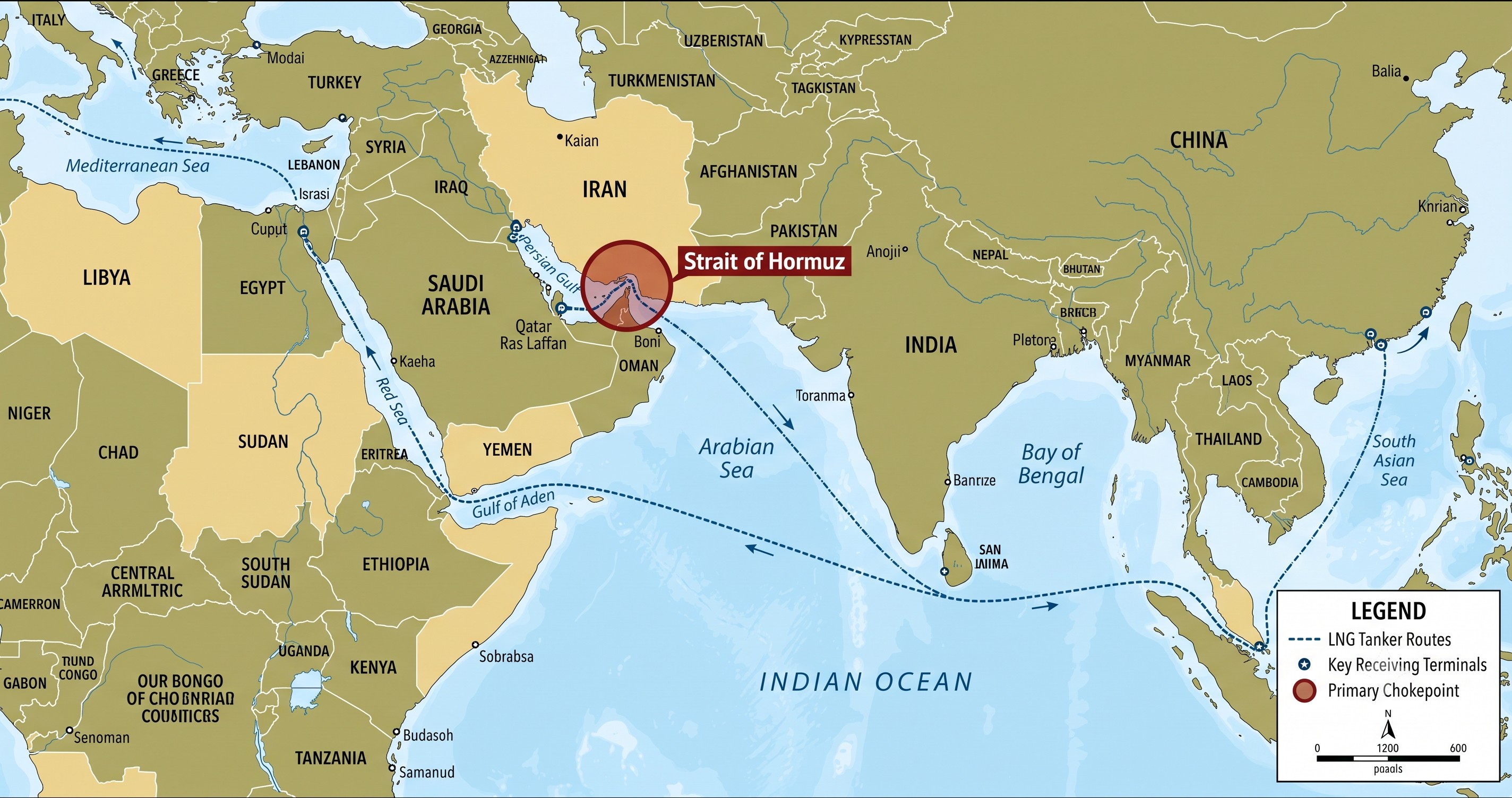
When Iran closed the Strait of Hormuz in March 2026, energy companies had a narrow window to exercise supply alternatives before logistics and contract options foreclosed. Japan had prepared. Most European buyers had not.

Shekhar Attri · July 1, 2026

Critical Minerals Supply Chain Risk and the Energy Exposure

Critical Minerals Supply Chain Risk and the Energy Exposure

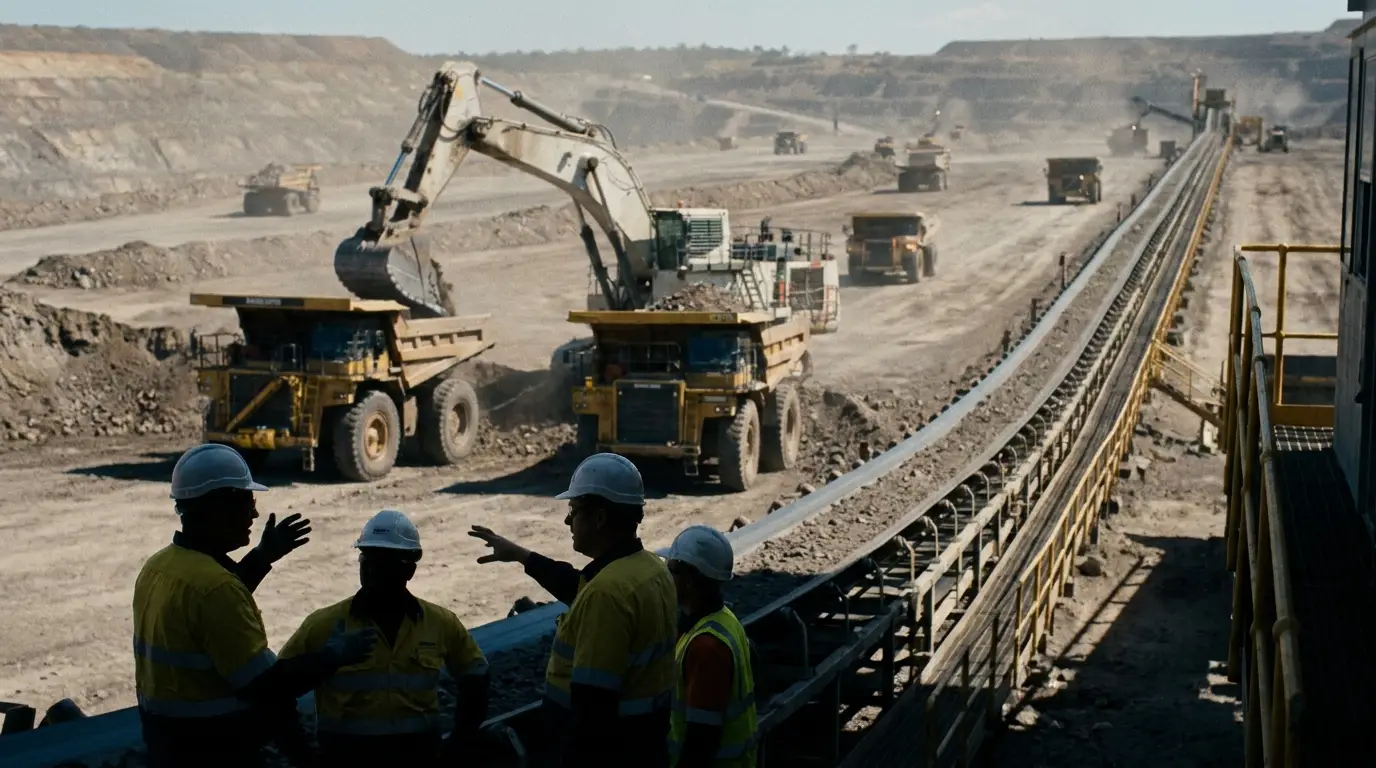
The energy transition does not reduce geopolitical risk. China refines 91% of rare earth elements and over 90% of battery-grade graphite. That processing concentration is the risk map most supply chain assessments do not yet reach.

Shekhar Attri · July 1, 2026

Why Country Risk Reports Fail CROs

Why Country Risk Reports Fail CROs

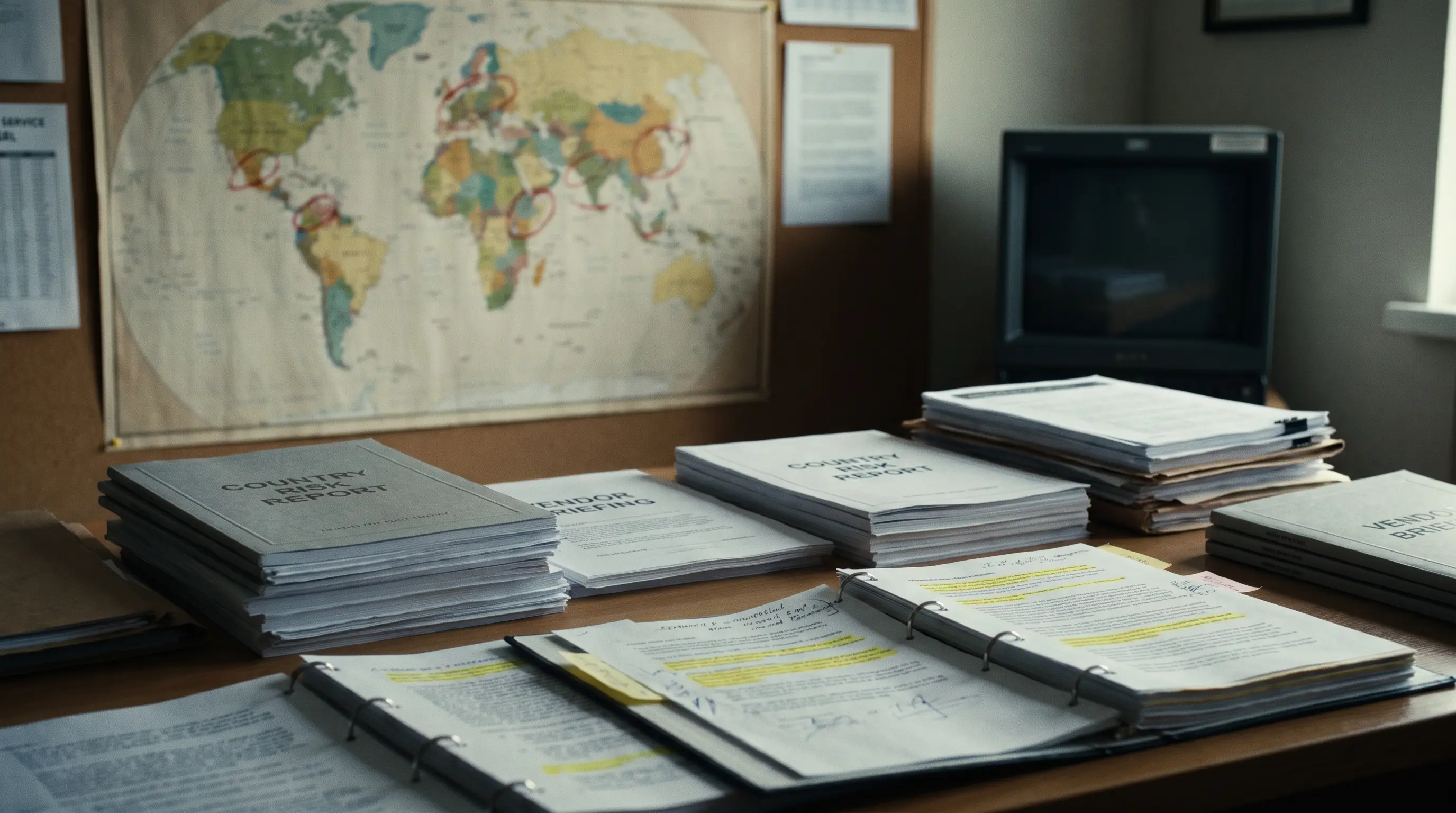
Country risk reports are built for annual review cycles. When the Strait of Hormuz closed in March 2026, CROs relying on quarterly vendor scores had already missed the decision window.

Jay Bimbrah · June 30, 2026