
TL;DR: Most geopolitical risk mitigation strategies companies report are stated intentions, not tested capabilities. Between 2024 and 2026, route flexibility in ocean shipping and multi-year capital diversification, such as TSMC's Arizona plant, were exercised under stress. Inventory buffers and reshoring plans mostly stayed on paper.
Key takeaways:
- Maersk moved two Red Sea shipping services back to the Cape of Good Hope route in February 2026, then partially reversed that decision in July and August, a capability used twice inside six months.
- TSMC's Arizona fab absorbed $1.25 billion in losses over four years before turning profitable in 2025, showing that a real diversification mitigation is a multi-year capital commitment, not an announcement.
- A McKinsey survey of 100 companies in December 2025 found 45 percent of tariff-exposed respondents said they were increasing inventories, a stated intention with no reported data on which of them actually did.
- Reshoring and FDI job announcements fell from 244,000 in 2024 to an annualized pace of roughly 173,000 in 2025, even as the same tracker shows announced jobs take 12 to 24 months to convert into hires.
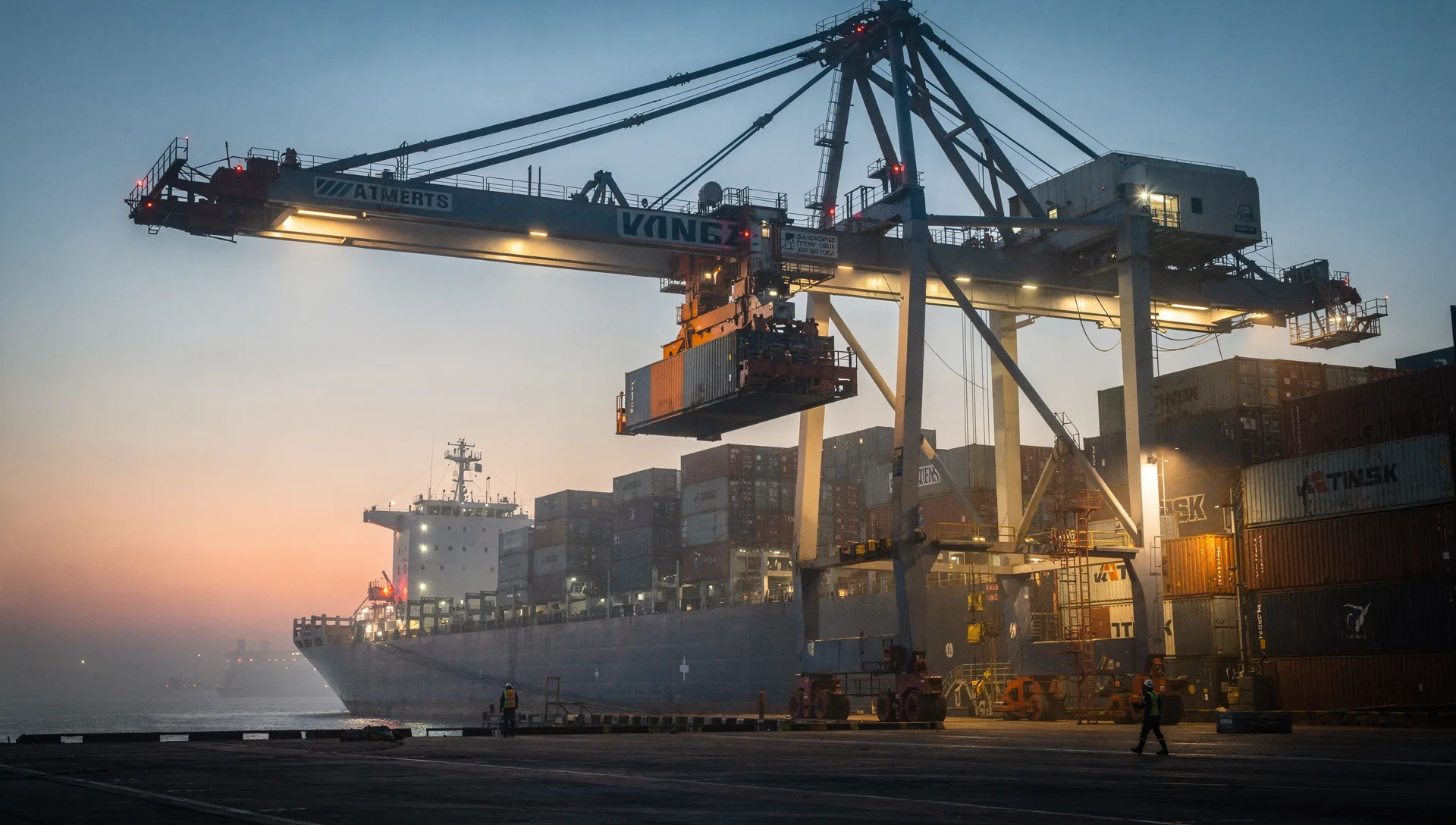
On 27 February 2026, Maersk pulled two Asia-Europe container services, ME11 and MECL, back around the Cape of Good Hope, citing "unforeseen constraints arising from the wider operating environment in the Red Sea region."[^1] Five months later the carrier sent four services back through the Suez Canal while holding nine others on the longer route.[^2] That reversal, and the partial reversal of the reversal, is closer to what a working mitigation looks like than anything in most risk-registers.
Which Geopolitical Risk Mitigation Strategies Actually Held
Three mitigation mechanisms show up constantly in 2024-2026 risk disclosures and vendor pitch decks. The disruption behind them runs deep: Egypt's Suez Canal revenue fell an estimated 40 percent, and container volumes at the Yemen-adjacent transshipment port of Salalah dropped 16 percent in the first half of 2024 alone.[^7] Only one of the three mechanisms below has been switched on, switched off, and switched back on under real pressure since. The other two look more like intentions than capabilities.
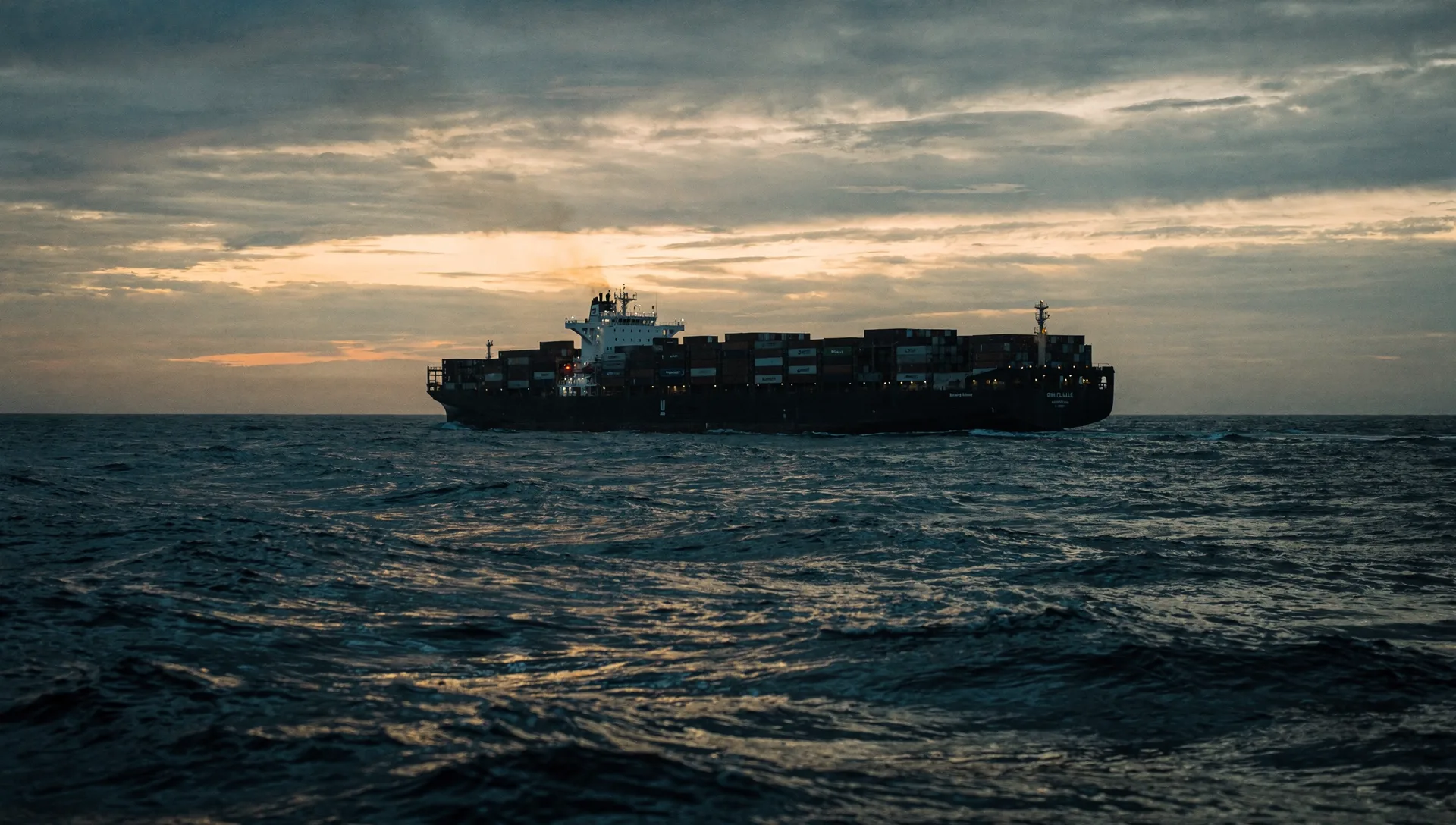
- Route flexibility held, and was used twice. Maersk's Suez-to-Cape-to-Suez sequence between February and August 2026 was not a plan on a slide. The westbound ME11 route saves 19 days on Suez versus the Cape; the eastbound leg saves seven.[^1] Maersk absorbed a $153 million loss in its Ocean division in the fourth quarter of 2025 while running the longer route, then still held nine of thirteen affected services on the Cape as of mid-August, judging the risk not yet worth the time saved.[^1][^2]
- Fab diversification held, but cost four years and $1.25 billion before it worked. TSMC's Arizona plant began mass production on a 4-nanometer process in the fourth quarter of 2024, after accumulating roughly $1.25 billion in operating losses since groundbreaking in 2021.[^3] It turned its first profit in 2025, a NT$16.14 billion (about $514 million) result independently confirmed by a second outlet, and Q1 2026 alone brought in more profit than all of 2025.[^3][^4] The mitigation is real, but it is not something a company decides to do in a quarter.
- Inventory buffers remain a survey answer, not a measured outcome. A McKinsey survey of 100 companies published 2 December 2025 found 45 percent of tariff-exposed respondents said they were increasing inventories as mitigation, 39 percent said they were pursuing dual sourcing, and 43 percent said they planned to shift supply chain footprint toward the United States.[^5] The survey records intent at one point in time. It does not track which of those companies followed through, and no comparable dataset does either.
- Reshoring announcements are real, and their pace just fell. The Reshoring Initiative counted 244,000 reshoring and foreign-direct-investment jobs announced in the United States in 2024, against an annualized 2025 pace of roughly 173,000 based on first-quarter data, a clear slowdown.[^6] The same tracker states that announced jobs typically take 12 to 24 months to convert into actual hires, and that of more than 2 million jobs announced since 2010, an estimated 1.7 million have been filled.[^6] Most reshoring commitments do eventually happen. They happen slowly, and the announcement pipeline feeding them is now shrinking.
The Difference Between Operational Resilience and a Press Release
What the record shows: the mitigations that held share three traits. Someone had to authorize their use under live conditions, more than once. The cost was already absorbed on a balance sheet rather than parked in next year's budget. And a named owner could make the call without waiting on a committee.
What we infer: the mitigations that stayed on paper share the opposite pattern. A tariff-exposed company telling McKinsey it is "increasing inventories" is a true statement about intent and an untested claim about execution. Nothing in the survey data confirms whether that inventory sits in a warehouse or in a board slide.[^5] The gap between the two is not dishonesty. Announcing a mitigation is cheap and building one is not, and the companies with the least capital to spare are the ones most likely to announce first and build later.
What we recommend: treat "we have a plan" and "we have used this plan" as two different facts, and price the difference. A mitigation strategy never triggered under real conditions carries the same uncertainty as an insurance policy nobody has tested with a claim. Sovereign ratings get revised on new evidence; a mitigation strategy deserves the same discipline, revised on whether it has been used, not on whether it was announced.
Route flexibility is cheap to test and hard to fake: either the ships turned or they did not. Capital diversification is expensive to test but leaves a paper trail in results filings that a rival's press release does not have to match. Inventory and reshoring commitments are the hardest to verify from outside a company, which is exactly why they show up most often on the mitigation slide and least often in a five-year audit.

What to Ask Before You Count a Mitigation as Real
A short set of questions separates a working mitigation from an intention. Has it been triggered at least once in the last 24 months, under conditions the company did not choose? Is the cost of using it already visible in a financial filing, or only in a planning document? Does one named person hold the authority to activate it without a sign-off chain that a fast-moving event would outrun?
None of this argues against inventory buffers or reshoring. Both can become real mitigations. The argument is against counting them as risk-adjusted capability before they have been tested, the same mistake the shipping industry stopped making between February and August 2026, when the actual routing decisions had to be remade every few weeks regardless of what the strategy deck said six months earlier. Properly mapped supply chain exposure tells a company which mitigations matter most; a working scenario planning process tells it when to expect the next test. Fortius Intel's free risk scan is built around a version of the same question: which of a company's stated mitigations already have triggering data behind them, and which do not.
Fortius Intel note: A mitigation strategy that has not been exercised under real pressure in the last two years is a hypothesis, not a control. Score it accordingly until the record says otherwise.
Methodology: this analysis draws on carrier routing disclosures reported by gcaptain and Euronews, TSMC's Arizona financial results as reported by TechTimes and independently corroborated by WCCFTech, McKinsey's December 2025 supply chain risk survey, and the Reshoring Initiative's 2024 annual data report.
About the author
Jay Bimbrah, Co-Founder & COO. A former Scotland Yard counter-terrorism investigator, Jay has advised EMEA tier-1 banks and Lloyd's market firms on distinguishing real exposure from theoretical risk.