
Field Notes
The Geopolitical Risk Country Coverage Gap: Why Most Companies Track a Handful of Countries and Miss the Rest
TL;DR: Companies that operate across dozens of countries typically build a real, current risk view for only the two or three that already caused a problem, and just 14 percent track exposure to their own highest-ranked risks at all. Mali's 2025 gold seizures from Barrick Mining and TotalEnergies' four-and-a-half-year pause on its Mozambique LNG project both show what happens when a country's risk profile moves faster than the review built to catch it.
Key takeaways:
- Only 14 percent of nearly 3,000 companies Aon surveyed in 2025 across 63 countries track exposure to their own top-ranked risks, even as geopolitical volatility entered the global top 10 business risks for the first time in the survey's 19-year history.
- Mali's government seized more than three tonnes of Barrick gold in January 2025 and a further shipment worth $117 million in July, holding the Loulo-Gounkoto complex under state administration until a November 24, 2025 settlement dropped all charges.
- TotalEnergies went four and a half years, from an April 2021 militant attack near its Mozambique site to an October 26, 2025 restart decision, before committing further capital to its $20.5 billion LNG project.
- Microsoft's $15.2 billion UAE investment runs through 2029 under an April 2024 intergovernmental agreement governing export controls and data protection, the kind of condition a country review has to catch before signing, not after.
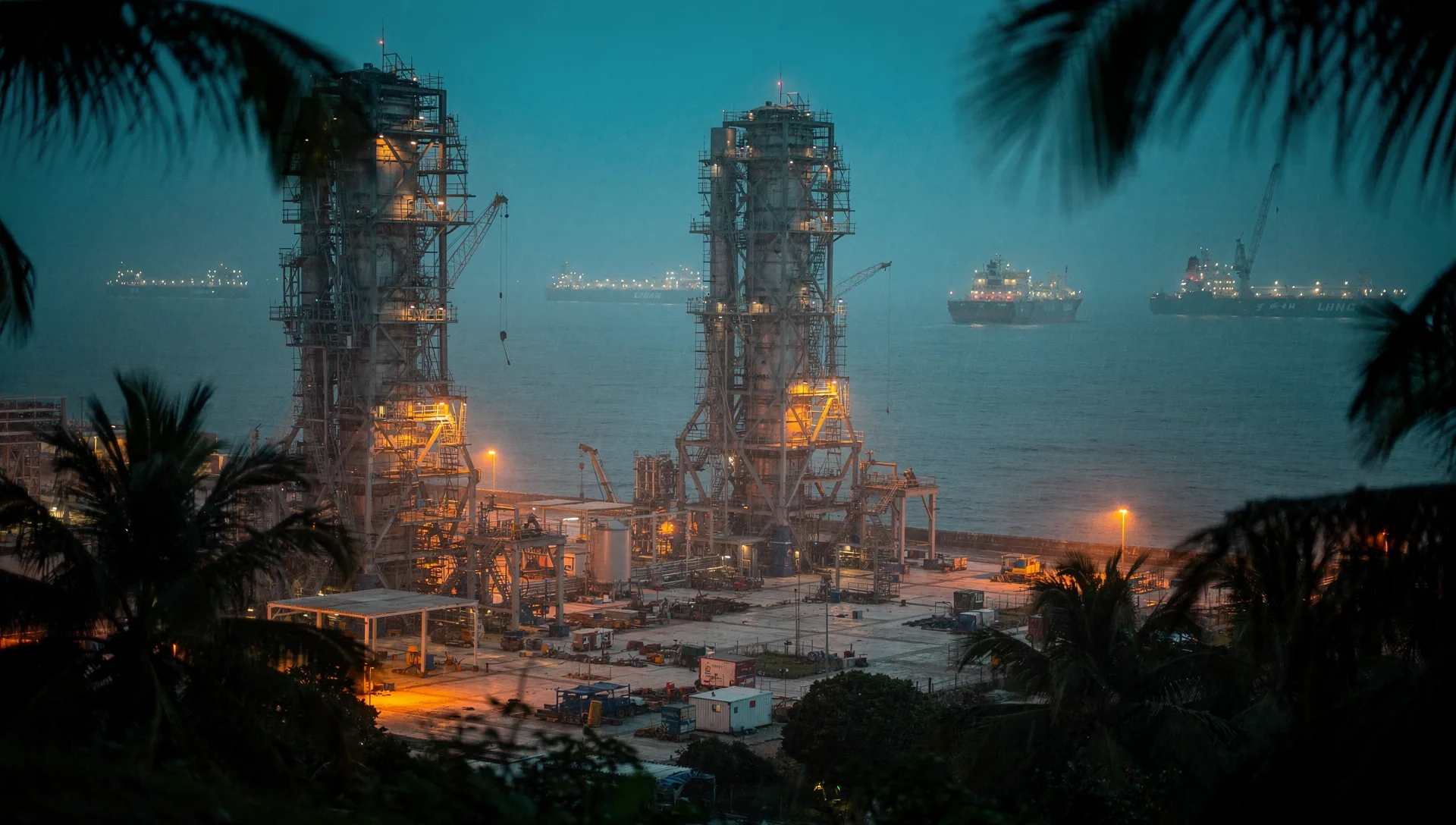
TotalEnergies spent four and a half years watching its own force majeure clause on the Mozambique LNG project, a risk it had assessed once at entry and stopped actively reassessing until the numbers forced a second decision. On October 26, 2025, the company told the market it would resume construction, committing to a $20.5 billion project total that includes $4.5 billion accumulated during the pause.[1] Most companies never get to that second decision. They just keep operating on the first one.
Geostrategic Monitoring: Why Ad Hoc Country Views Fail
Most companies build a country risk view once, at entry, then let it go stale. Formal review runs on renewal cycles measured in years, not on the calendar of the country itself. Aon's 2025 Global Risk Management Survey measured that gap directly, the same year geopolitical risk broke into its top 10 list for the first time in nineteen years.[2]
- Tracking rate: Only 14 percent of the nearly 3,000 executives Aon surveyed across 63 countries track exposure to their own organization's top-ranked risks, despite geopolitical volatility climbing 12 places since 2023 to reach that top 10.[2]
- Concentration blind spot: Companies spread across dozens of jurisdictions tend to formalize deep monitoring for only the two or three markets that already caused a problem, leaving the rest on assumptions made at entry.
- Cost of the gap: Both cases below trace back to a country whose conditions had shifted well before the company treated it as urgent.

Geostrategic Exposure in Emerging Markets: When Terms Change After You're In
Emerging-market risk rarely announces itself before entry. It shows up after, when the terms a company originally accepted get renegotiated by a government that gained new leverage. Barrick Mining's Loulo-Gounkoto complex in Mali is the clearest current case of what that looks like end to end.[3]
- Escalation: Mali's government detained four Barrick employees in November 2024, then seized more than three tonnes of gold from the mine in January 2025 after talks over a revised mining code broke down.
- Administration: A provisional administrator took over daily operations on June 16, 2025, and a further shipment worth $117 million was seized by government helicopter on July 10, 2025, while Barrick pursued arbitration at the International Centre for Settlement of Investment Disputes.
- Resolution: The dispute ended on November 24, 2025, when Mali agreed to drop all charges, release the detained employees, hand operational control back to Barrick, and let the company withdraw its arbitration claims.[4]
- The pattern: None of this followed a secret law. Each step traced to a mining-code review public since August 2023, over a year before the seizures began.

Geostrategic Expansion: What a Pre-Entry Checklist Actually Needs
A systematic country view has to work in both directions, catching exposure before a decision commits capital and revisiting it on a schedule set by the country, not by the company's own budget calendar. Microsoft's UAE investment shows what the first half looks like when it works.
- Structured before signing: Microsoft's $1.5 billion equity stake in Abu Dhabi's G42, announced April 16, 2024, came paired with an Intergovernmental Assurance Agreement negotiated directly between the US and UAE governments, covering export controls, technology transfer, and data protection before any chips shipped.[5]
- Scaled with conditions attached: That framework now sits underneath a $15.2 billion Microsoft commitment running through 2029, with GPU allocations tied to specific US administration approvals rather than one blanket license.[5]
- What a checklist catches: A pre-entry review built for this has to name the specific counterparties, sanctions and export-control regimes, and government relationships in play, not just score the country as a whole the way a standard sovereign rating does.
Fortius Intel note: The gap in every case above is coverage, not effort. A team can watch two problem countries closely and still miss the third one building the same way. Recon tracks up to three countries at no cost, without requiring a card or a sales call. Scan extends that to five countries plus one region. Command covers every jurisdiction a company operates in, on the country's own clock rather than the renewal calendar.[6]
Methodology: sourced from Aon's 2025 Global Risk Management Survey, TotalEnergies' and Mozambique LNG's public restart disclosures, Barrick Mining Corporation's public dispute timeline and settlement announcement, Microsoft's own published UAE investment disclosure, and Fortius Intel's current pricing page.
Footnotes
- TotalEnergies lifted force majeure and confirmed a restart of the Mozambique LNG project on October 26, 2025, with a total project budget of $20.5 billion, including $4.5 billion incurred during the shutdown that began after an April 2021 militant attack near Palma. JPT/SPE, "TotalEnergies Lifts Force Majeure on Mozambique LNG," October 2025, https://jpt.spe.org/totalenergies-lifts-force-majeure-on-mozambique-lng; Upstream Online, October 26, 2025, https://www.upstreamonline.com/lng/totalenergies-lifts-force-majeure-on-20-billion-mozambique-lng/2-1-1891251.
- Aon, "Geopolitical Volatility Surges into Top 10 Business Risks for the First Time, Aon's Global Study Finds," October 1, 2025, https://aon.mediaroom.com/2025-10-01-Geopolitical-Volatility-Surges-into-Top-10-Business-Risks-for-the-First-Time,-Aons-Global-Study-Finds. Survey of nearly 3,000 risk managers and executives across 63 countries; only 14 percent track exposure to their top 10 ranked risks.
- Mining.com, "Timeline: Barrick's dispute with Mali's junta," 2025, https://www.mining.com/timeline-barricks-dispute-with-malis-junta/. Details the November 2024 employee detentions, the January 2025 seizure of over three tonnes of gold, the June 16, 2025 provisional administrator appointment, and the July 10, 2025 helicopter seizure of gold valued at $117 million.
- Barchart, "Barrick Announces Resolution of Its Disputes With Mali," November 24, 2025, https://www.barchart.com/story/news/36287628/barrick-announces-resolution-of-its-disputes-with-mali. Confirms the settlement date, dropped charges, planned release of detained employees, return of operational control, and withdrawal of ICSID arbitration claims.
- Microsoft, "Microsoft's $15.2 billion USD investment in the UAE," November 3, 2025, https://blogs.microsoft.com/on-the-issues/2025/11/03/microsofts-15-2-billion-usd-investment-in-the-uae/. Confirms the April 16, 2024 $1.5 billion G42 equity stake, the Intergovernmental Assurance Agreement covering export controls and data protection, and the $15.2 billion total commitment spanning 2023 to 2029.
- Fortius Intel pricing page, fortiusintel.com/pricing, verified August 12, 2026. Recon (free): up to 3 countries, no region, 3 total scans. Scan (paid): up to 5 countries plus 1 region. Command (paid): global coverage.
About the author
Shekhar Attri, Co-Founder & CTO. An Indian Army Special Forces veteran with 21 years of service and a gallantry medal, Shekhar's corporate security advisory work spans Singapore, India, the Philippines, and the UAE, alongside PhD research on machine intelligence under incomplete information.