
Field Notes
Geopolitical Risk Is Not Financial Risk, and Most Companies Learn the Difference Too Late

TL;DR: Geopolitical risk is a distinct category from financial risk, triggered by state decisions rather than market moves, and it keeps landing on balance sheets as a surprise because fewer than one in five companies operate a dedicated function built to catch it before the shock arrives.
Key takeaways:
- BP absorbed close to $25 billion in non-cash charges within days of announcing its exit from a 19.75% stake in Rosneft on February 27, 2022, a loss triggered by a political decision, not by anything visible in its financial statements.
- Corporate directors named geopolitical instability, trade disruption, and supply chain risk among their foremost concerns for the years ahead in the WTW Global Directors' and Officers' Survey Report 2026, published June 16, 2026.
- A Harris Poll survey of 303 senior US business leaders conducted for Crisis24 and released April 28, 2026 found 93% had missed warning signs of a crisis or disruption, and 25% said it happens frequently or all the time.
On February 27, 2022, three days after Russian forces crossed into Ukraine, BP announced it would exit its 19.75% stake in Rosneft, the Russian state oil producer it had held for close to two decades.[1] The decision produced close to $25 billion in non-cash charges, more than BP's entire net profit the year before, and nothing in the company's balance sheet, credit rating, or quarterly filings had signaled it was coming.[2]

Geostrategic Risk, Defined
Financial risk moves through markets: interest rates, currency swings, credit spreads. Companies already run models for it. Geopolitical risk moves through states: a licence withdrawn, a border closed, a shareholder disqualified by sanction, a court ruling that reverses a decade of legal certainty overnight. It rarely shows up in a discounted cash flow model, and it almost never gives a treasury desk the lead time it is built to use. Four categories cover most of what a company needs to track separately from its financial risk register:
- Sovereign action. A government decision that changes market access without warning: an export licence pulled, an asset frozen, a shareholder register disqualified by sanction.
- Compliance exposure. A sanctions list, an entity list, or a tariff schedule that updates faster than a company's internal review cycle, turning a compliant counterparty into a liability overnight.
- Supply and market access. A border, strait, or licence a company depends on that a state can close for reasons that have nothing to do with the company's own performance.
- Reputational and demand-side spillover. A political position, boycott, or association that moves revenue independent of product quality or price.
None of this fits inside a standard risk taxonomy built for financial and operational categories, which is one reason geopolitical risk keeps landing on income statements as a surprise instead of a modeled scenario.
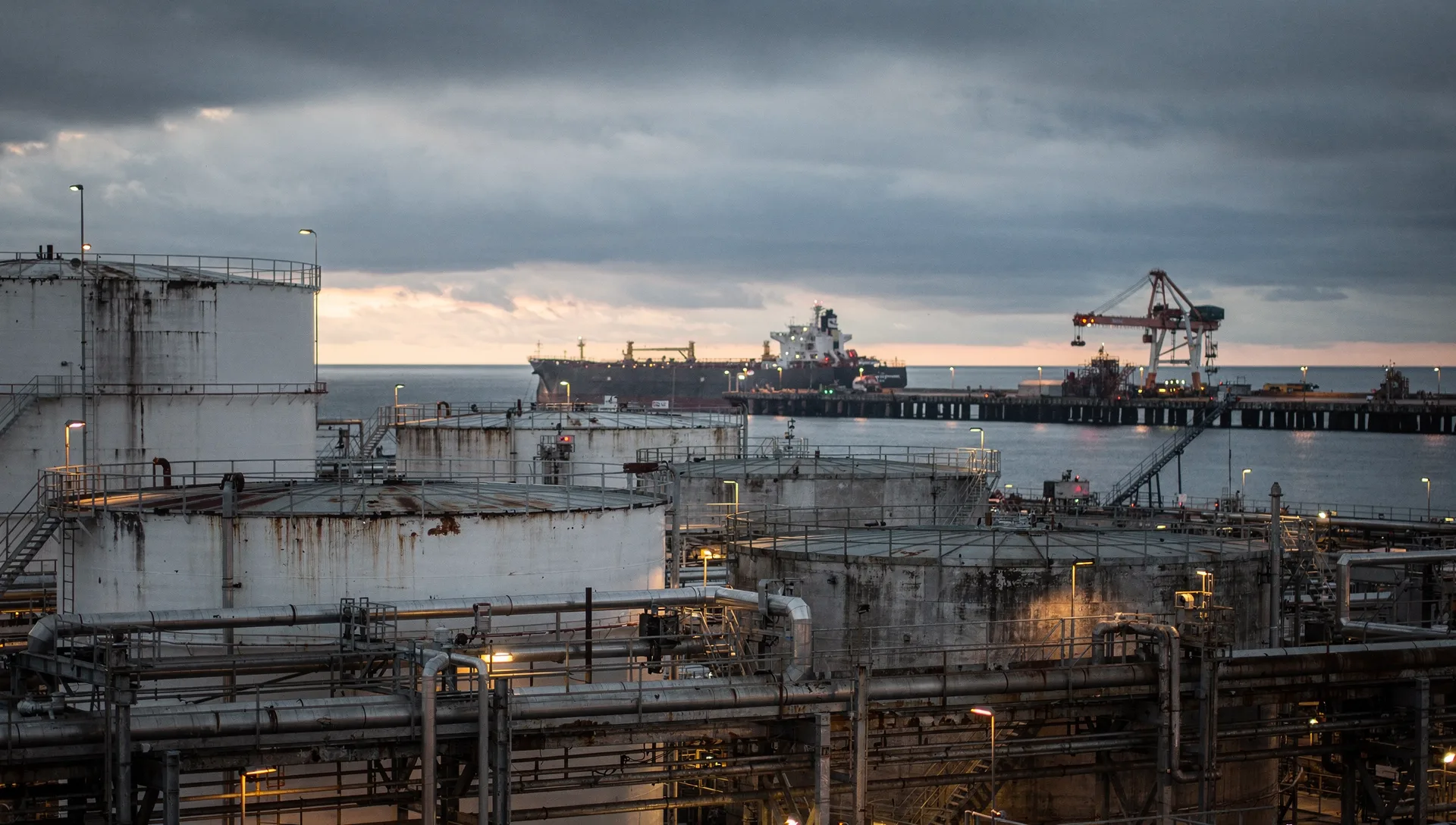
Geostrategic Exposure, Discovered Late
The gap is rarely a lack of information. It is a lack of somewhere for the information to land. Fewer than 20% of companies have created a dedicated geopolitics department, according to a report published January 12, 2026 by IMD Business School, the World Economic Forum, and Boston Consulting Group's Center for Geopolitics, based on interviews with 56 senior executives across industries and sectors.[3] Without a named owner, a warning sign gets read by whichever team happens to see it first, usually after the decision it should have informed has already been made.
That gap shows up clearly in how leaders describe their own preparedness. A Harris Poll survey of 303 senior US business leaders, conducted for Crisis24 and released April 28, 2026, found every respondent described their own crisis planning as proactive. Yet 93% admitted their company had missed warning signs of a crisis or disruption, and a quarter said it happens frequently or all the time. Nearly half said their leadership team is regularly caught off guard by market shifts and external pressure.[4] Confidence and detection are measuring two separate things, and most boards are grading themselves on the wrong one.

Geostrategic Risk, Once It's Owned
Trade disruption and geopolitical instability are not abstractions companies can defer to next year. Directors themselves already rank them near the top of the list. The WTW Global Directors' and Officers' Survey Report 2026, published June 16, 2026, found corporate directors naming geopolitical instability, trade disruption, and supply chain risk among their foremost concerns for the years ahead.[5] Naming a concern and owning a process for it are different acts, and BCG's 2026 research on geopolitical response found the two rarely arrive together: about half of companies feel prepared for the disruptions ahead, even as 95% say they plan to strengthen their geopolitical capabilities within the year.[6]
What changes once a company treats geopolitical risk as a named function, instead of a subject that surfaces only after a shock, is speed. The question stops being "does this affect us," asked in a scramble after a headline breaks, and becomes a standing answer a team checks before a decision is made, not after one goes wrong.
Fortius Intel note: Fortius Intel's free Scan turns "does this affect us" into a ranked Threat Register in under 60 seconds, no card and no onboarding call required. It will not replace a dedicated geopolitics function. It exists so a company does not have to build one before it gets its first honest answer.
Methodology: this piece draws on BP's own public disclosures, the January 2026 IMD/WEF/BCG survey of 56 senior executives, the April 2026 Harris Poll survey of 303 US business leaders conducted for Crisis24, WTW's 2026 Global Directors' and Officers' Survey Report, and BCG's 2026 research on geopolitical response.
Footnotes
- bp, "bp to exit Rosneft shareholding," February 27, 2022. https://www.bp.com/en/global/corporate/news-and-insights/press-releases/bp-to-exit-rosneft-shareholding.html
- Bloomberg, "BP to Exit Rosneft Stake and May Take a $25 Billion Hit," February 27, 2022. https://www.bloomberg.com/news/articles/2022-02-27/bp-to-exit-its-20-shareholding-in-russian-oil-producer-rosneft
- IMD Business School, World Economic Forum, and Boston Consulting Group, "Building Geopolitical Muscle: How Companies Turn Insights into Strategic Advantage," January 12, 2026. https://www.bcg.com/press/12january2026-companies-dedicated-geopolitics-department
- Crisis24 (Harris Poll survey of 303 senior US business leaders), "Crisis24 Survey Reveals Boardroom Blindspot," April 28, 2026. https://www.prnewswire.com/news-releases/crisis24-survey-reveals-boardroom-blindspot-majority-of-leaders-claim-to-be-prepared-for-the-next-crisis-their-own-answers-suggest-otherwise-302754998.html
- WTW, "Global Directors' and Officers' Survey Report 2026," June 16, 2026. https://www.wtwco.com/en-us/insights/2026/06/global-directors-and-officers-survey-report-2026-geopolitical
- Boston Consulting Group, "Crisis Reaction to Strategic Geopolitical Response," 2026. https://www.bcg.com/publications/2026/crisis-reaction-to-strategic-geopolitical-response
About the author
Jay Bimbrah, Co-Founder & COO. A former Scotland Yard counter-terrorism investigator, Jay has advised EMEA tier-1 banks and Lloyd's market firms on distinguishing real exposure from theoretical risk.