Field Notes
Shadow Fleet Sanctions: The Vessel-Level Exposure Behind a Clean Counterparty

TL;DR: Since 23 July 2026 the EU can sanction a ship for what it does to another ship, such as refuelling a tanker already on the list, whether or not the supplier knew. Charterers, traders and lenders who screen only the company across the table can miss exposure that sits in the vessel's own record.
Key takeaways:
- The EU's 21st package added 41 vessels to its shadow fleet list, taking the total above 670, and held the Russian crude price cap at $44.10 a barrel until 15 July 2027.
- Five bunkering tankers were the first ships listed under new criteria covering vessels that supply, service or transfer cargo with already designated ships.
- The same package designated a crewing agency for shadow fleet support for the first time, and named an Indian national as the figure behind a network of fraudulent ship registries.
- EU member states may now confiscate and sell cargoes carried by shadow fleet vessels they detain.
- The UK counts more than 600 vessels sanctioned or specified in connection with Russia's shadow fleet, so an EU check alone does not clear a ship.
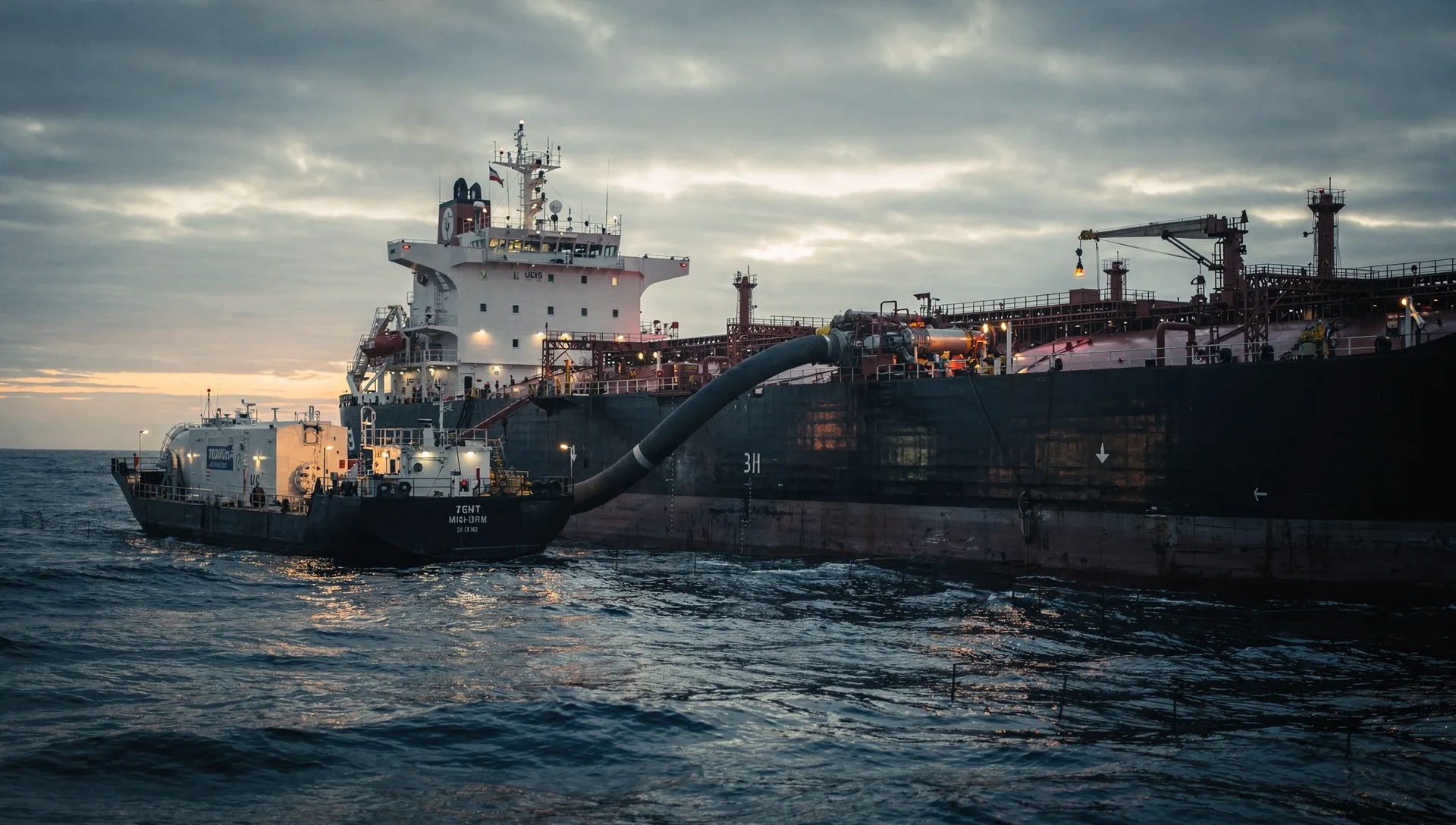
A ship can now land on the EU sanctions list without ever loading Russian oil. On 24 July 2026 the EU listed five bunkering tankers, Kumana, Bilal Bey, Bebek-E, Lady Jasmine and Ocean Fortune 18, for supplying fuel or services to tankers it had already designated.[^1][^2] That moves sanctions exposure away from the company you sign with and toward the ships that company's vessel has met at sea.
What the 21st Package Changed at Sea
The Council adopted the 21st package on 23 July 2026.[^3] Most of its maritime measures attach to vessels rather than to owners.
- More ships. It added 41 vessels, 34 of them tankers, along with six bulk carriers and one service vessel, bringing the EU list to more than 670.[^4][^5][^6]
- New grounds for listing. A ship can now be designated for bunkering, towing or otherwise servicing a listed vessel, or for ship-to-ship transfers with one. Lloyd's List Intelligence notes that the test does not depend on what the supplier knew or intended.[^1][^5]
- A wider enabler net. Eight entities and one individual were designated for shadow fleet support, including a crewing agency, a first for the EU.[^6][^7] The package also named Suniel Kumar, an Indian national, as the figure behind fraudulent registries including the false Guyana registry used by shadow fleet tankers.[^4][^5]
- The cap held. The crude price cap stays at $44.10 a barrel, and the automatic six-monthly adjustment is paused until 15 July 2027.[^5][^8] A full maritime services ban, pushed during negotiations, was shelved after disagreement led by Greece.[^4]
- Cargo now at risk. Member states may confiscate and sell cargoes carried by shadow fleet vessels they detain.[^5][^9]
Since July the EU has kept adding names. On 12 October 2026 it adopted its largest set of designations since the full-scale invasion, including 826 entities and 743 individuals, though law firm Penningtons Manches Cooper found no material new shipping restrictions in it.[^10][^11] The UK added eight ships on 1 October and says more than 600 vessels are now sanctioned or specified in connection with the shadow fleet.[^10][^11] Further EU listings covering the shadow fleet are in preparation, and the dates and contents are not yet public.[^11]

Vessel Due Diligence Starts With the Hull
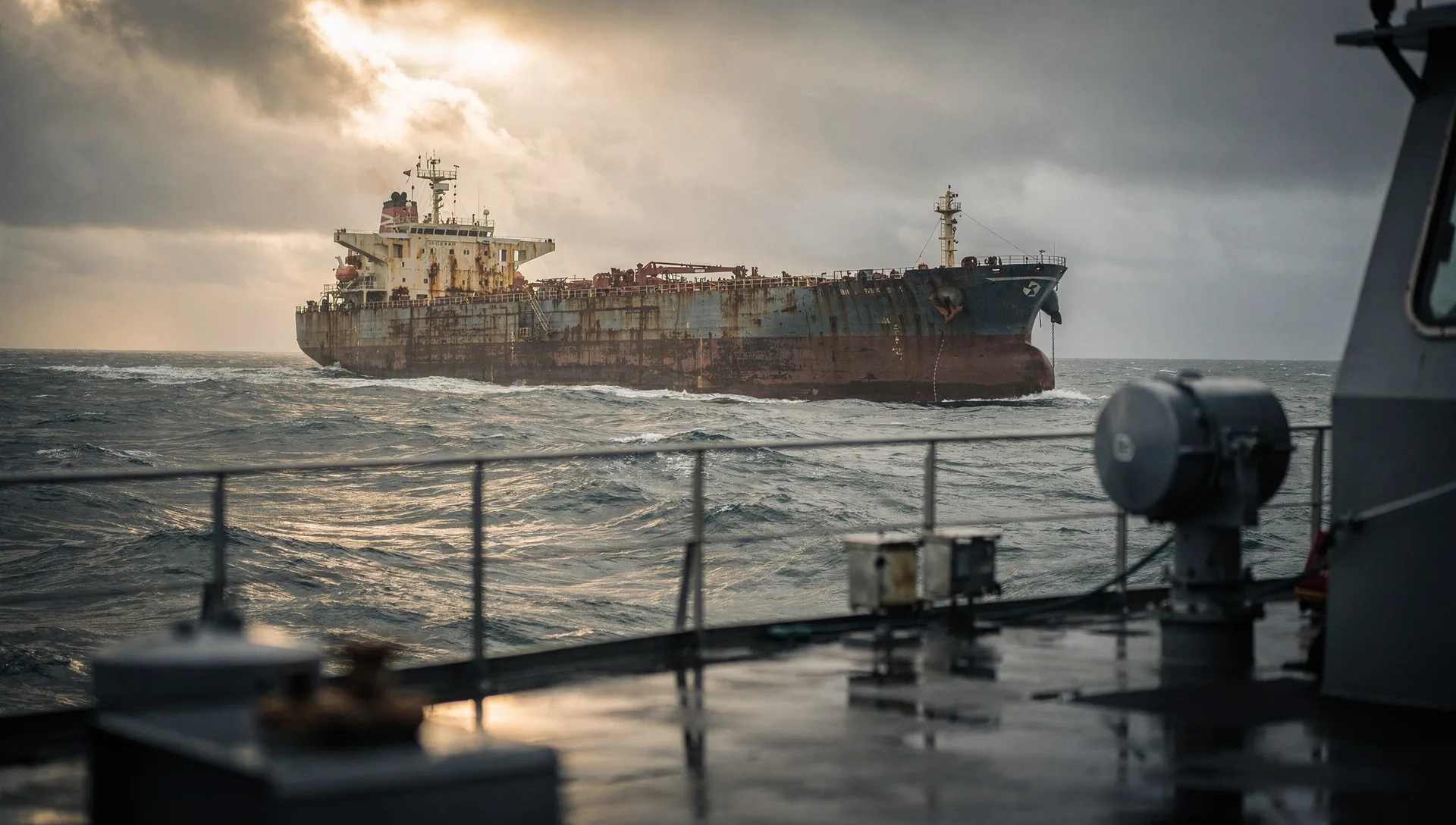
What the record shows: enforcement has become physical. On 28 February 2026 Belgian forces, supported by France, boarded the tanker Ethera in the North Sea and took it to Zeebrugge. Belgium said the ship was flying a false Guinea flag and was on the EU sanctions list.[^12][^13] A vessel's paperwork can also hide a long history. Lloyd's List Intelligence found one ship linked to this round, Nevah, had traded under at least three earlier names and four earlier flags.[^1]
What we infer: a counterparty can pass every name screen and still put your cargo on a ship that a navy may board or a member state may seize. Charterers, cargo buyers, insurers and lenders are each exposed through the vessel, not through the contract. Most counterparty screening is built around company and person names. The vessel risk sits in data that keeps changing: name, flag, manager and the ships it has met.
What we recommend: check the ship as a separate step from the counterparty, on the day of the fixture or financing decision.
- Identity. Screen the IMO number, not the current name, against EU, UK and US lists. The lists do not match: the EU counts more than 670 shadow fleet vessels and the UK more than 600, so one clear result is not enough.[^5][^10]
- Flag. Confirm the registry is real. The IMO has declared some registrations linked to shadow fleet tankers fraudulent or invalid, and P&I clubs now tell members to verify flag validity before trading.[^5][^9]
- The people behind the hull. Look at the registered owner, the commercial manager, the operator and the crewing agent. Any of them can be designated in its own right, and the EU listed a crewing agency for the first time in July.[^1][^6]
- Contacts since July. Ask whether the vessel has bunkered from, been serviced by or transferred cargo with a listed ship since the new criteria took effect.
Where Shadow Fleet Sanctions Exposure Hides
The new criteria look back only to ships that were already listed at the time of the service. A bunker supplier that delivered a stem to a tanker which was clean on that day is not caught retrospectively.1 The package also sets no threshold for how many deliveries, over what period, add up to a listable pattern.1 For an energy trader that means the risk builds over time through a ship's routine contacts, and a one-off screen at contract signature will not show it. A tanker chartered in August can pick up that history in September without any change to its owner, flag or name.
This is where geopolitical risk in shipping turns into a records problem. P&I clubs have told members that cover is not available for any trade that breaches sanctions, and that they should keep records of the due diligence done at the time.23 Lloyd's List Intelligence makes the same point about ownership and control analysis.1 If a vessel is listed six months after a voyage, the file that shows what was checked, and when, is what the company will be asked to produce.
The package touches LNG too. Owners must now notify their member state of any sale of an LNG tanker to a third country.24 Sale and purchase brokers, ship lenders and shipyards need that obligation in their deal checklists alongside the vessel screen.
The ownership chain note covers who sits behind a counterparty; vessel exposure is the layer under that. The secondary sanctions note explains how non-targets get caught, and the energy sector notes carry the wider picture for oil and gas trading.
Fortius Intel note: Vessel checks belong in the same approval step as counterparty checks, and they have to be repeated. The 21st package lists ships for contacts made after a contract is signed, and it sets no threshold for how many such contacts make a pattern, so a screen done once at signature covers only the first day of the exposure. Re-screen the ship before each lifting, bunker stem or drawdown.
Methodology: this note draws on circulars from NorthStandard, Skuld and West P&I, legal analysis from Hill Dickinson, Penningtons Manches Cooper and Skadden, Lloyd's List Intelligence, Kharon and Windward, and reporting from gCaptain, USNI News and Naval News. Each figure was checked against a second independent source.
Footnotes
-
Lloyd's List Intelligence, Marina Lebedeva, "From Facilitation to Designation: Bunkering and ship servicing under the EU's 21st sanctions package," 31 July 2026, https://www.lloydslistintelligence.com/resources/blog/from-facilitation-to-designation-bunkering-and-ship-servicing-under-the-eus-21st-sanctions-package (retrieved 3 November 2026). Source for: the five vessels listed for servicing designated ships (Kumana, Bilal Bey, Bebek-E, Lady Jasmine, Ocean Fortune 18) with an entry date of 24 July 2026; the new grounds covering bunkering, tug services and ship-to-ship transfers with designated vessels; the prohibition not depending on the supplier's knowledge or intent; the look-back applying only to vessels already listed at the time of supply; no fixed threshold for a pattern; designation risk for owners, managers and operators; the advice to document ownership and control analysis; and Nevah trading under at least three prior names and four prior flags. ↩ ↩2 ↩3
-
Skuld, "EU sanctions: 21st sanctions package against Russia," 29 July 2026, https://www.skuld.com/topics/legal/sanctions/russia/eu-sanctions-21st-sanctions-package-against-russia/ (retrieved 3 November 2026). Source for: 41 vessels designated under Regulation (EU) 2026/1848, bringing the total to over 670; five bunkering tankers listed under the widened criteria; the price cap at US$44.10 per barrel with the adjustment paused until 15 July 2027; member states' power to confiscate and sell cargoes of detained shadow fleet vessels; an Indian national designated over fraudulent registries; IMO declarations of fraudulent registrations; the LNG tanker sale notification obligation; and advice that cover is unavailable for sanctioned trade and that members keep due diligence records. ↩ ↩2
-
West P&I, "No 7 2026/27: EU Sanctions, 21st Sanctions Package," 29 July 2026, https://www.westpandi.com/News-and-Resources/Notice-To-Members/2026-2027/No-7-2026-27-EU-Sanctions-21st-Sanctions-Package-A/ (retrieved 3 November 2026). Source for: cross-check of member states' power to confiscate and sell cargoes carried by detained shadow fleet vessels; advice to verify flag and registry validity; advice to keep due diligence records; and cover being unavailable for trades that breach sanctions. ↩
-
Hill Dickinson, "EU adopts 21st package of sanctions against Russia," 28 July 2026, https://www.hilldickinson.com/our-view/articles/eu-adopts-21st-package-of-sanctions-against-russia/ (retrieved 3 November 2026). Source for: Council adoption on 23 July 2026; 41 shadow fleet vessels designated in addition to 632 already listed; the automatic price cap adjustment paused until 15 July 2027; and the notification obligation for sales of LNG tankers. ↩
About the author
Jay Bimbrah, Co-Founder & COO. A former Scotland Yard counter-terrorism investigator, Jay has advised EMEA tier-1 banks and Lloyd's market firms on distinguishing real exposure from theoretical risk.