
TL;DR: Subsea cable "redundancy" fails when routes sold as independent share one physical chokepoint: a single dragged anchor severed two Baltic cables marketed as separate paths within hours in November 2024, because both converged on the same corridor near Bornholm.
Key takeaways:
- Two Chinese-flagged vessels cut Matsu's two submarine cables six days apart in February 2023; repairs began April 20.
- The global subsea repair fleet counts roughly thirty vessels, two based in the EU, against 150 to 200 cable faults reported worldwide yearly, per ENISA.
- Egyptian waters carry 17 percent of global internet traffic and over 90 percent of Europe-Asia communications through ten landing stations, per CSIS.
- GPS jamming near Kaliningrad and Baltiysk has hit the Baltic near-daily since 2022, strong enough that Finnair suspended flights to Tartu in spring 2024.
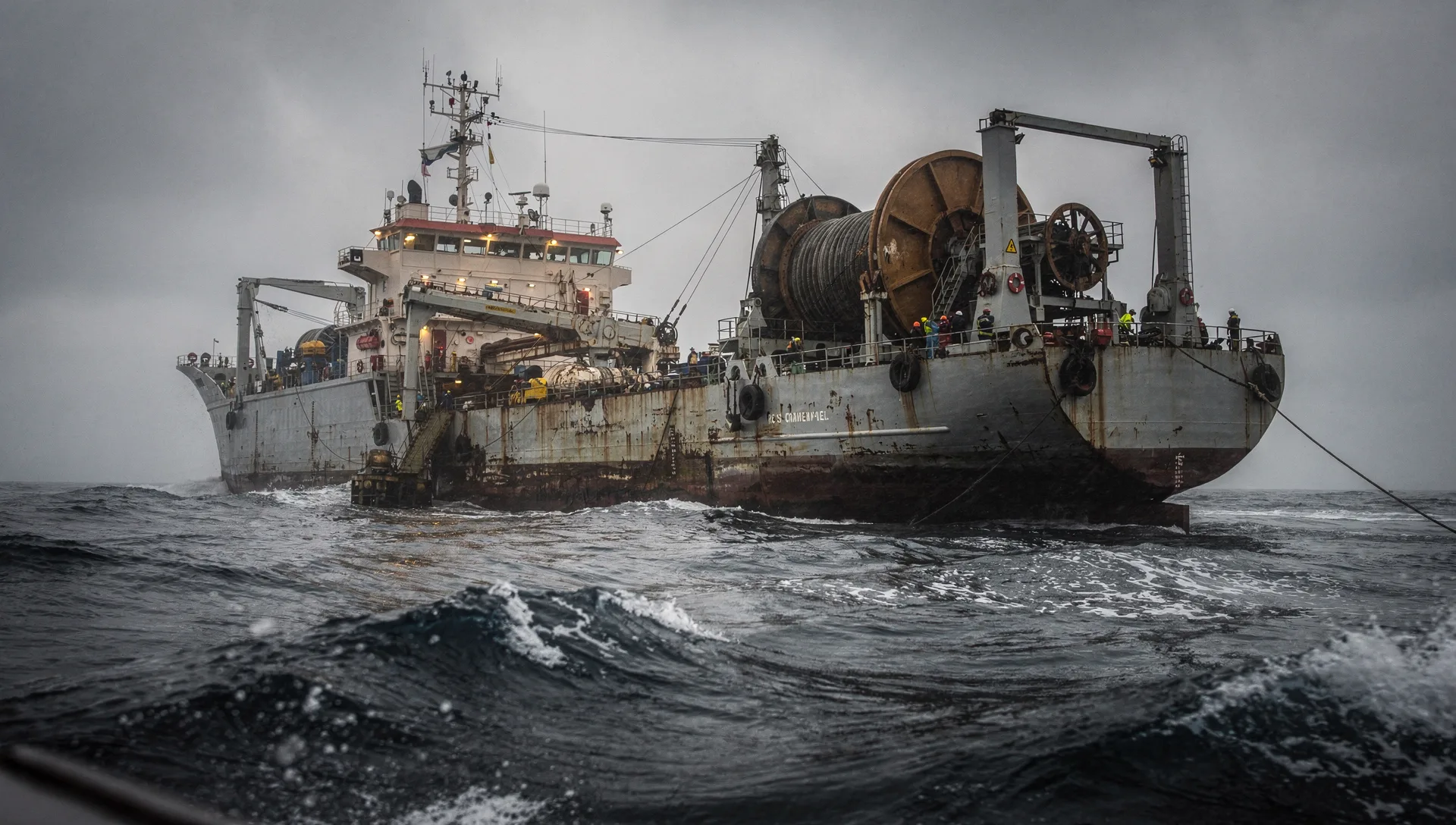
On November 20, 2024, the Chinese-flagged cargo ship Yi Peng 3 dragged its anchor across two subsea cables in the Baltic Sea, severing the Germany-Finland link and a separate line between Lithuania and Sweden within hours.1 Both cables had been sold to customers as redundant capacity on independent routes; a single vessel loitering near Bornholm reached both in one pass. Five weeks later, on December 25, the tanker Eagle S cut the Estlink 2 power cable and two more data cables in the same waters.2 A cable count on a spreadsheet and a corridor that survives one ship's anchor are not the same measure of resilience.
The Geostrategic Anatomy of a 'Redundant' Route
Network planners size resilience in cable count, route diversity, and provider diversity, but none of those metrics captures the physical geometry that determines whether one incident can degrade several "independent" paths at once. Incidents from 2023 to 2025 show corridors that look diversified on paper sharing a landing zone, a strait, or a class of vulnerable ship traffic.
- Baltic corridor, three hits in fourteen months: the Hong Kong-flagged, Chinese-registered NewNew Polar Bear damaged the Balticconnector gas pipeline and two communications cables in October 2023, then sailed to Tianjin without stopping for Estonian investigators.1 The Yi Peng 3 and Eagle S incidents followed in November and December 2024, severing cables run by different carriers in the same waters off Bornholm.
- Matsu, two cuts, six days apart: a Chinese fishing vessel severed one of Matsu's two submarine cables on February 2, 2023, and a Chinese cargo ship cut the second on February 8.3 The islands' roughly 14,000 residents lost their primary connection twice in a week, and repairs did not start until April 20, two months later.
- Red Sea's narrow water: the AAE-1, Seacom/TGN, and Europe India Gateway systems were all damaged in the same stretch of water on February 24, 2024; analysts traced the cause to the abandoned cargo ship Rubymar's drifting anchor, not direct Houthi action. A second wave of cuts in September 2025 again disrupted service into the UAE, Saudi Arabia, India, and Pakistan.
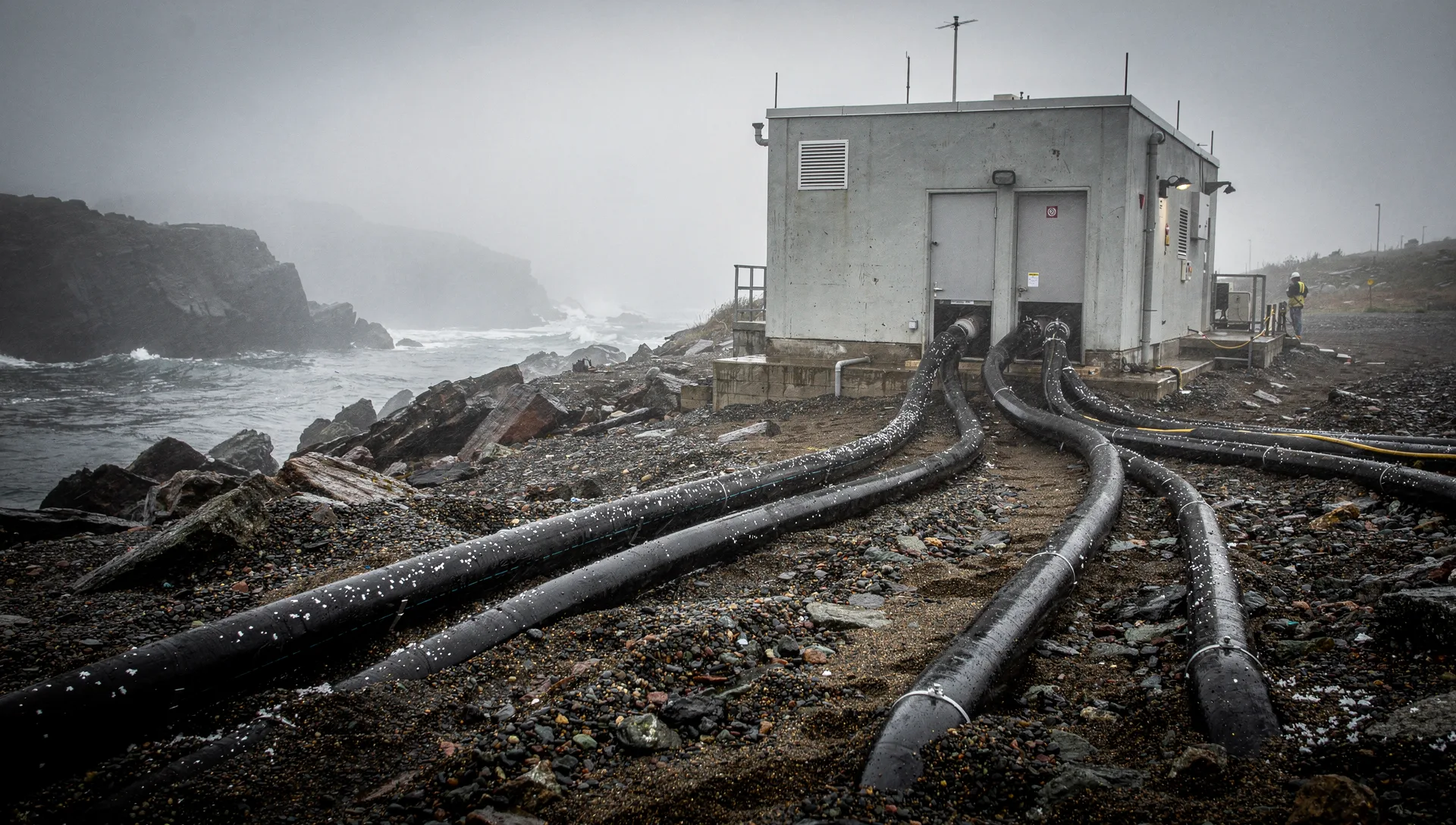
- Egypt's chokepoint: roughly 17 percent of global internet traffic and more than 90 percent of Europe-Asia communications transit Egyptian waters, funneled through five Mediterranean and five Red Sea landing stations before the Bab al-Mandab Strait narrows to sixteen miles.4
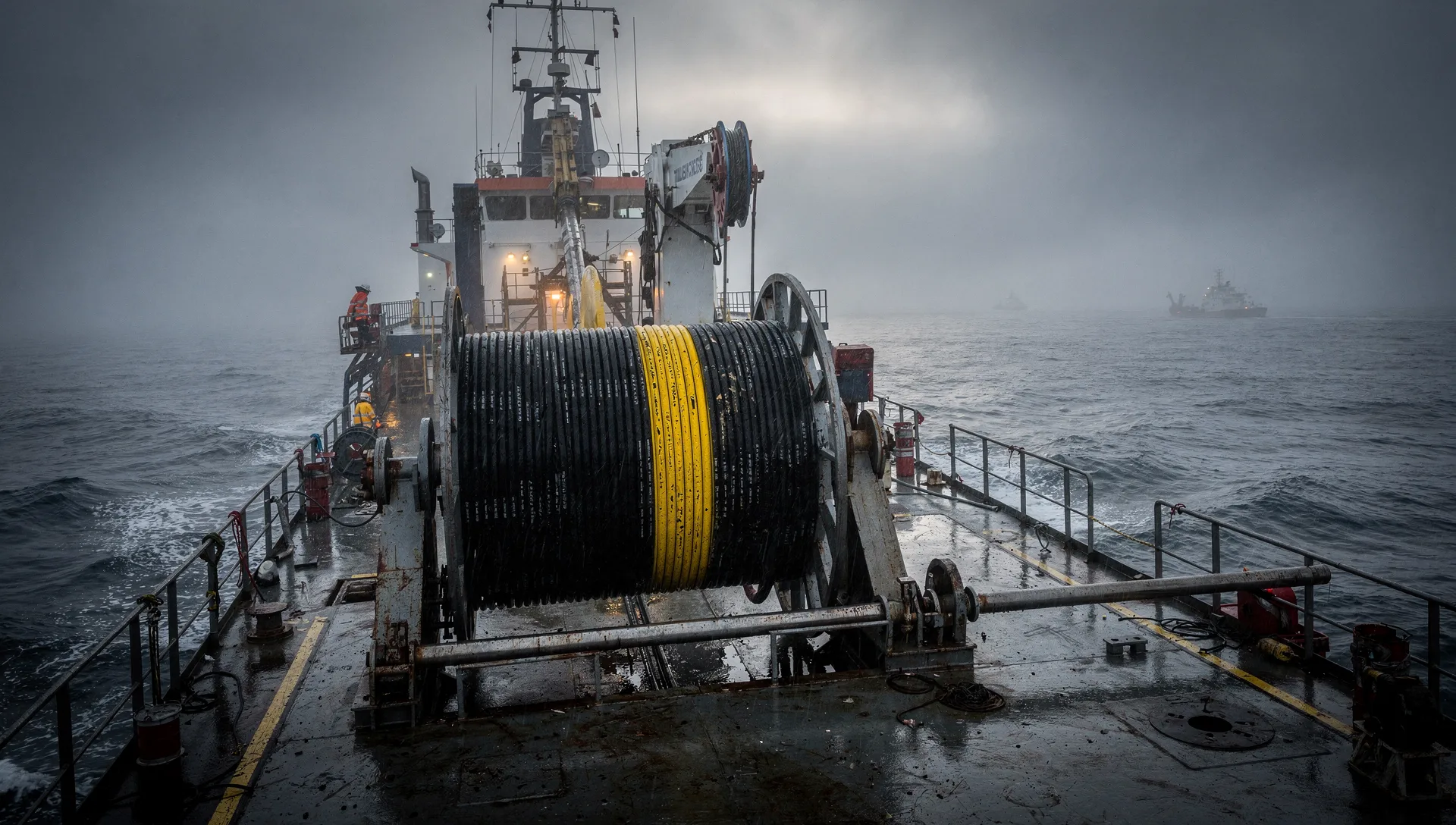
- A repair fleet too thin to keep pace: the global maintenance fleet numbers roughly thirty dedicated repair vessels, with only two based in the European Union and one in the United Kingdom, against roughly 150 to 200 cable faults reported worldwide each year.5
The Geostrategic Logic Behind Three Failure Modes
Three mechanisms produce the same result: loss of a corridor's capacity, not one cable's capacity. Physical damage is the most visible: an anchor drag, a dredging operation, or a deliberate cut removes a cable at one point, and when diverse systems share a lane, one dragged anchor removes them together, as the Baltic incidents showed twice in five weeks. Government action is harder to see: cable landing facilities sit inside sites licensed by a single national regulator or state carrier, so a permitting freeze or a change in access policy can take a jurisdiction's landing capacity offline without a strand being cut, an exposure Egypt carries through its five Red Sea landing stations under one licensing regime. Satellite interference correlates geographically with both. Researchers at Gdynia Maritime University and the German Aerospace Center traced GPS jamming across the Baltic to transmitters near Kaliningrad and the Russian naval base at Baltiysk, active almost daily since 2022 and strong enough that Finnair suspended flights to Tartu in spring 2024.6
For a board pricing geopolitical risk, that overlap matters more than any single incident. A resilience plan that treats cable cuts, landing-station shutdowns, and satellite-positioning disruption as unrelated line items will misprice the joint probability that one state actor triggers several of them in the same window, the way Russia-linked shipping and jamming activity have converged on the Baltic since 2023.
Geostrategic Implications for Board-Level Risk Owners
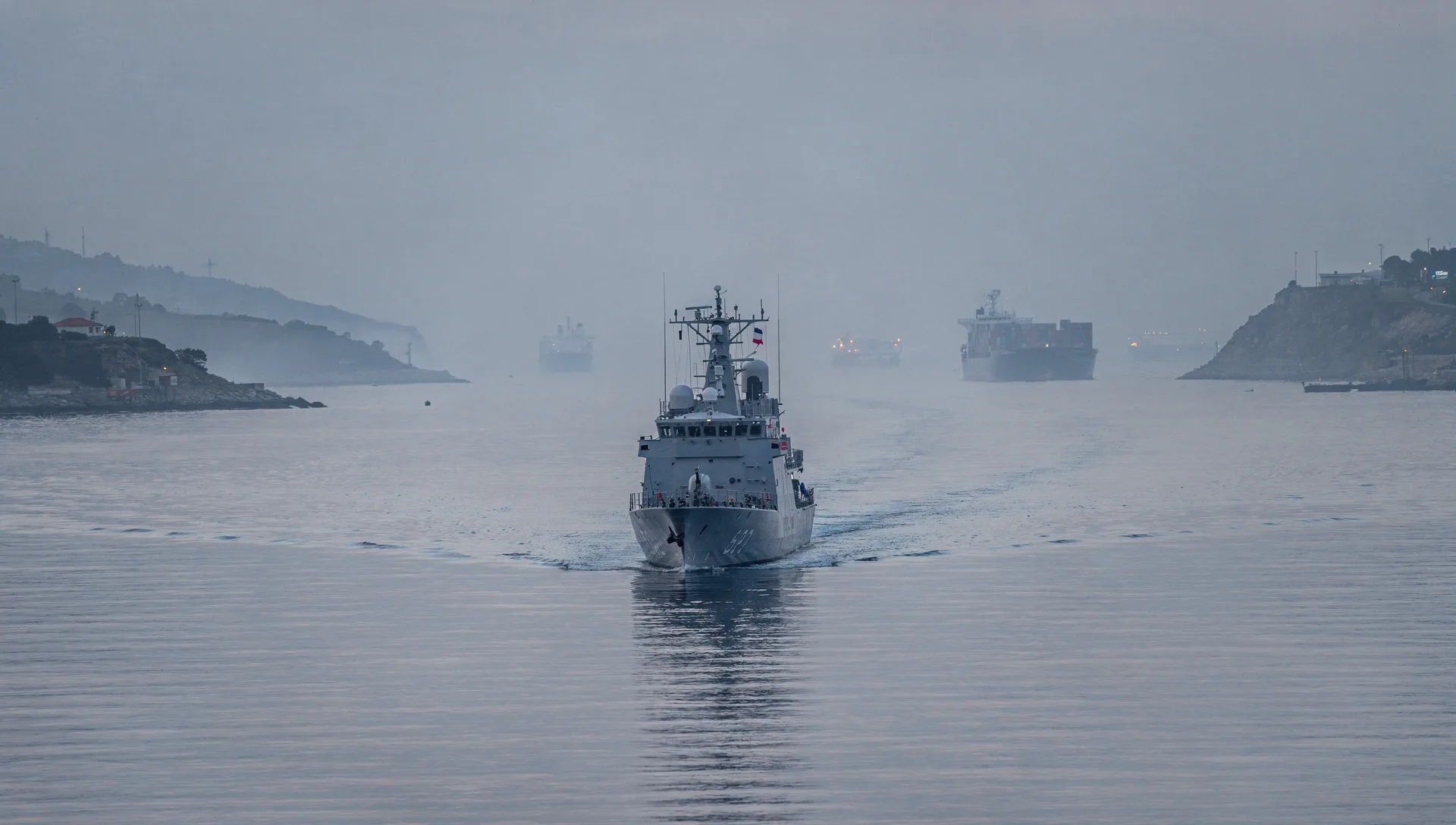
Enterprises anchoring continuity plans to "multiple cable providers" should put four questions to vendors that most contracts never answer. Where do the diverse paths converge: a shared strait, landing zone, or repair queue. Which national regulator or state carrier licenses each landing station, and what shutdown authority does it hold. Which repair ship services each route, how many faults sit ahead of it in queue, and how far away is its home port. Does the backup path route through satellite links transiting the same contested airspace already targeted by jamming.
None of those questions appear on a standard capacity map, and none get answered by counting the cables serving a facility. A regional operations center in Singapore, Rotterdam, or Alexandria with three "diverse" fiber paths and no answer to those four questions carries single-corridor risk it has not priced.
Fortius Intel note: Cable-count redundancy is a procurement metric, not a resilience metric. The corridors that failed together in the Baltic, at Matsu, and in the Red Sea were counted as separate risks until one ship, or one government, proved otherwise.
Methodology: Analysis draws on Carnegie Endowment for International Peace reporting on the Baltic Sea cable incidents (December 2024), NPR reporting on the Eagle S/Estlink 2 incident (December 2024), PBS NewsHour reporting on the Matsu cable cuts (February 2023), CSIS's subsea cable case study on Egypt (November 2025), the European Union Agency for Cybersecurity's "Undersea Cables: What is at Stake?" report (July 2023), and Defense News reporting on Baltic GPS jamming research (July 2025). All cited sources are publicly available.
Footnotes
1 Carnegie Endowment for International Peace, A Chinese-Flagged Ship Cut Baltic Sea Internet Cables. This Time, Europe Was More Prepared., December 2024. Documents the November 20, 2024 Yi Peng 3 cable cuts and the October 2023 NewNew Polar Bear damage to the Balticconnector pipeline and two cables. Available at https://carnegieendowment.org/emissary/2024/12/baltic-sea-internet-cable-cut-europe-nato-security
2 NPR, What to know about Finland, Russia's 'shadow fleet' and a severed undersea cable, December 27, 2024. Reports the December 25, 2024 Eagle S incident damaging the Estlink 2 power cable and two data cables. Available at https://www.npr.org/2024/12/27/g-s1-40114/finland-russia-vessel-undersea-cables
3 PBS NewsHour, Taiwan blames Chinese ships for cut internet cables, 2023. Reports the February 2 and February 8, 2023 cable cuts near Matsu and the April 20, 2023 repair start date. Available at https://www.pbs.org/newshour/world/taiwan-blames-chinese-ships-for-cut-internet-cables
4 Erin L. Murphy and Thomas Bryja, The Strategic Future of Subsea Cables: Egypt Case Study, Center for Strategic and International Studies, November 12, 2025. Cites 17 percent of global internet traffic and over 90 percent of Europe-Asia traffic transiting Egyptian waters, and ten named landing stations. Available at https://www.csis.org/analysis/strategic-future-subsea-cables-egypt-case-study
5 European Union Agency for Cybersecurity (ENISA), Undersea Cables: What is at Stake?, July 2023. Cites approximately 35 cable-laying vessels and 30 maintenance vessels worldwide, with only two repair ships based in the EU and one in the UK. Available at https://www.enisa.europa.eu/sites/default/files/publications/Undersea%20cables%20-%20What%20is%20a%20stake%20report.pdf
6 Defense News, Researchers home in on origins of Russia's Baltic GPS jamming, July 2, 2025. Reports near-daily GPS jamming across the Baltic since February 2022 traced to Kaliningrad and Baltiysk, and Finnair's spring 2024 suspension of flights to Tartu. Available at https://www.defensenews.com/global/europe/2025/07/02/researchers-home-in-on-origins-of-russias-baltic-gps-jamming/
About the author
Shekhar Attri, Co-Founder & CTO. An Indian Army Special Forces veteran with 21 years of service and a gallantry medal, Shekhar's corporate security advisory work spans Singapore, India, the Philippines, and the UAE, alongside PhD research on machine intelligence under incomplete information.