
TL;DR: Conflict-affected and high-risk areas (CAHRA) are defined by where a material comes from, not by who sells it to you, so the risk usually sits at the mine and the smelter several tiers back. A company that screens only its direct suppliers, or only the countries on the EU's indicative list, will miss most of it.
Key takeaways:
- EU Regulation 2017/821 has applied since 1 January 2021 to EU importers of tin, tantalum, tungsten and gold above set volume thresholds, and requires due diligence on minerals from conflict-affected and high-risk areas.
- The EU's CAHRA list is indicative and non-exhaustive by design, and the Commission updates it every three months.
- Verisk Maplecroft's 2026 data flags 44 countries as CAHRAs, up from 34 in 2021, and 11 of those are not currently assessed as being in conflict.
- Rubaya in eastern Congo, which Reuters reports produces about 15 percent of the world's coltan, has been under AFC/M23 control since 2024.
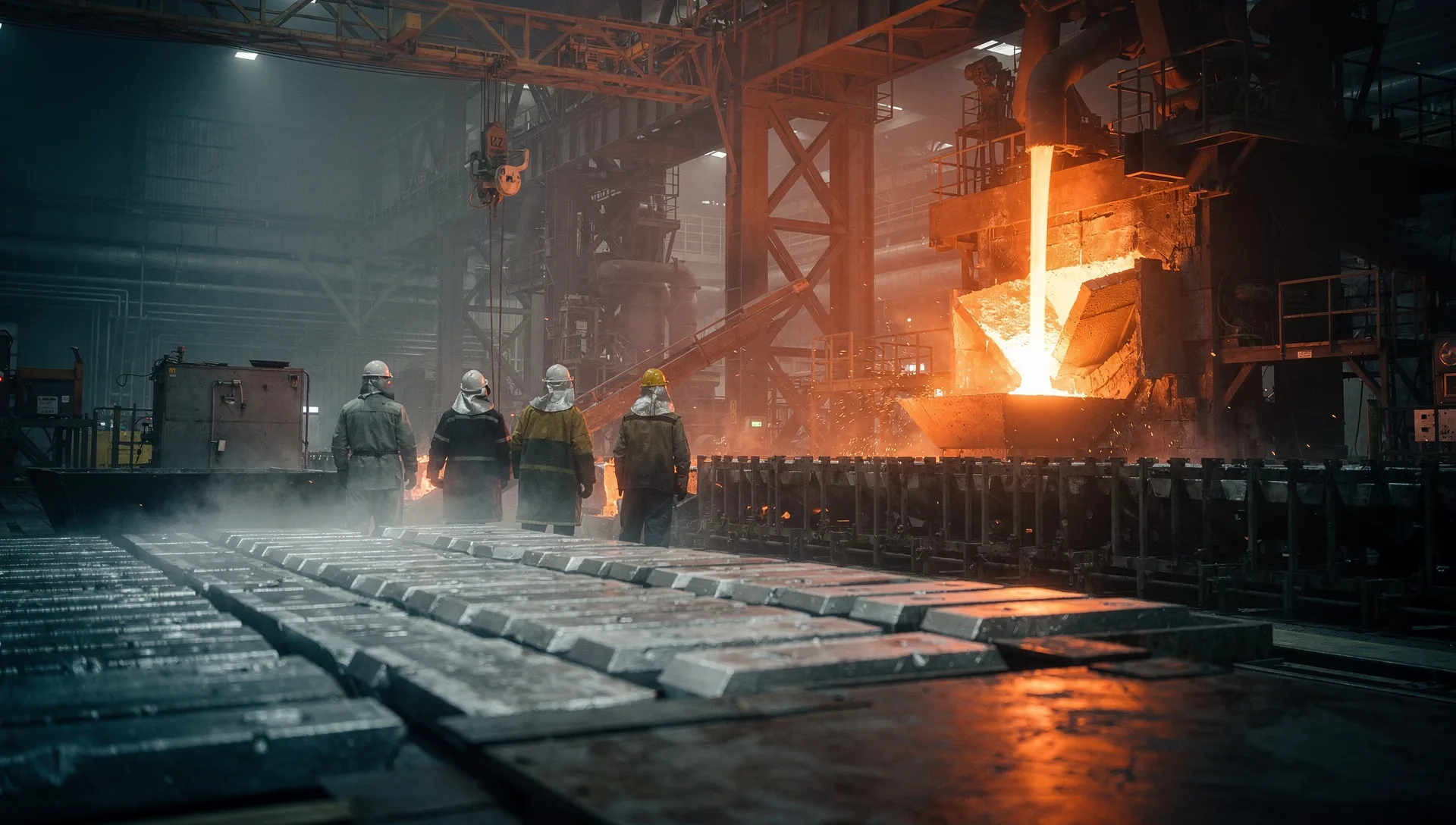
- The OECD and the Responsible Minerals Initiative both place the practical audit point at the smelter or refiner, where buyers still have influence.
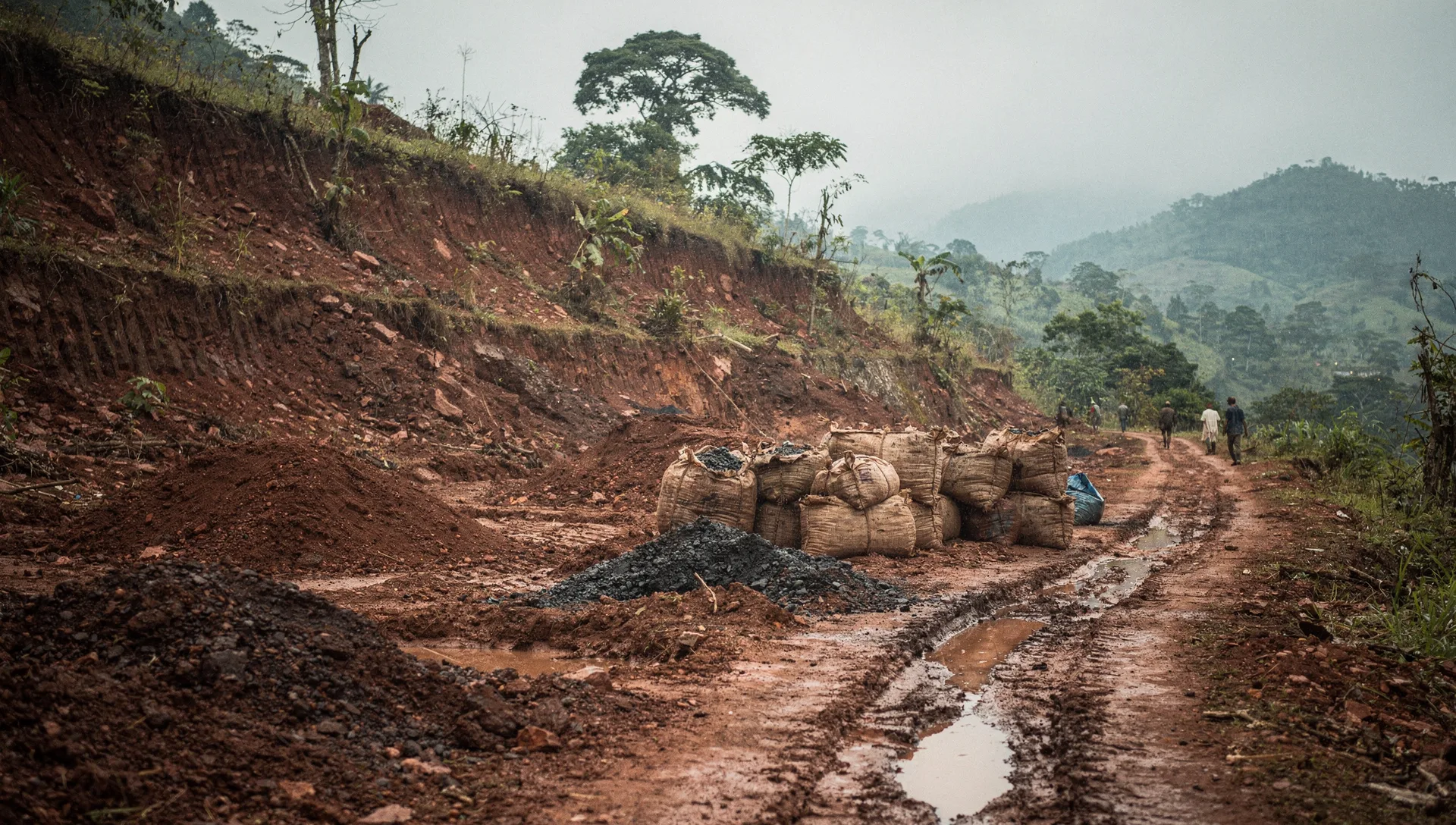
On 31 January 2026 a landslide at the Rubaya coltan mine in eastern Congo killed more than 200 people.[^1] The site has been run by the AFC/M23 rebel group since 2024 and produces about 15 percent of the world's coltan, the ore that is refined into tantalum.[^1][^2] Few companies that buy tantalum components have a contract with anyone in Rubaya. That is the problem CAHRA due diligence is meant to solve.
What the EU CAHRA List Leaves Out
The legal definition is broad. Regulation (EU) 2017/821 describes conflict-affected and high-risk areas as places in armed conflict or fragile post-conflict, places with weak or non-existent governance and security, and places with widespread and systematic violations of international law, including human rights abuses.[^3] The list the Commission publishes to help importers is narrower, and it says so.
- It is indicative. Article 14(2) asks the Commission for an "indicative, non-exhaustive, regularly updated list."[^3] The list's own site repeats that wording, and the Commission updates it every three months.[^4][^5] An area missing from it is not cleared.
- It covers four minerals. The regulation applies to EU importers of tin, tantalum, tungsten and gold, with thresholds set so that at least 95 percent of EU imports of each are covered. Those obligations have applied since 1 January 2021.[^3][^6] Verisk Maplecroft notes that the list "only covers a narrow set of countries associated with the production of four minerals."[^7]
- Conflict is not the only test. Maplecroft's 2026 data identifies elevated risk in 44 countries, up from 34 in 2021, and 11 of them, including Bangladesh and Kenya, are not assessed as being in conflict.[^8][^7] Its view is that "CAHRA cannot be identified by assessing armed conflict in isolation."[^7]
- The exposure is wider than metals. Maplecroft estimates that over 21 percent of global oil and gas export value, 16 percent of agricultural goods and 14 percent of metals flow from CAHRAs.[^8]
One caution on those numbers. The 44-country count and the trade shares come from Maplecroft's own risk data, and we found no independent dataset to check them against. What we infer: the direction matters more than the exact count. The set of places a buyer has to worry about has grown, and the official list was never meant to keep pace with it.

Supply Chain Risk Narrows at the Smelter
A downstream manufacturer cannot audit thousands of artisanal mine sites. The OECD guidance does not ask it to. It identifies a "control point" in each mineral chain, the smelter or refiner, where ore from many sources is transformed and where "there are relatively few companies."[^9] Its five-step framework runs from internal policy through red-flag review, reporting to senior management, an audit of that control point, and public reporting.[^9]
The Responsible Minerals Initiative, which has more than 500 member companies, builds its audit programme on the same idea. Its June 2026 briefing describes a "pinch-point approach" and states that collective buyer leverage reaches the smelter or refiner and then "diminishes further upstream."[^10] On 16 October 2025 the European Commission recognised the initiative's Responsible Minerals Assurance Process as the first supply chain due diligence scheme under the EU regulation.[^11]
The weak spot is what happens before ore reaches the smelter. Reuters reported in August 2025 that Rubaya ore was being mixed with Rwandan production to disguise its origin before export.[^2] UN experts said in July 2025 that coltan smuggling from M23-held areas had reached "unprecedented levels."[^12] A smelter that passes its audit can still be receiving material laundered upstream of its gate.
That is now being tested in court. In November 2025 International Rights Advocates sued Apple in the District of Columbia, naming three Chinese smelters it alleges processed coltan smuggled through Rwanda. Apple has said, in a statement cited in the coverage, that there was "no reasonable basis" to conclude that any smelter or refiner in its supply chain financed armed groups.[^13][^14] In February 2025 a Paris prosecutor dismissed a separate complaint by Congo against Apple subsidiaries as not sufficiently well founded, and Congo's lawyers said they would appeal.[^15]
The geopolitical risk here is not only reputational. A smelter's standing can change because of a court finding or a shift in who controls a mining district, and neither shows up in a direct supplier's quarterly scorecard.

What to Run Before the Next Audit Cycle
The US side is moving in the other direction. The SEC's conflict minerals rule has "remained at a practical standstill," with no enforcement of the due diligence report since a 2017 staff statement, though the annual Form SD filing was still due on 1 June 2026.1 On 2 June 2026 the chair and vice chair of the House Financial Services Committee asked the President to "terminate, revise, or waive" the rule.2 A company that relied on the US filing cycle to drive its programme may soon have no external clock at all.
What we recommend:
- Map to the smelter, not the supplier. For every product containing tin, tantalum, tungsten or gold, get the smelter and refiner list from suppliers and check each one against the conformant list.3
- Screen origin against more than the EU list. Treat the EU list as a floor and add a second source that tests for governance, security and human rights risk, not only active conflict.45
- Track control changes in mining districts. Rubaya changed hands in 2024.6 A district that changes control should trigger a review of every smelter known to source from it.
- Extend the method beyond 3TG. Maplecroft's trade figures suggest the same exposure sits in agricultural inputs, textiles and energy.7
This builds on our note on supply chain risk past tier one, which covered ownership chains, and our note on critical minerals and energy exposure, which covered processing concentration. Sector coverage is on our manufacturing page.
Fortius Intel note: Our recommendation is to make the smelter list a standing input to supplier onboarding, refreshed every quarter to match the EU list cycle. A programme built around an annual filing collects it once a year. By the time the next filing comes round, the district may have changed hands.
Methodology: this note draws on the text of Regulation (EU) 2017/821 on EUR-Lex; European Commission DG Trade pages on the regulation and the CAHRA list; OECD due diligence guidance materials; Responsible Minerals Initiative materials; Verisk Maplecroft's April and July 2026 CAHRA analysis; Reuters reporting on Rubaya as republished by TimesLive and Daily Maverick; AP reporting on the July 2025 UN Group of Experts report; Reuters and Al Jazeera reporting on litigation against Apple; Skadden on the SEC rule; and the House Financial Services Committee letter of 2 June 2026. Maplecroft country counts and trade shares are single-source. This is not legal advice.
Footnotes
-
Skadden, client alert on conflict minerals disclosures due 1 June 2026, 1 May 2026, https://www.skadden.com/insights/publications/2026/05/conflict-minerals-disclosures-due-june-1-2026 (retrieved 12 November 2026). Source for: the rule having "remained at a practical standstill"; the April 2017 staff statement on non-enforcement of the due diligence report; Form SD due 1 June 2026. ↩
-
US House Financial Services Committee, letter to the President on conflict minerals, 2 June 2026, https://financialservices.house.gov/UploadedFiles/2026-06-02_-_FSC_Letter_-_POTUS_on_Conflict_Minerals.pdf (retrieved 12 November 2026). Source for: the request to "terminate, revise, or waive" the rule. ↩
-
Responsible Minerals Initiative, critical minerals webinar slides, 30 June 2026, https://share.ansi.org/Shared%20Documents/Standards%20Activities/Critical%20Minerals/Standards%20Webinars%20June%202026/June%2030%20Presentations/RMI%20Critical%20Minerals%20Webinar%20Slides_30June2026.pdf (retrieved 12 November 2026), with membership from https://www.responsiblemineralsinitiative.org/ (retrieved 12 November 2026). Source for: the "pinch-point approach"; leverage that reaches the smelter or refiner and "diminishes further upstream"; more than 500 member companies. ↩
-
CAHRAs list project, https://www.cahraslist.net/ (retrieved 12 November 2026). Source for: the list's description of itself as an "indicative, non-exhaustive and updated list of CAHRAs." ↩
-
Verisk Maplecroft, "How to identify and assess CAHRA using Country Risk Data," 16 April 2026, https://www.maplecroft.com/solutions/supply-chain-risk/insights/how-toidentify-and-assess-cahra-using-country-risk-data/ (retrieved 12 November 2026). Source for: the EU list covering "only a narrow set of countries associated with the production of four minerals"; "CAHRA cannot be identified by assessing armed conflict in isolation"; Bangladesh and Kenya as CAHRAs not in conflict; same-publisher confirmation of the 44 and 34 counts. ↩
-
Daily Maverick (Reuters), report on how the Rubaya coltan mine funds M23, 18 August 2025, https://www.dailymaverick.co.za/article/2025-08-18-how-drc-coltan-mine-feeds-tech-world-and-funds-m23-rebels (retrieved 12 November 2026). Source for: M23 seizure of the area in April 2024; Rubaya producing about 15 percent of world coltan (same wire origin as footnote 1); ore mixed with Rwandan production to disguise provenance. ↩
-
Verisk Maplecroft, "Conflict and human rights: Risk hidden deep in the supply chain," 9 July 2026, https://www.maplecroft.com/solutions/supply-chain-risk/insights/conflict-and-human-rights/ (retrieved 12 November 2026). Source for: elevated CAHRA risk in 44 countries, up from 34 in 2021; 11 not currently assessed as in conflict; over 21 percent of global oil and gas export value, 16 percent of agricultural goods and 14 percent of metals flowing from CAHRAs, with textiles at more than a quarter. Single source: the publisher's own dataset. ↩
About the author
Shekhar Attri, Co-Founder & CTO. An Indian Army Special Forces veteran with 21 years of service and a gallantry medal, Shekhar's corporate security advisory work spans Singapore, India, the Philippines, and the UAE, alongside PhD research on machine intelligence under incomplete information.