Field Notes
OPEC Geopolitical Risk: Reading Production Decisions as a Corporate Planning Signal

TL;DR: OPEC+'s monthly output decisions move more than the price of crude; they move freight rates and producer fiscal pressure on separate, faster timelines, and a planning team that tracks only the barrel count is missing most of the signal.
Key takeaways:
- Seven OPEC+ producers raised output by 188,000 barrels a day for September 2026 on 3 August, the sixth straight monthly increase and the formal completion of a 1.65 million barrel-a-day voluntary cut unwound since April 2023.
- A separate 2 million barrels a day of 2022-vintage cuts stays in place through the end of 2026, and the group's next review is scheduled for 6 September.
- Brent crude rose from about 61 dollars a barrel in October 2025 to roughly 88 dollars by late August 2026, closing most but not all of the gap to Saudi Arabia's IMF-estimated fiscal breakeven of 94 dollars.
- VLCC freight rates from the Persian Gulf to Asia jumped 139 percent year on year in November 2025 on higher OPEC output and sanctions-driven tanker demand, then dropped more than 40 percent within two months.
Saudi Arabia, Russia, Iraq, Kuwait, Kazakhstan, Algeria and Oman agreed in a virtual meeting on 3 August 2026 to raise combined output by 188,000 barrels a day starting in September, the sixth consecutive monthly increase and the point at which the group finished restoring the 1.65 million barrels a day it had voluntarily pulled from the market since April 2023.[^1] Coverage of the decision led with the barrel figure. The figure a corporate planning team should be reading is what happens to freight and producer budgets on either side of it.
What the August Decision Actually Changed
The headline quota number is real, but it is only one of four moving parts in the same announcement, and the other three carry more geopolitical risk for a planning cycle than the 188,000 figure does on its own:
- The rollback is now complete. Seven producers are back to the output levels they held before the additional voluntary cuts began in April 2023, closing out an unwind that ran through six consecutive monthly meetings and was never announced as a single decision.[^1]
- A separate 2 million barrels a day stays cut. These are 2022-vintage reductions, distinct from the voluntary tranche just restored, and they remain in force through the end of 2026, meaning the group retains meaningful spare capacity it has chosen not to release yet.[^1]
- The next review lands 6 September, keeping the group on its established monthly cadence rather than locking in a longer pause.[^1]
- The March 2026 decision set the template. Eight countries, including the UAE, agreed on 1 March to resume unwinding the voluntary cuts at 206,000 barrels a day from April, while explicitly retaining "full flexibility to increase, pause or reverse the phase out."[^2] That flexibility clause is the operative fact. Every monthly number since has been provisional by the group's own stated terms, not a fixed glide path.
Reading the August number as a standalone barrel count misses that it is the sixth data point in a sequence the group itself has reserved the right to reverse.

What the Record Shows, What We Infer
Rystad Energy's Jorge Leon, commenting on the August decision, said "OPEC+ has finished unwinding its voluntary cuts," a reading that treats the sequence as mechanically complete rather than as a signal of continued loosening.[^1] What the record shows: the group has restored the 1.65 million barrels a day it removed in 2023, kept the separate 2 million barrels a day of 2022 cuts in place, and scheduled its next review on the normal monthly cycle rather than announcing an extended pause.[^1] What we infer, and this is inference rather than a stated fact from OPEC+ itself: the timing tracks a period in which Brent has moved from roughly 61 dollars a barrel in October 2025 to close to 88 dollars by late August 2026, a recovery that narrows but does not close the gap to the roughly 94 dollar fiscal breakeven the IMF estimated for Saudi Arabia's core budget, and 111 dollars once spending by the kingdom's Public Investment Fund is included.[^3][^4][^5] A producer group that had fully closed its budget gap would have less reason to keep restoring volume; one still short of it has an incentive to do both at once, sell more barrels and hope price holds, which is a harder balance to read from the quota number alone.
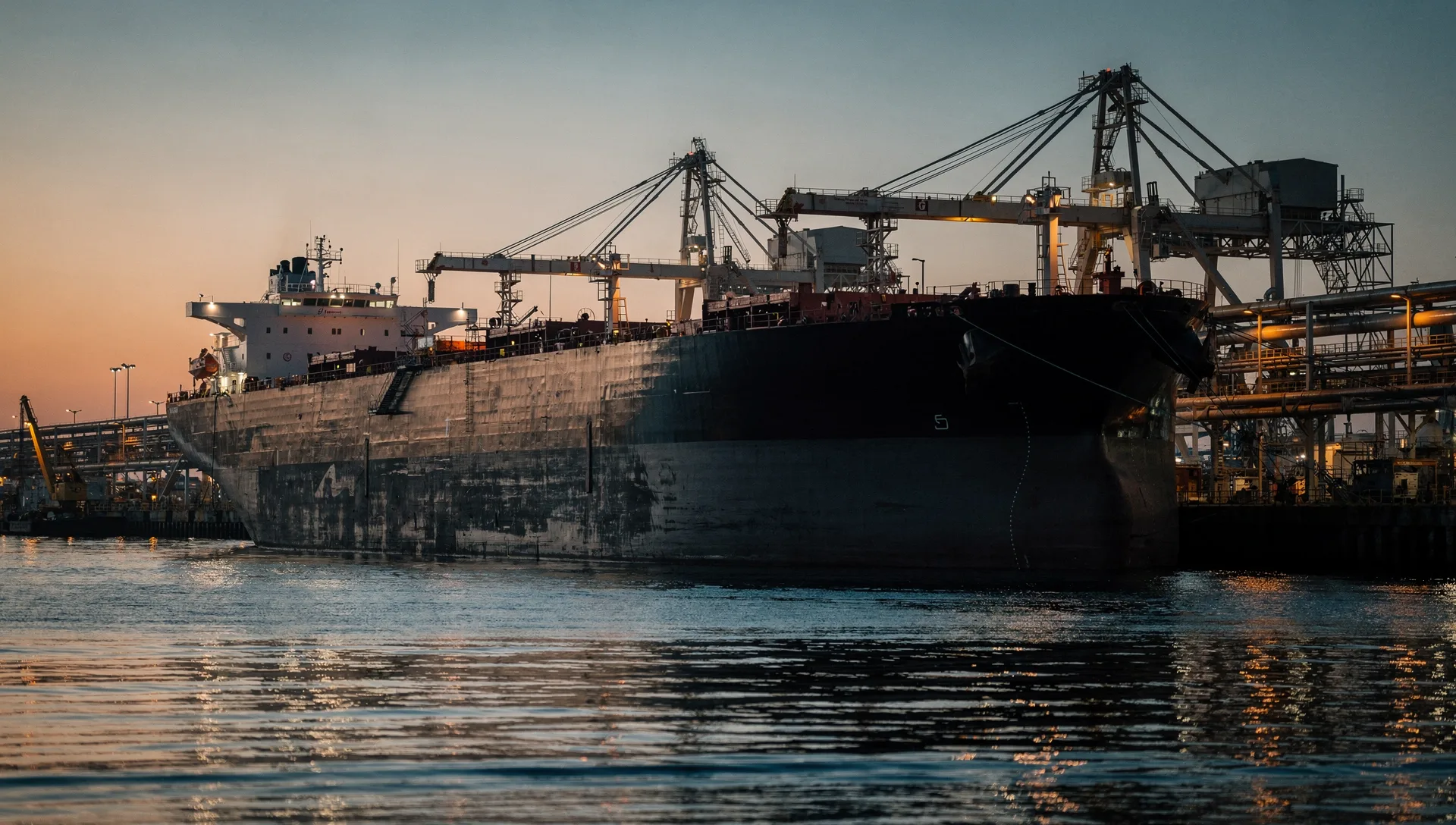
The same August cycle carried a freight effect that moved on its own clock, independent of the fiscal story. The US Energy Information Administration recorded VLCC rates from the Persian Gulf to Asia up 139 percent year on year in November 2025 and rates to the US Gulf Coast up 118 percent, driven by a combination of higher Persian Gulf output following earlier OPEC increases, seasonal winter demand in East Asia, and sanctions-related shifts that pushed India's buyers away from discounted "shadow fleet" barrels and back toward conventional Gulf supply.[^6] By January 2026 those same routes had fallen 43 and 55 percent respectively as the seasonal and vessel-scarcity pressure eased.[^6] None of that swing showed up in the OPEC+ communique. All of it showed up in the landed cost of a cargo booked in November versus one booked in January.

Three Questions Worth Running Against Every OPEC+ Announcement
A planning team reading these releases as a single crude-price input is working from an incomplete signal. Three separate questions belong in that review each month:
- The flexibility question. Does this month's adjustment sit inside a stated reversible sequence, as March 2026's language made explicit, or has the group signaled a firmer commitment? A reversible sequence deserves a shorter planning horizon than a locked one.
- The freight question. Is the current tanker rate environment closer to the November 2025 peak or the January 2026 trough? The spread between those two points, well over 100 percentage points on some routes, is often larger than the headline price move for the same period.1
- The breakeven question. How far is the relevant producer state's actual fiscal position from its budget breakeven this quarter, and is that gap widening or narrowing? A state closing the gap has less reason to keep adding supply; one still short of it has more.
None of these three questions is answered by the barrel figure in the press release. All three move the actual cost and reliability of a crude or freight commitment made against that release, which is where the geopolitical risk in an OPEC+ decision actually sits, several steps past the number analysts quote first. A team that only updates its planning assumptions when the headline quota changes will still be caught out by a freight spike or a producer's fiscal squeeze that never appears in the communique at all.
Fortius Intel note: The barrel figure in an OPEC+ statement is the input everyone already prices. The freight spread and the producer fiscal gap behind it are not, and both move faster and further than the quota itself in most months.
This analysis draws on OPEC's own press releases for its March and August 2026 meetings, US Energy Information Administration tanker rate data published in January 2026, IMF regional fiscal estimates for Saudi Arabia reported by World Oil in October 2025, and Brent crude price reporting from Fortune and Forbes Advisor in late August 2026, all retrieved 29 August 2026.
Footnotes
Footnotes
-
US Energy Information Administration, "Crude oil tanker rates reached multi-year highs in late 2025," 27 January 2026. https://www.eia.gov/todayinenergy/detail.php?id=67064 (retrieved 29 August 2026). Source for: VLCC rate increases of 139 percent (Persian Gulf to Asia) and 118 percent (Persian Gulf to US Gulf Coast) year on year in November 2025, the cited causes including higher OPEC output and sanctions-driven shifts in tanker demand, and the 43 and 55 percent rate declines on those same routes by January 2026. ↩
About the author
Jay Bimbrah, Co-Founder & COO. A former Scotland Yard counter-terrorism investigator, Jay has advised EMEA tier-1 banks and Lloyd's market firms on distinguishing real exposure from theoretical risk.