
Field Notes
Geopolitical Risk Outlook 2027: How to Read the Annual Forecasts Without Copying Them Into Your Register

TL;DR: The 2027 forecast season opens this month, and the outlooks work best as raw material for a company's own exposure map rather than as ranked lists to paste into a risk register. The 2026 season shows why: the war that halted Gulf tanker traffic in late February was not one of the ten headline risks on the best-known list.
Key takeaways:
- Control Risks launches RiskMap 2027 on 10 November 2026, and Verisk Maplecroft released its last Political Risk Outlook in parts between 13 November and 11 December 2025.
- Eurasia Group published Top Risks 2026 on 5 January 2026, led by the "US political revolution", and none of its ten headline risks named Iran or the Gulf.
- US and Israeli strikes on Iran began on 28 February 2026, and by 1 March no tankers were moving through the main Hormuz shipping lanes.
- In December 2025 Maplecroft placed seven of the world's largest economies, five of them in Europe, among the highest-risk countries for civil unrest.
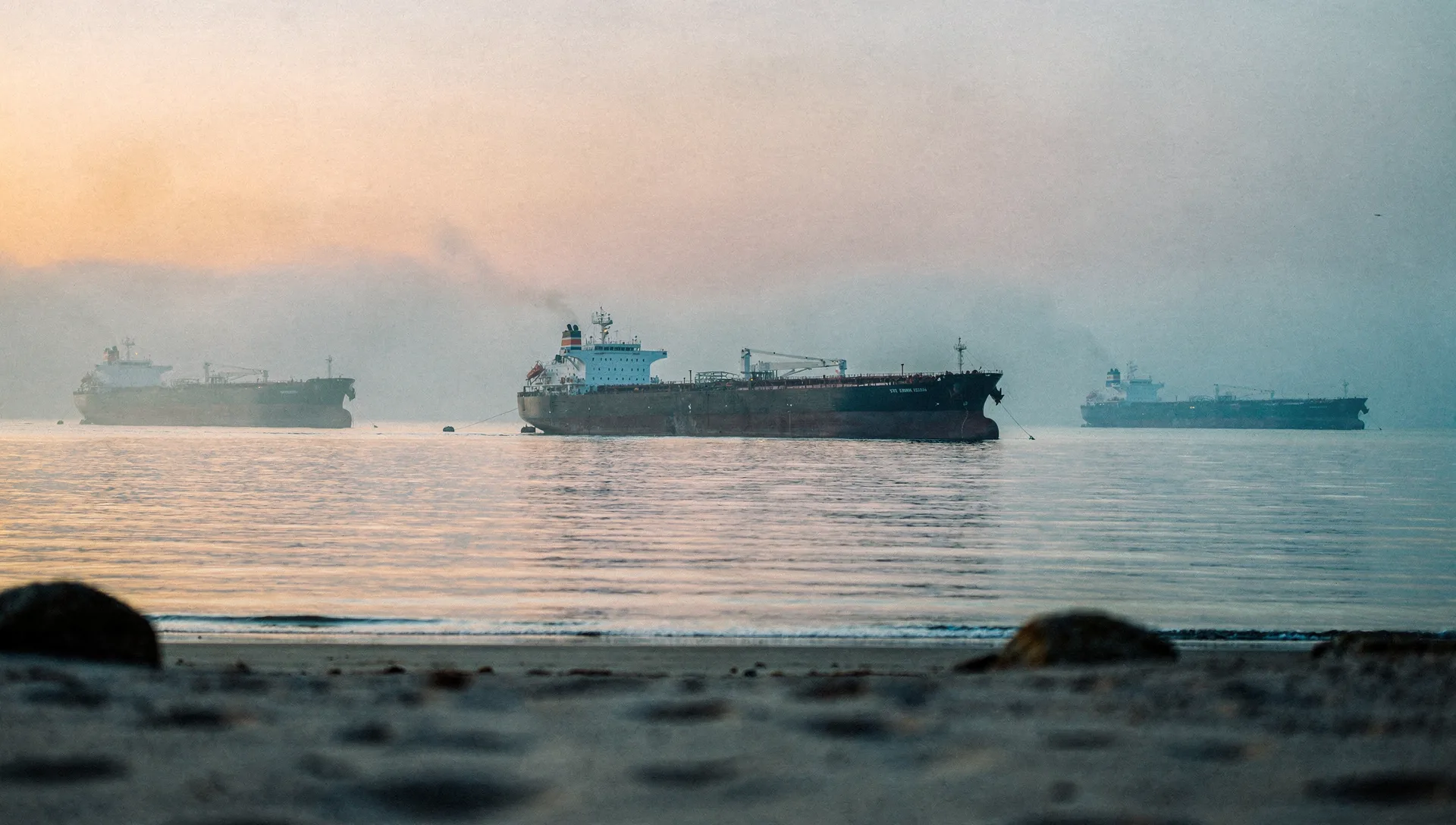
On 5 January 2026 Eurasia Group published its ten top risks for the year, led by what it called the US political revolution.[^1][^2] None of the ten headline risks named Iran or the Gulf. Fifty-four days later the United States and Israel struck Iran, and by 1 March the tracking firm Windward saw no active tanker transits in the main Hormuz lanes.[^3][^4]
The Forecasts Did Their Job. Many Registers Did Not
It is tempting to call that a forecasting miss. We think it was mostly a reading problem. An annual outlook ranks what its authors judge to be the biggest moves in the global system that year. A risk register should rank what would hurt one company. The two lists overlap less than most board packs assume, and the gap shows up in four ways.
- Different units. Eurasia Group's 2026 list dealt in systems: American politics, China's deflation, the USMCA review, artificial intelligence.[^1] A register entry is about an asset, a contract or a revenue line.
- Different calendars. The season runs from November to January. Maplecroft published its 2025 outlook in parts from 13 November to 11 December 2025, Control Risks launches RiskMap 2027 on 10 November 2026, and Eurasia Group's list arrives in early January.[^5][^6][^1] A register that adopts one of these as its annual input inherits that publisher's cut-off date.
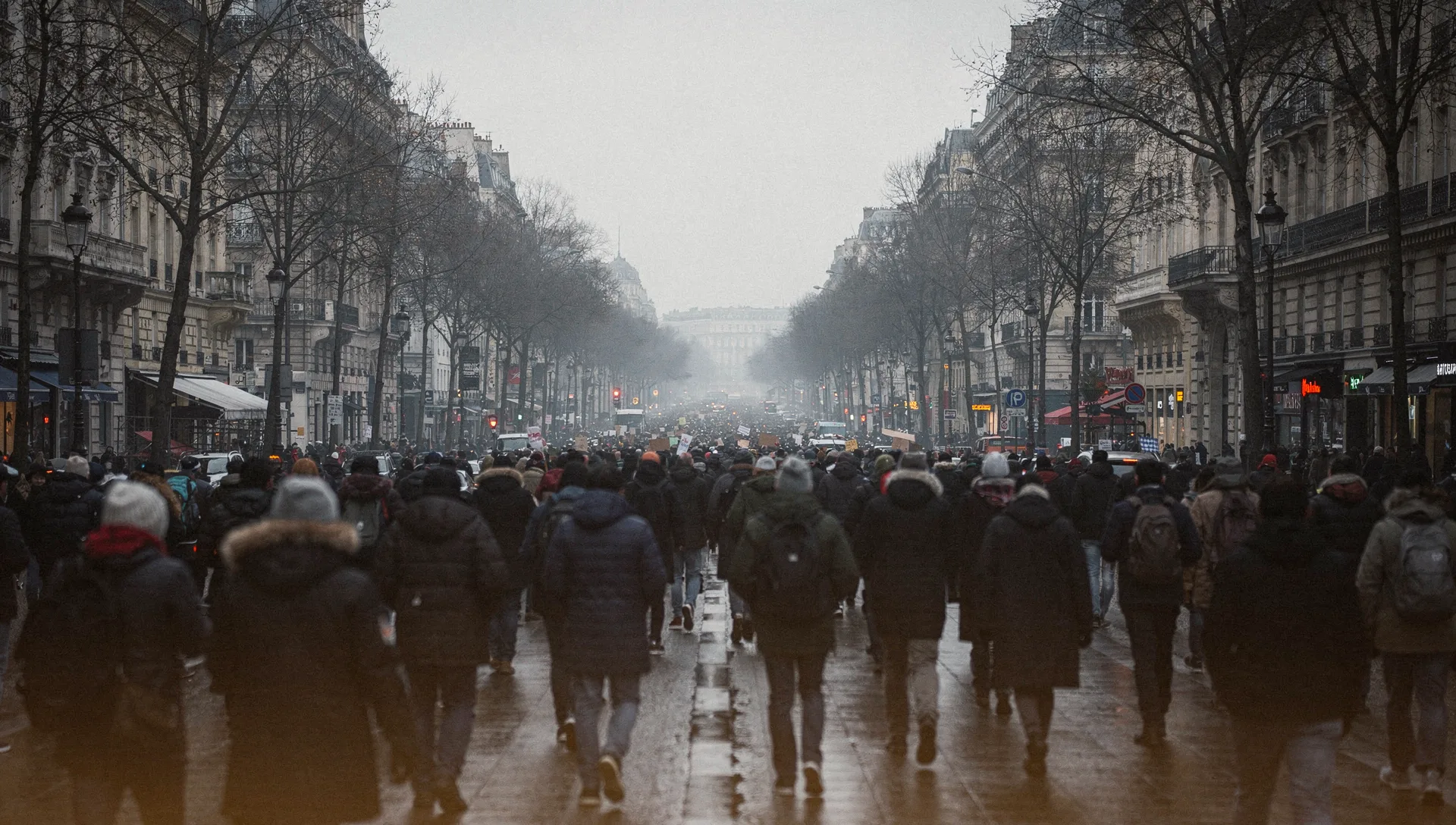
- Different home ground. Each house leads with what its own data sees best. Maplecroft's civil unrest data put seven of the world's biggest economies among the highest-risk countries, five of them in Europe, with the US ranked third.[^5][^7] That is a strong signal for a retailer with stores in Paris and a weak one for a refiner buying Gulf crude.
- Shared silence. Dragonfly's Strategic Outlook 2026 led on hard power, geoeconomic coercion, adversarial AI, climate and space, and flagged the November 2026 US midterms as a source of unrest risk.[^8] The published summary of that report did not mention the Gulf either.
The outlooks were doing what they are built to do. A list written for thousands of readers cannot also be a list written for you.
Reading a Geopolitical Risk Outlook in Three Passes
What the record shows: the Gulf disruption of 2026 was a long event, not a single shock. Tanker traffic stopped in the first days of March, and after a mid-June interim deal the truce broke down in early July following attacks on commercial ships, leaving traffic through the strait at a near standstill again.[^3][^4][^9] In July the EU cited the disruption from the Hormuz closure when it froze the adjustment of the Russian oil price cap.[^10]
What we infer: the companies that handled this well were unlikely to have relied on a forecaster naming it in January. They would have needed a standing view of their own Gulf exposure and a trigger for acting on it. We have no survey of how companies actually performed, so treat this as reasoning from the mechanism, not as a finding.
What we recommend: read each 2027 outlook three times, with a different question each time.
- Translate. For every headline risk, write the one or two routes by which it reaches your company: a supplier country, a shipping lane, a customer's regulator, a sanctions list. If you cannot name a route, the item stays on the reading list and off the register.
- Subtract. List the exposures you already know you carry, then mark the ones that no outlook mentions. Those gaps matter more than the overlaps, because nobody outside the company is watching them for you.
- Set a trigger. For each risk that survives, name the observable event that would move it from watch to action, and the person who acts. A ranking without a trigger is a reading exercise.
Take one item through all three passes. Maplecroft's civil unrest finding names France, Germany, Spain, Italy and the UK.[^7] For a logistics firm with depots in those markets, translation gives two routes: roads blocked during national strikes and damage to sites. Subtraction asks what the finding leaves out, such as a port outside those five countries that most of the firm's inbound freight passes through. The trigger might be a union strike call with a fixed date, which gives the firm notice to move stock. The owner is the regional operations head, not the risk team. The outlook supplied only the first step of that chain.

Scenario Planning With Borrowed Assumptions
The longer documents in the season are often more useful than the top ten lists, because they show their working. Maplecroft's "Beyond the storm" outlook of 11 December 2025 argued that volatility will remain the norm to the end of the decade.1 Oxford Economics, in a 26 October 2026 briefing on the UAE, named geopolitical tensions and shipping disruption as the main risks to that economy and forecast oil falling to between $80 and $100 a barrel by the end of 2027.2
Use these as inputs to your own scenarios, not as the scenarios themselves. A forecaster's central case is built for its whole client base. Yours should start from the two or three exposures that would hurt the business most, then borrow the outlooks' assumptions on oil, tariffs or unrest as ranges to test against. That is where geopolitical risk becomes a number a finance team can use.
The US midterm vote taking place today is a fair test. Its result will feature in every 2027 outlook. What it changes for your own tariff bill or sanctions exposure is a question only your trade data can answer, and that answer will not appear in anyone else's report.
The WEF report critique looks at one January document in depth, and the risk register piece covers where these risks should sit once they are in. For a company-specific read of the 2027 season, start with the Fortius brief.
Fortius Intel note: Before RiskMap 2027 lands on 10 November, write down the five external events that would cost your company most next year without looking at any published list. Then compare your five against the outlooks as they arrive. Any item on your list that no outlook mentions should get a named owner first, because it is the exposure least likely to be flagged to you by anyone else.
Methodology: this note draws on the published pages of Eurasia Group, Verisk Maplecroft, Control Risks and Oxford Economics, reporting from Axios, Global Reinsurance, Supply Chain Digital, gCaptain and World Oil (Bloomberg), Windward's maritime daily, and the Wikipedia chronology of the 2026 Hormuz crisis for background dates. Each dated fact was checked against a second independent source where one exists.
Footnotes
-
Verisk Maplecroft, "Political Risk Outlook," https://www.maplecroft.com/resources/outlooks/political-risk-outlook/ (retrieved 3 November 2026). Source for: the 2025 Political Risk Outlook articles dated 13 November to 11 December 2025; the 4 December 2025 civil unrest article stating that seven of the world's biggest economies are among the highest-risk countries for civil unrest; and the 11 December 2025 "Beyond the storm" outlook stating that volatility will remain the norm to the end of the decade. ↩
-
Oxford Economics, Sanele Mjikane, "Geopolitics and shipping disruption are the biggest risks for 2027," 26 October 2026, https://www.oxfordeconomics.com/resource/geopolitics-and-shipping-disruption-are-the-biggest-risks-for-2027/ (retrieved 3 November 2026). Source for: geopolitical tensions and shipping disruption named as the primary risks to the UAE economy; and the forecast of oil prices falling to between $80 and $100 a barrel by the end of 2027. This is the publisher's own forecast and has no independent cross-check. ↩
About the author
Shekhar Attri, Co-Founder & CTO. An Indian Army Special Forces veteran with 21 years of service and a gallantry medal, Shekhar's corporate security advisory work spans Singapore, India, the Philippines, and the UAE, alongside PhD research on machine intelligence under incomplete information.