Field Notes
Country Risk Analysis Should Start With the Counterparty, Not the Country

TL;DR: A country score gives every company inside a border the same number, while sanctions, banks and software vendors act on individual companies. India's sovereign rating rose in August 2025 as one Indian refinery lost a bank and, for a few days, its email, so country risk analysis has to score the counterparty first.
Key takeaways:
- S&P raised India from BBB- to BBB on 14 August 2025, its first upgrade in 18 years, 27 days after the EU listed Nayara Energy, an Indian refinery part-owned by Rosneft.
- Nayara ran at 70 to 80 percent of its 400,000 barrel a day capacity in late July 2025 and was still there in October, with State Bank of India no longer processing its trade payments.
- Reliance stopped feeding Russian crude to its Jamnagar export refinery from 20 November 2025, while cargoes arriving after that date went to the domestic refinery on the same site.
- The EU ban on refined products made from Russian crude took effect on 21 January 2026 and names five exempt partner countries. India is not one of them.
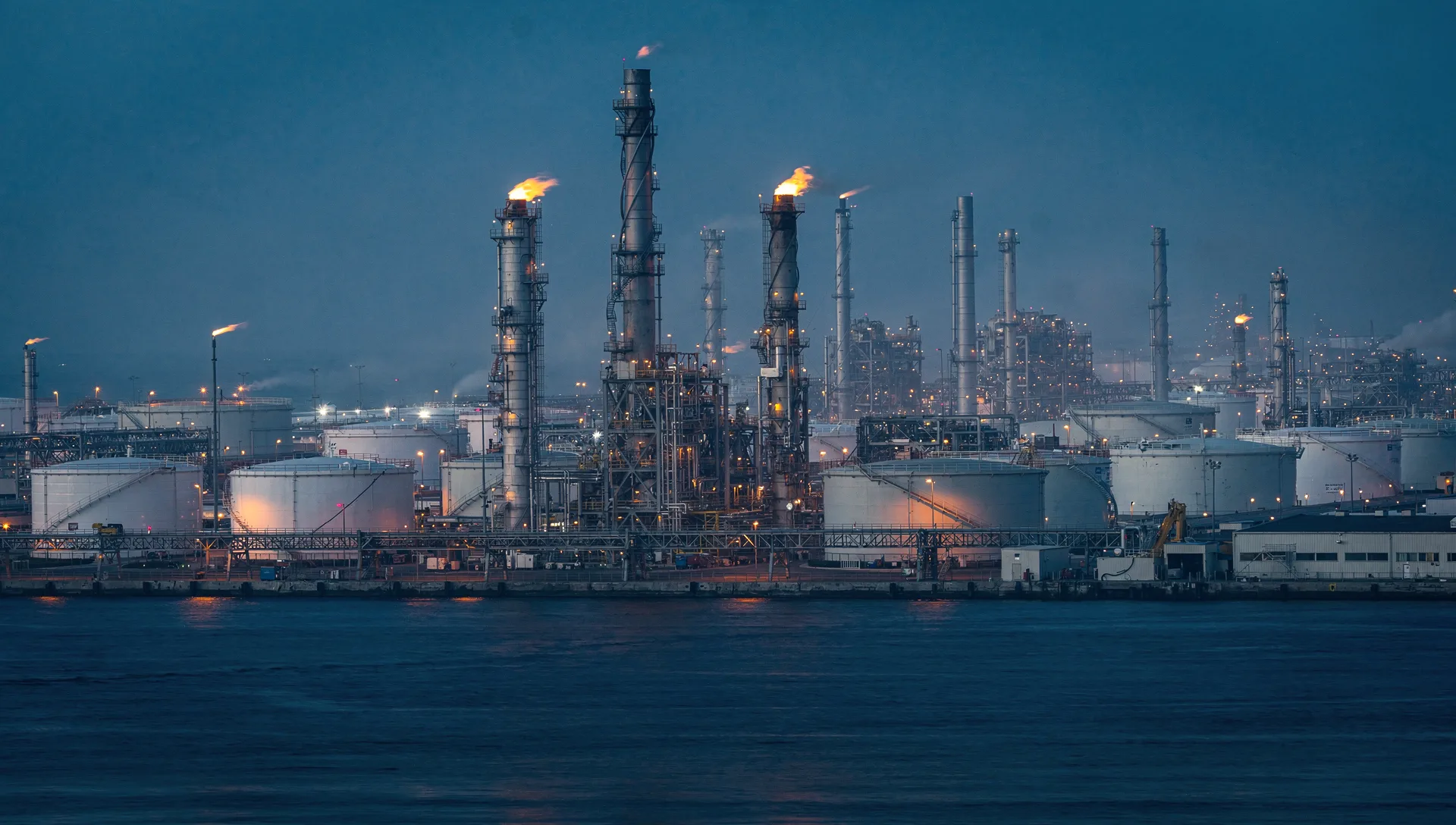
S&P raised India's sovereign rating to BBB from BBB- on 14 August 2025, the first upgrade in 18 years.[^1] Two days earlier, State Bank of India (SBI) was reported to have stopped processing trade and foreign currency transactions for a 400,000 barrel a day refinery in Gujarat.[^2][^3] That refinery is Nayara Energy. The EU had put it on its asset freeze list on 18 July, and Rosneft owns 49.13 percent of it.[^3][^4][^5]
Two Indian Refiners, One Sovereign Rating
S&P's stated reasons were economic resilience, fiscal consolidation and policy stability.[^1] Nothing in them concerned sanctions, and nothing should have. A sovereign rating answers whether a government can service its debt. It never claimed to say anything about a refinery in Vadinar.
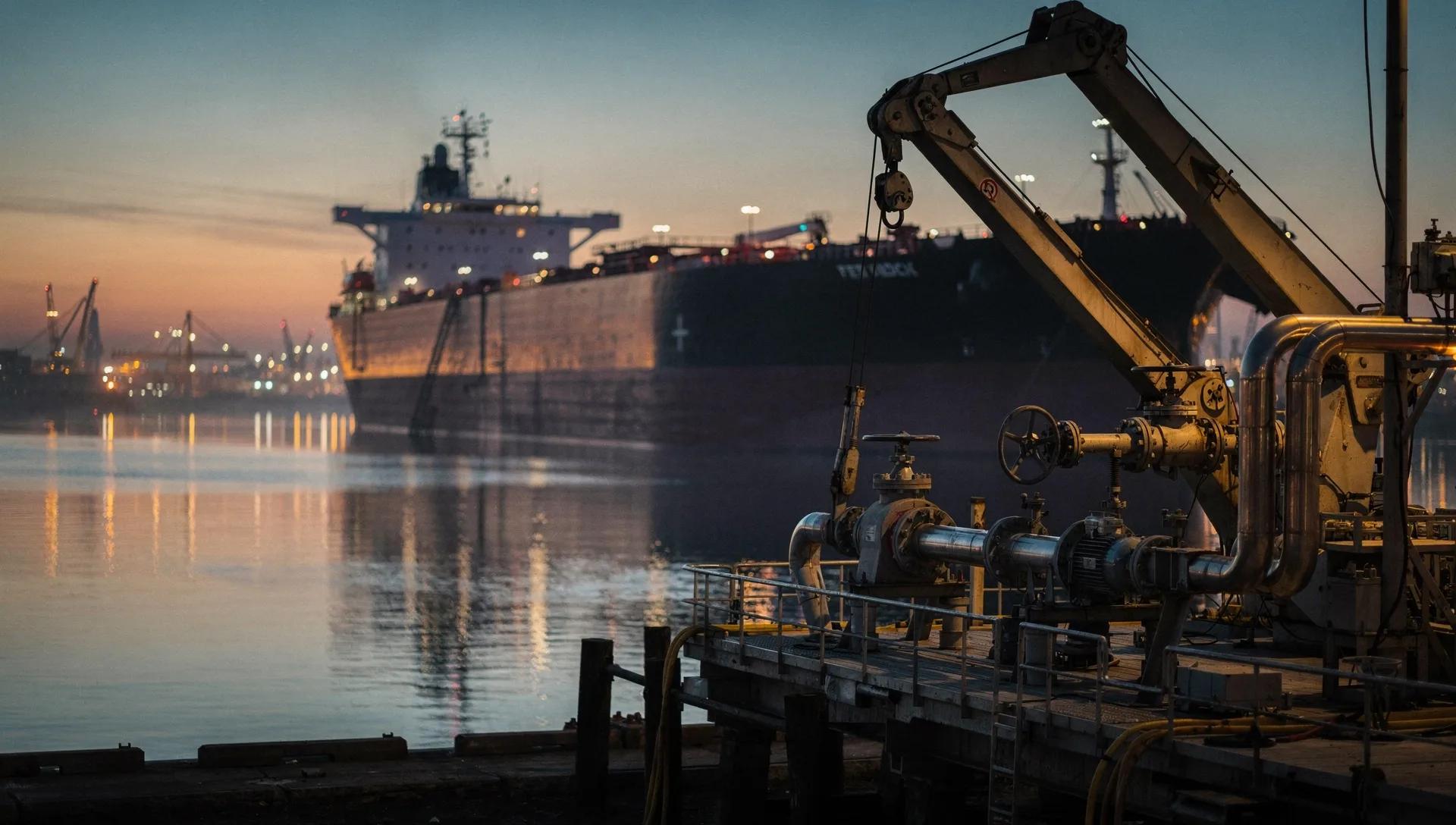
Inside the same border, the picture split. By the end of July Nayara was running at 70 to 80 percent of capacity, against close to 100 percent for a typical Indian plant.[^5] Bloomberg's report noted that keeping the plant running depended on fuel sales at home and abroad and on crude imports, and those needed tankers, maritime insurers and western financiers.[^5] None of them answers to India's sovereign rating. In October it was still at 70 to 80 percent, and it had pushed more of its fuel into the domestic market because some overseas buyers could not get payments through.[^6][^7] The government then stepped in. The Finance Ministry asked UCO Bank to lead Nayara's payments after SBI stepped back.[^8]
Reliance Industries met the same EU rule from the other side. Its Jamnagar complex has export and domestic refineries. From 20 November 2025 the export unit stopped taking Russian crude, so that fuel shipped to Europe would stay eligible once the EU product ban began on 21 January 2026. Cargoes arriving after that date went to the domestic unit.[^9][^4][^10] One company, one site, two risk profiles, and the difference was set by where the fuel goes.
What the record shows: India's rating rose while one refiner was listed and another rerouted its crude. What we infer: the exposure came from ownership and destination, and a country score has no field for either. What we recommend: score the counterparty first, and treat the country number as one input to that score.
Four Facts a Country Score Cannot Carry
Nayara's first weeks show four entity-level facts that moved its risk while the sovereign number went up.
- Ownership, and which list applies. Nayara sits in India and was listed by the EU as a refinery part-owned by Rosneft.[^4] Which list matters depends on where a company sells and banks, not on where it is registered.
- Where the output goes. The EU ban covers fuel made from Russian crude and names five exempt partner countries: Canada, Norway, Switzerland, the UK and the US.[^4][^10] India is not one of them, so Nayara's flows had to change, and so did Reliance's.
- Who clears the payments. SBI stopped handling Nayara's trade and foreign currency business to limit its own compliance risk.[^2] SBI was not the target. That is the mechanism behind secondary sanctions.
- What it runs on. After the listing Microsoft suspended email and Teams access for Nayara staff. It restored them days later, just before a Delhi High Court hearing on Nayara's complaint.[^11]
A country score still does its own job. It says whether the state can pay its debts and let money cross the border. It cannot say whether this supplier can ship, get paid or open its inbox next week. The unit-of-analysis problem makes the same argument at corridor level. This is the counterparty version.
Running Country Risk Analysis One Counterparty at a Time
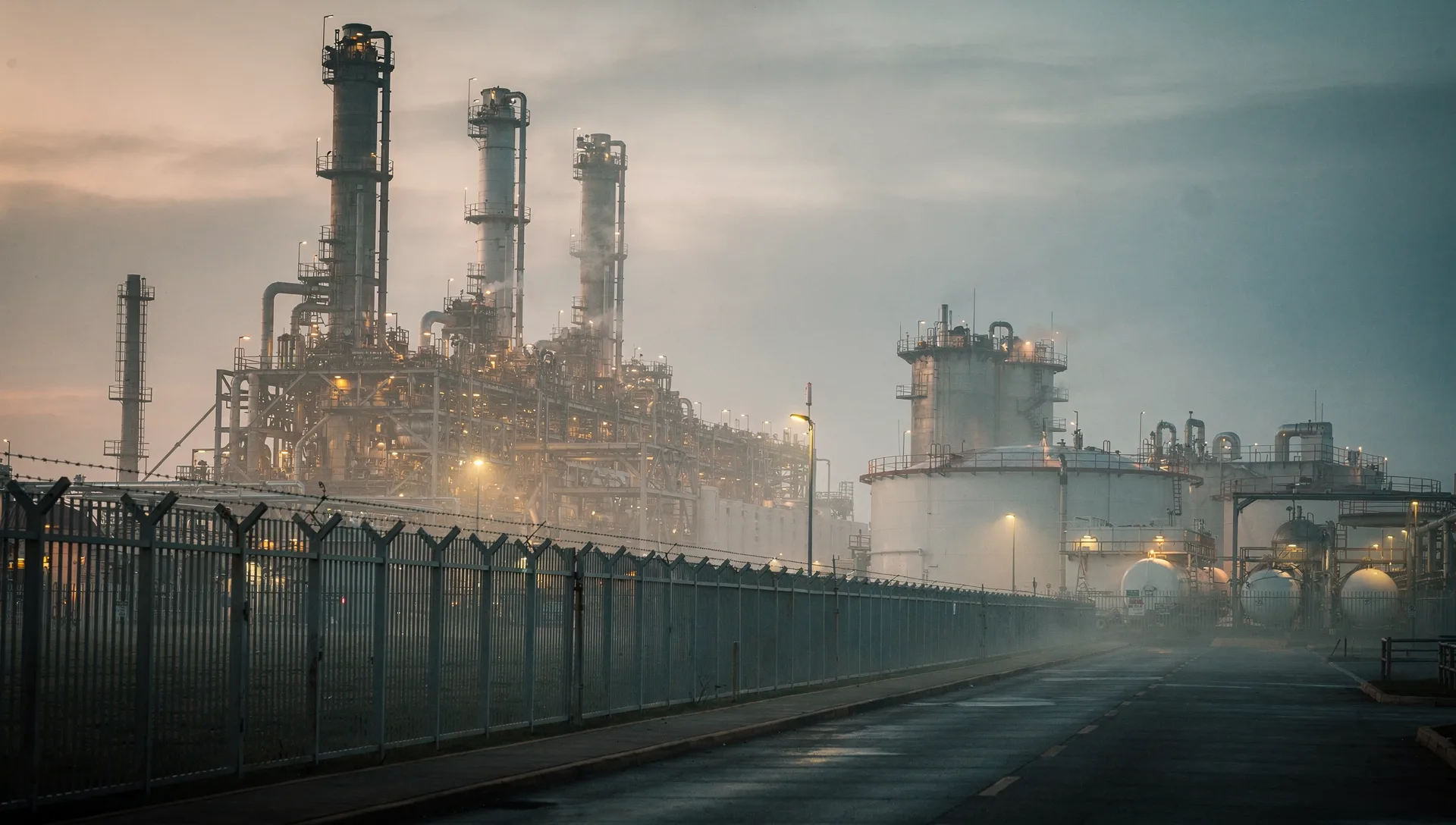
Geopolitical risk reaches a company through the entities around it, so the analysis has to start there. Take one country where you hold five or more counterparties and put four questions to each. Who owns a stake large enough to matter, and which lists do those owners appear on? Which jurisdictions do its customers and banks sit in? Which unit, route or product line carries the sensitive flow? Which vendors could it not replace in a week?
Score each answer as better than, level with or worse than the country number, and let the worst answer set the counterparty's score, not the average. A refinery with clean ownership and a compromised bank is a compromised refinery. Rescore when a list, a bank or a rule changes, not when the rating calendar says so.
You do not need to score every supplier by hand. Use the country number to decide where to look first, then spend the analyst hours on the counterparties whose loss would stop revenue or production. A sanctions listing is the loud version of this problem, and most counterparties will never get one. What carries over from Nayara is the set of questions, not the odds of the outcome. Most cards will show small gaps against the country number, and even a small gap can change payment terms.
Each score should end in a decision that someone owns: keep terms, shorten payment terms, qualify a second bank route, or move volume before a rule date. The Nayara case shows how much time that can buy. The EU set a six-month transition between adopting the product ban and applying it,1 and Reliance used part of it, closing its export unit to Russian crude two months before the rules bit. A card that already recorded product routes would have shown that unit as exposed the day the ban was published, with months to spare. A risk scan that starts from the counterparty list, not the country list, is one way to build that card.
Fortius Intel note: If every counterparty you score in one country lands on that country's number, the review has described the country and left the counterparties unscored. Run the four questions before the next country review, not after it.
Methodology: this analysis draws on S&P Global, Bloomberg, Business Standard, The Register and White & Case reporting on Nayara Energy, Reliance and the EU's 18th sanctions package, with each dated fact checked against at least two independent sources.
Footnotes
-
S&P Global Commodity Insights, "EU sanctions on India's Vadinar refinery raise questions on crude tracking, enforcement," 21 July 2025, https://www.spglobal.com/commodity-insights/en/news-research/latest-news/crude-oil/072125-eu-sanctions-on-indias-vadinar-refinery-raise-questions-on-crude-tracking-enforcement (retrieved 24 September 2026). Source for: the 18 July 2025 EU listing of Nayara Energy, the 400,000 barrel a day capacity of the Vadinar refinery, and the six-month transition period before the EU ban on refined products made from Russian crude. ↩
About the author
Jay Bimbrah, Co-Founder & COO. A former Scotland Yard counter-terrorism investigator, Jay has advised EMEA tier-1 banks and Lloyd's market firms on distinguishing real exposure from theoretical risk.