
Field Notes
Supplier Concentration Risk: When Your Second Source Is the Same Country

TL;DR: In October and November 2025, automakers with multiple chip and magnet suppliers on paper still halted production lines because the actual bottleneck, an assembly plant in Dongguan or a magnet refiner in China, was the same regardless of which vendor's name was on the purchase order. Supplier concentration risk survives dual-sourcing whenever the second source shares a country, a port, or a raw material with the first.
Key takeaways:
- Dutch authorities invoked the Goods Availability Act, a rarely used wartime-era law described as "highly exceptional," to take control of Nexperia on October 13, 2025.[^1]
- On October 9, 2025, China separately expanded its export licensing regime to cover foreign-made parts and assemblies containing Chinese rare earth materials, effective December 1, 2025, extending its chokepoint beyond raw mineral exports.[^6]
- Rare earth import volumes fell within weeks of the April 2025 controls: 58% in the United States, 78% in India, 73% in South Korea, and 47% in Germany, according to Wood Mackenzie.[^7]
- The United States has committed an estimated $1.4 billion to rare earth mining, separation, and refining projects since the 2025 shock, with commercial-scale output still several years away.[^7]
- European rare earth prices rose to as much as six times Chinese domestic prices after the April 2025 export controls, according to IEA analysis.[^6]
Honda, Ford, GM, Nissan, Mercedes-Benz, BMW, Renault, Volkswagen, and Volvo all reported production constraints in late 2025, and none of them relied on a single chip supplier.[^3] What they had was a supply base that looked diversified on an org chart and converged on one facility once traced back far enough: an assembly and test plant in Dongguan, China. China choked off that plant's exports within days after the Dutch government invoked a rarely used wartime law on October 13, 2025 to take operational control of Nexperia, headquartered in Nijmegen and owned by China's Wingtech since 2018.[^1][^2]
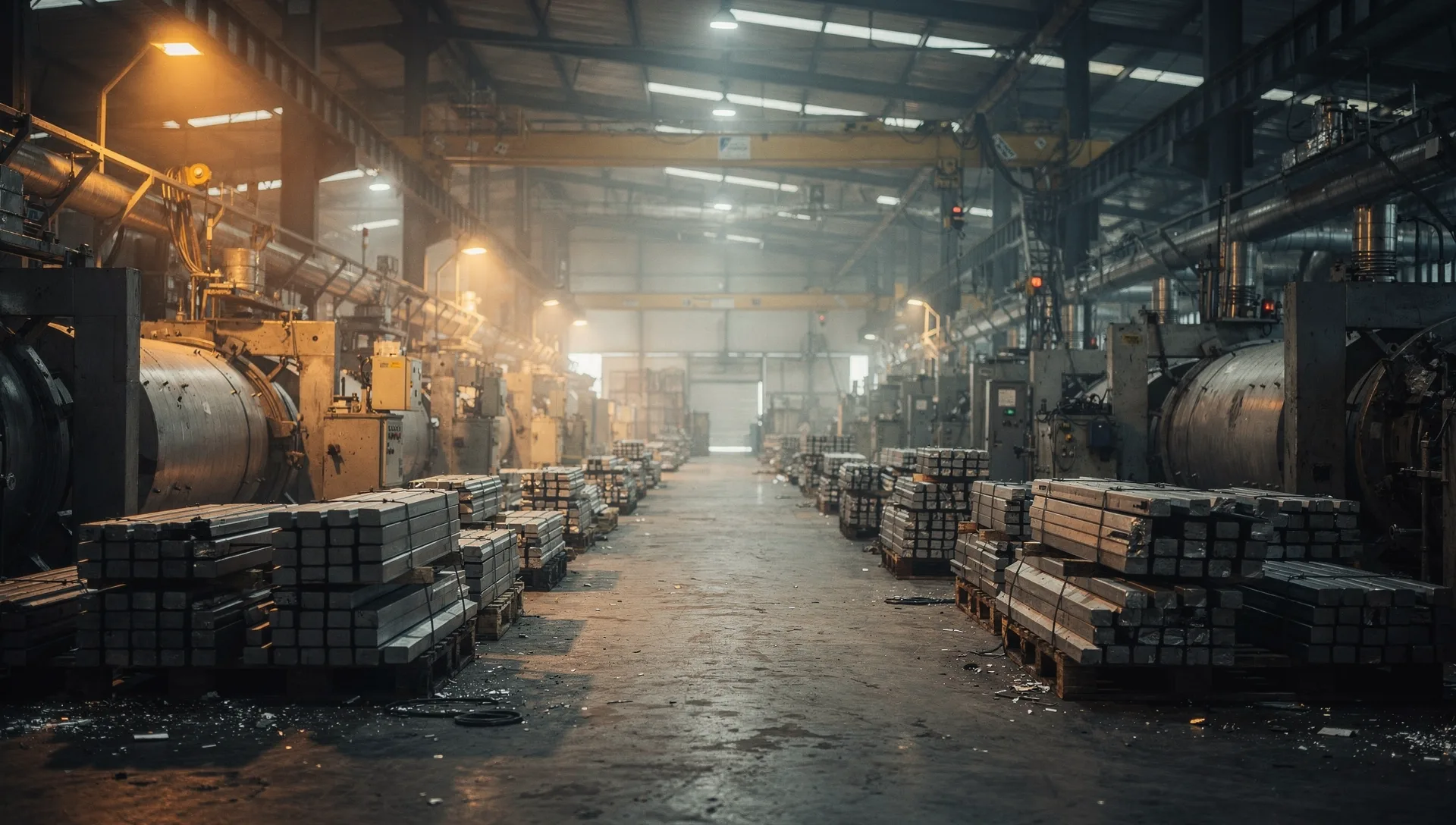
Where the Single Point of Failure Actually Sits
Procurement teams generally verify supplier diversity by counting vendor names and headquarters countries. That count misses the step in the process where the actual concentration lives, which is rarely where a company is headquartered and often is a single production site several tiers upstream.
- Wafer fab sat in Europe; the bottleneck sat in China. Nexperia's front-end wafer fabrication runs through Hamburg, Germany and Manchester, UK, plus a newer 300mm fab in Shanghai. But assembly and test, the step that turns a wafer into a shippable chip, is concentrated at a single site in Dongguan that handled roughly 70% of the company's end-product capacity.[^4] A European headquarters and European fabs did not change where the finishing bottleneck sat.
- Magnet manufacturing is more concentrated than magnet mining. China accounts for an estimated 60-61% of global rare earth mining, but roughly 91% of separation and refining and about 94% of finished sintered magnet manufacturing.[^5][^9] Europe sources an estimated 98% of its finished magnets from China, a dependency that curtailed Ford and Suzuki production in 2025.[^10] A motor supplier in Michigan and one in Slovakia can both be "diversified" by country and both still depend on the same magnet plant.
- A license queue became as narrow as a strait. After China's April 4, 2025 export controls on seven heavy rare earth elements,[^6] Wood Mackenzie found automotive suppliers securing export licenses at roughly a 25% approval rate, with Chinese magnet exports falling an estimated 51% between March and April 2025.[^7] A paperwork queue at one ministry became the actual chokepoint, not a shortage of mines.
- The failure showed up as a shortage of factories, not brands. Eight named automakers reported Nexperia-linked constraints in late 2025 despite each qualifying components from multiple discrete-chip suppliers.[^3] Honda's Celaya, Mexico plant halted HR-V production, with resumption expected the week of November 21, 2025.[^8] The country where the OEM plant sat was irrelevant; the country where the chip finished was not.

The Geoeconomics of a Shared Upstream Input
The pattern in both cases is the same: a company diversifies the part of its supply chain that is easy to see (vendor names, plant addresses, headquarters countries) while the part that actually determines exposure (the last processing step before a shippable part exists) stays concentrated in one place. Vendor management systems record a supplier's legal entity and billing address, rarely the physical facility that performed the finishing step, which is exactly where the risk lives.
Field Notes has made a version of this argument before for multi-region cloud architecture, where two cloud regions can share upstream infrastructure, such as a network backbone or a power grid, in ways that defeat the purpose of geographic redundancy. The mechanism here is the same failure of imagination applied to a factory instead of a data center: distance on a map does not equal independence in a supply chain, whether the thing moving through it is a packet or a permanent magnet. For manufacturers weighing where this exposure sits inside their own operations, Fortius Intel's manufacturing coverage tracks it at the country and facility level rather than the vendor level.
This is a geopolitical risk that sits inside a company's own supplier file, not only in a foreign ministry's export control list. The Nexperia case shows it can also sit inside a single company's own footprint: Nexperia itself was not a monolith, its wafer fabrication really was split across three countries, and that split still did not prevent an eight-brand production disruption because the bottleneck was never the fab step to begin with.
Board-level risk reporting tends to treat "supplier diversity" as a solved problem once a second vendor contract is signed. That framing measures effort, not exposure. A risk register that lists two magnet suppliers as a mitigation, without recording that both buy sintered magnets from the same processing region, is recording an intention rather than a fact about where production would actually stop.

What Procurement Teams Are Missing
Most supplier risk registers stop at the tier-one vendor's country of incorporation, a gap covered by Field Notes' look at risk beyond the first supplier tier. Closing it requires three changes procurement and supply chain teams can make without new software.
First, treat "facility of last processing" as a required field for any part classified as dual-sourced, separate from vendor name and headquarters address. A vendor master file with a Michigan mailing address and a Dongguan finishing step should be flagged the same way as a vendor with a Shenzhen mailing address, because the mailing address is not where the exposure sits. Second, ask each supplier directly which of its own inputs, alloys, chemical precursors, or sub-assemblies come from a single country or a single sub-tier plant, since a supplier's own concentration becomes the buyer's concentration by inheritance. Third, track license approval rates and export control changes at the country level for every input a part depends on, not only for the finished component, because the April 2025 rare earth controls and the October 2025 Nexperia intervention both changed the risk picture in days, not quarters.
None of this requires predicting a specific export ban. It requires knowing, before one happens, which of a company's "two suppliers" would both go quiet on the same afternoon.
Fortius Intel note: Any company that lists two supplier names as evidence of diversification should be able to name the physical facility where the last processing step happens for each one. If a procurement or supply chain team cannot answer that question for its ten highest-risk single-sourced components today, the diversification exists on a spreadsheet and not in the supply chain.
Methodology: this article draws on IEA and S&P Global market analysis of critical mineral concentration published in 2025 and 2026, Wood Mackenzie's automotive supply chain estimates on China's April 2025 export controls, and wire-service and S&P Global Mobility reporting on the October-November 2025 Dutch government intervention at Nexperia. Figures were cross-checked against at least two independent sources where available; single-source figures are identified as such in the footnotes below.
About the author
Jay Bimbrah, Co-Founder & COO. A former Scotland Yard counter-terrorism investigator, Jay has advised EMEA tier-1 banks and Lloyd's market firms on distinguishing real exposure from theoretical risk.