Field Notes
The Geopolitical Blind Spot Two Tiers Back: Mapping Pharma's Hidden Supply Chain Dependencies

TL;DR: A dozen FDA-approved amoxicillin manufacturers still weren't enough to prevent the 2022 pediatric shortage, because nearly all of them sourced 6-aminopenicillanic acid, the antibiotic's starting material, from the same handful of Chinese producers. Supplier-count diversification at the finished-dose tier hid a single point of failure one tier back.
Key takeaways:
- China produces roughly 94 percent of the world's 6-aminopenicillanic acid, the amoxicillin starting material, per a June 2026 Council on Foreign Relations report.
- US pediatric amoxicillin prescriptions fell 30.8 percent during the winter 2022 shortage.
- India imports roughly 68 percent of its API value and 87 percent of its antibiotic imports from China.
- Only 24 percent of the API manufacturing facilities supplying US-marketed drugs sat inside the United States as of August 2024, per HHS data.
- The EU's Critical Medicines Act proposal tracks 270-plus substances because manufacturing disruption causes 50.6 percent of reported EU medicine shortages.
In late 2022, American pediatric hospitals rationed liquid amoxicillin though the drug carried a dozen FDA-approved manufacturers on its label. The diversification was real at the finished-dose tier and irrelevant one tier up: nearly all of those manufacturers drew their 6-aminopenicillanic acid, the key starting material for every penicillin-class antibiotic, from the same handful of Chinese producers. Pediatric amoxicillin prescriptions fell 30.8 percent that winter, not because the supplier list failed, but because it was never the real map.[^1]
The Geostrategic Concentration Behind a Diversified Supplier List
Most life-sciences procurement organizations inherited a vendor-management model built for automotive and electronics sourcing: qualify the contracted manufacturer, audit its quality system, add a second supplier, and call the exposure managed. That model fails at the API and key starting material tier, where geography, not contract count, does the concentrating.
- China produces roughly 94 percent of the world's 6-APA, the starting material underlying amoxicillin, ampicillin, and related antibiotics, through a small number of manufacturers, according to a June 2026 Council on Foreign Relations report.[^1]
- The same report puts China's share of global heparin supply at 74 percent and its share of acetaminophen raw material production at 70 percent, categories where a single country's regulatory or environmental action moves global price and availability.[^1]
- India imports roughly 68 percent of its API value and 75 percent of API tonnage from China, and 87 percent of India's antibiotic imports specifically originate there, meaning a large share of "Indian-made" generics still carry a single upstream origin.[^2][^3]
- Only 24 percent of the API manufacturing facilities supplying US-marketed drugs were located inside the United States as of August 2024, leaving three-quarters of that manufacturing base subject to a foreign jurisdiction's export policy.[^4]
- The European Commission's Critical Medicines Act proposal, tabled March 11, 2025, tracks a list of more than 270 active substances because manufacturing disruption, not demand or distribution, accounts for 50.6 percent of reported EU medicine shortages.[^5]
The Geostrategic Logic of Mapping by Dependency, Not by Contract
This concentration survives supplier diversification programs for a structural reason, not a failure of diligence. A pharmaceutical company can hold detailed audit records on its contracted CDMO and still have no visibility into which KSM plant, port, or feedstock that CDMO's own API supplier relies on two tiers back. Brookings researchers reviewing US drug supply chain exposure to China describe upstream visibility as extremely limited, which makes any existing exposure numbers suspect, because companies treat sourcing data as proprietary and regulators cannot compel disclosure past the first contracted tier.[^2] The FDA has acknowledged it cannot precisely determine the volume of API China exports, let alone which KSM plants feed which finished products.[^1]
This is a geopolitical risk problem disguised as a quality problem. Three CDMOs on three continents can look diversified on a supplier scorecard while all three source the same precursor from one plant in one province, subject to one country's export licensing regime. India's government has tried to close a version of this gap domestically: its Production Linked Incentive schemes for bulk drugs had, by the end of 2025, produced 26 new KSMs and APIs generating 2,315 crore rupees in sales under the Bulk Drug Parks scheme, plus 191 more KSMs, drug intermediates, and APIs under the broader pharma PLI, avoiding an estimated 3,591 crore rupees in combined imports.[^6] That is real substitution capacity, but it covers only the facilities India funds, not the thousands of precursor relationships still undocumented past the first supplier tier.
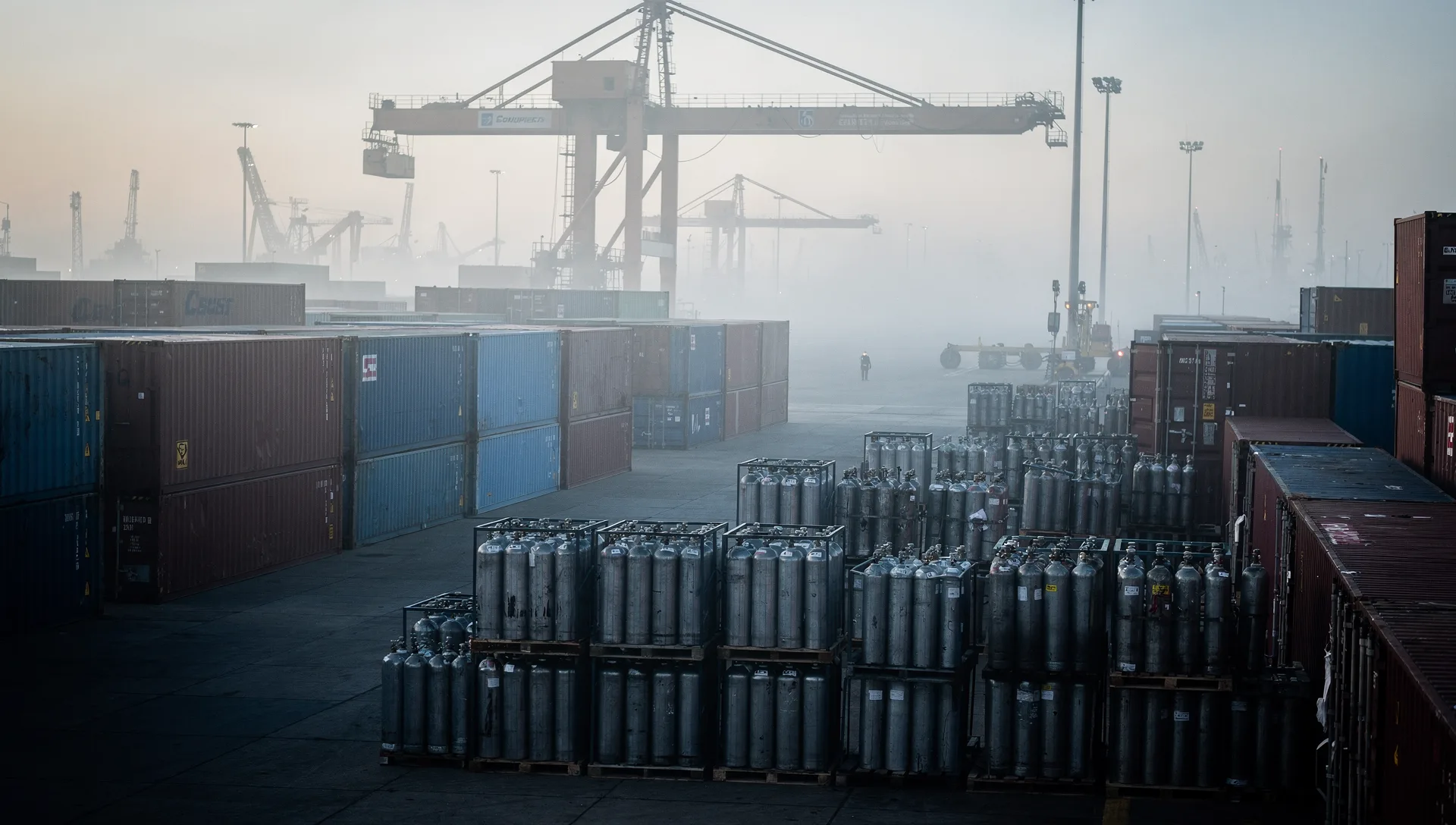
The fix is a mapping discipline, not another audit cycle: finished product to API, API to key starting material, KSM to precursor chemical, precursor to country of origin, origin to specific licensed facility, facility to the transport corridor and port that moves it. Each link, not the contract, is where the single point of failure sits. A drug can list five API suppliers, and a mapping exercise can still find that four of them file the same Drug Master File for a fermentation input produced at a single site in Shandong or Gujarat, reachable through a single export licence and a single container terminal. That single terminal, not the supplier count, is the number a resilience plan needs.

Geostrategic Implications for Boards and CROs
For manufacturing, chemicals, and life-sciences boards, the practical change is to stop asking "how many suppliers do we have" and start asking "how many distinct upstream facilities, licences, and corridors sit behind those suppliers." The EU Critical Medicines Act's 270-substance list and its manufacturing-diversification criteria show regulators already moving toward facility-level and origin-country reporting, not supplier-count metrics.1 Companies that map dependencies ahead of that requirement can price and hedge KSM concentration risk before a plant closure, an export licence delay, or a single-corridor port disruption turns into a shortage they read about in an FDA report rather than one they saw coming.
Fortius Intel note: A vendor scorecard measures contracts. A dependency map measures exposure. Boards that confuse the two will keep discovering their single points of failure after the shortage, not before it.
Methodology: Analysis draws on the Council on Foreign Relations' "The Pharma Choke Point" (June 2026), Brookings Institution research on US drug supply chain exposure to China (July 2025), the Observer Research Foundation's analysis of India-China API trade (December 2025), the European Parliament's Critical Medicines Act briefing (May 2025), the US Department of Health and Human Services' drug shortage data brief (January 2025), and India's Department of Pharmaceuticals PLI scheme disclosure (December 2025). All cited sources are publicly available.
Footnotes
Footnotes
-
European Parliament, European Parliamentary Research Service, Critical Medicines Act, briefing EPRS_BRI(2025)772842, May 2025. The proposed Critical Medicines Act, COM(2025) 102, tabled March 11, 2025, lists over 270 active substances; manufacturing issues account for 50.6 percent of reported EU medicine shortages. Available at https://www.europarl.europa.eu/RegData/etudes/BRIE/2025/772842/EPRS_BRI(2025)772842_EN.pdf. ↩
About the author
Shekhar Attri, Co-Founder & CTO. An Indian Army Special Forces veteran with 21 years of service and a gallantry medal, Shekhar's corporate security advisory work spans Singapore, India, the Philippines, and the UAE, alongside PhD research on machine intelligence under incomplete information.