
Field Notes
Geopolitical Risk Is Now a Line Item: What Currency and Valuation Teams Keep Missing

TL;DR: Currency desks and valuation teams still price geopolitical risk using static, backward-looking assumptions, and the gap is now visible in real numbers: Shein's IPO valuation target fell from $98.2 billion in 2022 to $40-50 billion in 2026, driven largely by one US tariff policy change.
Key takeaways:
- Shein's valuation dropped from roughly $98.2 billion in a 2022 funding round to $64 billion in 2024 to a targeted $40-50 billion for its 2026 Hong Kong IPO, a decline tied substantially to the May 2025 removal of the US de minimis import exemption, which cut its US revenue 14.3 percent year over year.
- When 25 percent US tariffs on Mexican and Canadian goods took effect on March 4, 2025, the peso moved only about 0.9 percent, a muted reaction that priced in a quick reversal rather than the multi-year tariff uncertainty that followed.
- Kyriba's CFO Risk Radar 2026, a July 22, 2026 survey of 1,354 CFOs and senior finance leaders, found 79 percent had suffered a real financial hit from inadequate risk visibility, while only 47 percent felt highly prepared to manage financial risk.
- In Mexico specifically, tariffs rank as the top CFO concern at 83.2 percent, the highest single-country reading in the same survey.
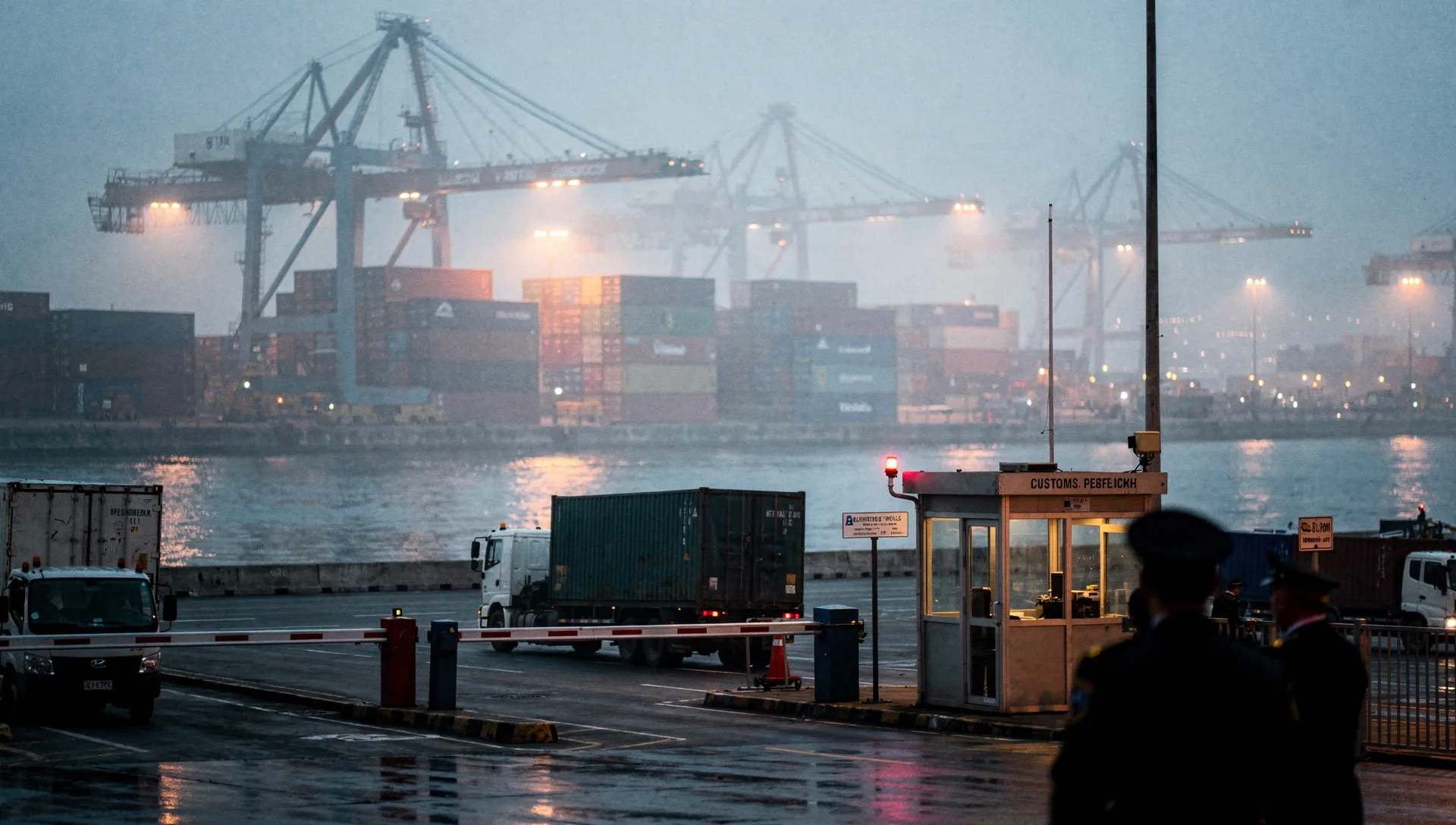
Shein priced its Hong Kong IPO at $40 billion to $50 billion in the summer of 2026, a fraction of the roughly $98.2 billion investors assigned it in 2022.[^1] Tariff policy did most of the damage: the May 2025 removal of the US de minimis exemption cut Shein's US revenue 14.3 percent year over year, compressing margins and forcing three separate IPO venue changes as scrutiny followed the company from New York to London to Hong Kong.[^1]
Geostrategic Exposure Inside Currency and Valuation Functions
Currency and valuation are supposed to be quantitative disciplines, built on defensible numbers rather than narrative judgment. Geopolitical risk breaks that model because it rarely arrives as a clean input. It arrives as a tariff announcement, a court ruling, or an export control list, and finance teams convert that into a discount rate or a hedge ratio on short notice.
- Tariff shocks move currency less than the policy implies. The peso's 0.9 percent slide against a 25 percent tariff on March 4, 2025 shows a market pricing in a negotiated reversal, a bet that took years to fully resolve.[^3]
- Valuation resets can lag the triggering event by more than a year. Shein's US revenue fell in the first reporting period after the May 2025 exemption change, but its IPO valuation target kept sliding through mid-2026 as the listing moved between three venues.[^1]
- CFOs know the gap exists and still get caught by it. Kyriba's 2026 survey found a 32 percentage point spread between financial impact experienced, at 79 percent, and preparedness felt, at 47 percent, among more than 1,300 finance leaders.[^2]
- Country-specific risk premiums are already large and unevenly built. Damodaran's July 2026 data shows a Turkish lira risk-free rate above 20 percent against roughly 3 percent for German bunds, yet close to two dozen countries have no credit rating behind their premium at all.[^4]
Geostrategic Risk and the Quantification Gap Finance Teams Keep Hitting
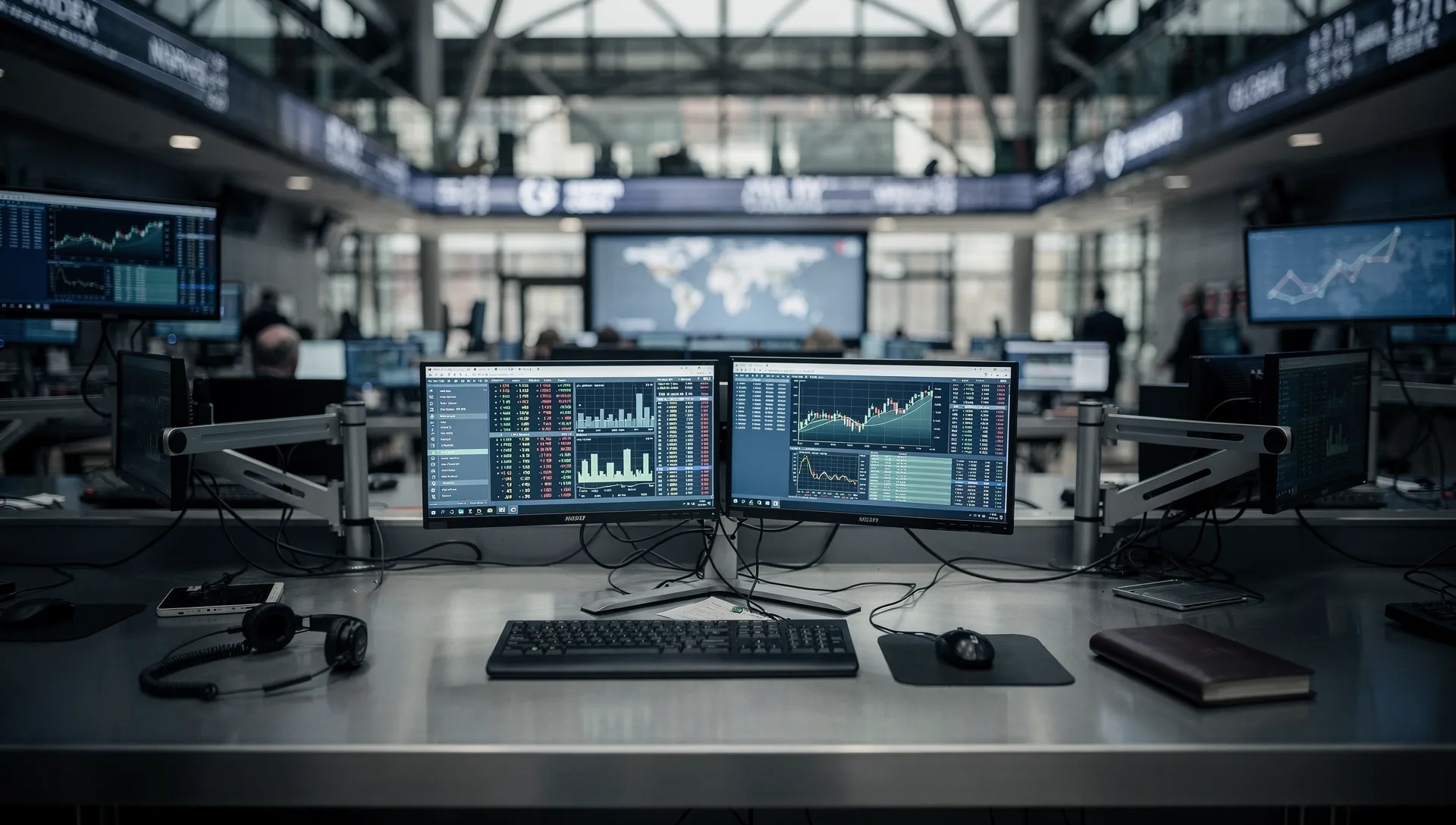
A geopolitical risk report that reads well in a board deck rarely converts into a number a treasury or corporate development team can use. Damodaran's own valuation framework converts sovereign default spreads into equity risk premiums using a fixed multiplier of 1.55, and for roughly two dozen unrated countries it substitutes a political risk score for a missing credit rating.[^4] That is a stated simplification, not a precise science. Damodaran describes the approach itself as putting pragmatism ahead of theory.[^4]
Currency desks face the same problem in miniature. US Bank's 2026 CFO Insight Report, fielded after the May 2026 escalation between the US and Iran, surveyed 1,000 senior finance leaders and found war and geopolitical tension ranked the top risk at 35 percent, ahead of inflation at 34 percent.[^5] Ranking a risk first on a survey does not tell a treasurer what hedge ratio to run or what discount rate to apply next quarter. The survey names the risk. It does not price it.

A Geostrategic Risk Input Finance Teams Can Actually Use
Treasury, corporate development, and valuation teams need a structured, dated input with named sources behind it: a specific exchange rate mechanism at risk, a specific sovereign spread reading, a specific date when a tariff or sanctions decision is due. A one-time political risk report does not meet that bar, because currency and valuation decisions are not one-time events. A hedge ratio gets revisited on a cycle, a discount rate at every deal stage, and the input feeding both needs to move on the same cycle, not sit static while the underlying policy changes underneath it.
That means naming the actual data feeds behind a risk score, whether a sanctions list, a tariff schedule, or a court filing, rather than handing finance a single blended number with no visible working. Mexico-based CFOs already rank tariffs as their top concern at 83.2 percent.1 That is a company asking the right question. What it needs next is a dated, sourced answer, not another ranking.
Fortius Intel note: Fortius Intel's Intelligence Brief is built for this gap. Each Brief draws on named, dated sources, including GDELT, the OFAC Specially Designated Nationals list, the EU Official Journal, the Federal Register, and the BIS Entity List, and lays out a 30/90/180-day consequence chain rather than a single snapshot rating.
Methodology: sourced from Forbes, Kyriba's CFO Risk Radar 2026, Reuters, Aswath Damodaran's July 2026 country risk data, and Fortune's reporting on US Bank's CFO Insight Report.
Footnotes
Footnotes
-
Kyriba, "CFO Risk Radar 2026: The Complacency Paradox," July 22, 2026. https://www.kyriba.com/news/cfo-risk-radar-2026/ ↩
About the author
Shekhar Attri, Co-Founder & CTO. An Indian Army Special Forces veteran with 21 years of service and a gallantry medal, Shekhar's corporate security advisory work spans Singapore, India, the Philippines, and the UAE, alongside PhD research on machine intelligence under incomplete information.