TL;DR: AI geopolitical risk is not one exposure but four, spread across compute, model weights, data and talent, and each layer moves on a different clock under a different control regime. A company that maps its AI exposure by vendor name instead of by stack layer will miss the layer that is actually shifting under it.
Key takeaways:
- The U.S. rescinded its AI Diffusion Rule on May 13, 2025, four months after issuing it, replacing a fixed licensing structure with case-by-case guidance that leaves chip export status unsettled for buyers outside the U.S. and its closest allies.[^1]
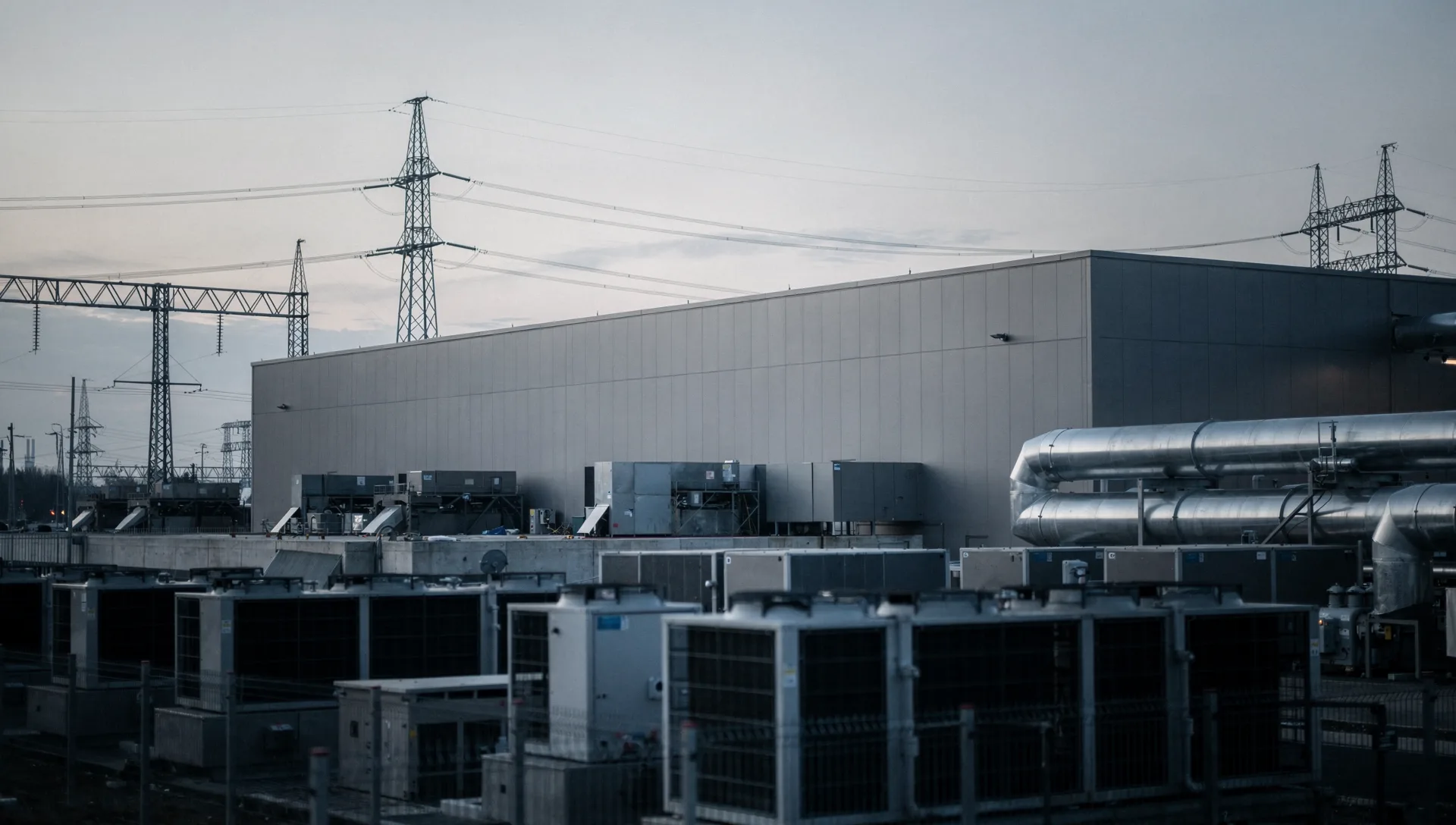
- Data centers already draw roughly 6 percent of U.S. electricity, a share Goldman Sachs projects could reach 11 percent by 2030, with grid capacity in most U.S. regions unable to keep pace by the same year.[^2]
- China has not restricted export of its own open-weight models. DeepSeek, Alibaba's Qwen and Moonshot's Kimi have all shipped openly since January 2025, and by March 2026 the performance gap between top U.S. and Chinese models had narrowed to 2.7 percent.[^3]
- By May 2026, China required government approval before certain strategically important AI researchers and executives could travel abroad, with some DeepSeek staff working on model development reportedly required to surrender their passports, and Moonshot AI, StepFun and ByteDance requiring government sign-off before accepting American capital.[^4]
- Northern Virginia's Data Center Alley alone carries roughly 70 percent of global internet traffic and could absorb up to 70,000 additional megawatts of data center load, concentrating a large share of global AI compute capacity inside one electrical grid.[^5]
Ask a risk committee where its AI exposure sits and most will point at one thing: the vendor relationship, usually a contract with a U.S. hyperscaler. That answer describes a single layer of a four-layer stack. Compute, model weights, data and talent each move under a different legal regime, on a different timeline, and a company that only tracks the vendor contract is blind to the other three, each of which can move independently of it.
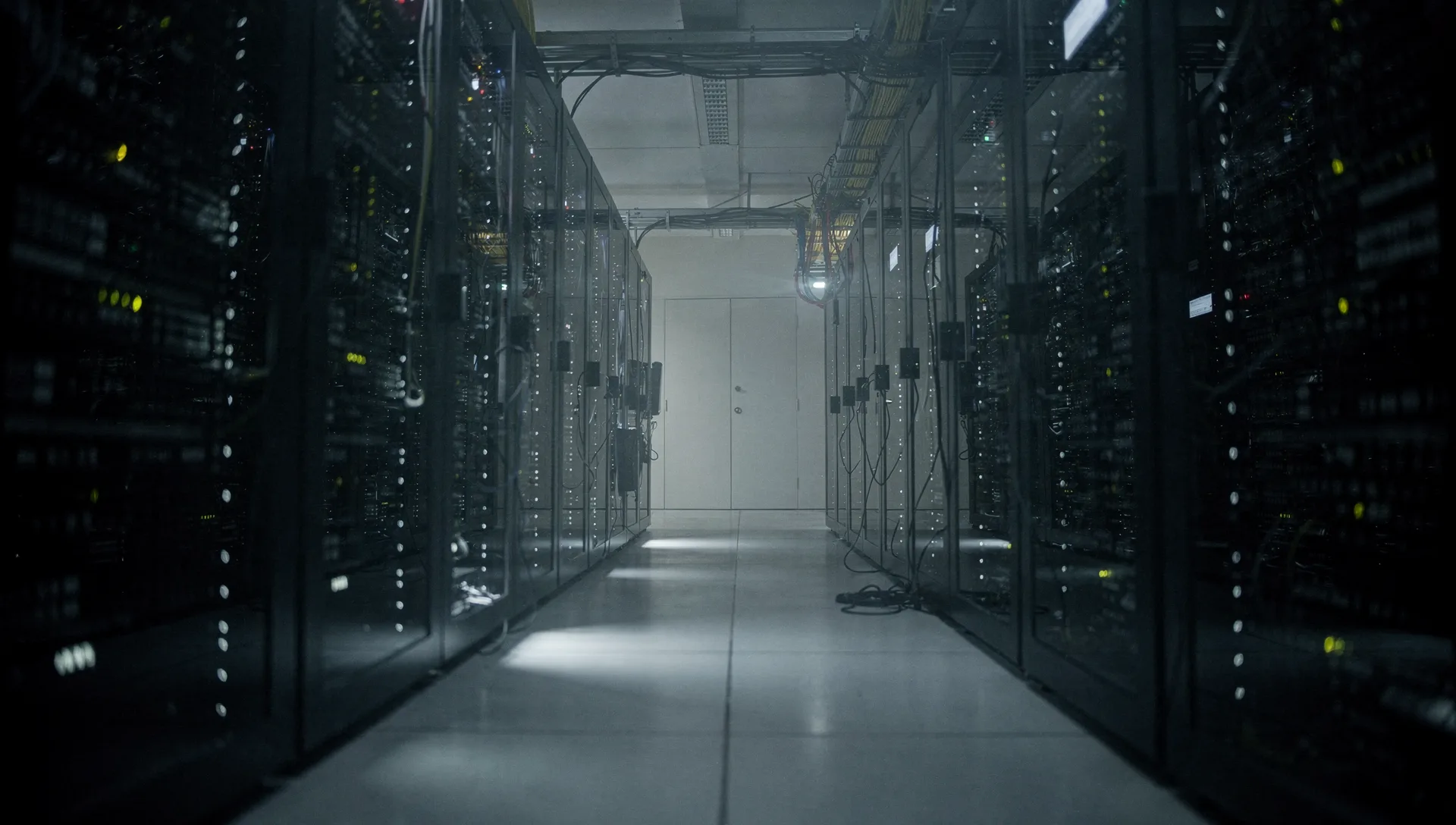
Where AI Geopolitical Risk Concentrates
- Compute sits inside export control, and the rules moved twice in four months. Washington issued the AI Diffusion Rule on January 15, 2025 and rescinded it on May 13, 2025, replacing a tiered licensing system with guidance that assumes advanced chips found inside China were likely diverted in violation of export law.[^1]
- Model weights move at the speed of a file download, which export control was never built for. DeepSeek's open-weight release in January 2025 reached global developers within days, and Beijing has since let Qwen and Kimi follow the same path rather than restrict them, even as the capability gap with U.S. models narrowed to 2.7 percent.[^3]
- Data sits wherever the compute sits, and that is not evenly distributed. Northern Virginia's Data Center Alley alone carries roughly 70 percent of global internet traffic through one electrical grid, and Dominion Energy has flagged up to 70,000 additional megawatts of prospective data center load in the same region.[^5]
- Talent is the layer most companies never map at all. By May 2026, China required government approval before certain strategically important AI researchers could travel abroad, with some DeepSeek staff reportedly asked to surrender their passports, which means a company's access to a given research team can change for reasons that have nothing to do with that team's employer.[^4]

Weights Travel Faster Than Chips
Export controls were built around a physical object crossing a border, and a GPU still has to. A model's weights do not. When DeepSeek shipped an open-weight frontier model in January 2025, no customs agency had a mechanism to stop it, because nothing physical moved.[^3] Beijing had the legal authority to restrict that release and chose not to, a choice that only makes sense as a deliberate bet that open distribution built more strategic value, in adoption and developer reach, than it cost in control.
The asymmetry matters for a company that assumes its chip exposure and its model exposure move together. They do not. A firm cut off from advanced compute under the current guidance can still build on an open-weight model that shipped freely months earlier, and a firm with unrestricted compute access can still find itself dependent on a model whose weights sit under a foreign government's future decision to restrict, not today's. Talent compounds the mismatch. The researchers who could rebuild a restricted capability from scratch are increasingly unable to leave the country that trained them, which caps how fast a competitor elsewhere can close the gap even where the weights and the compute are both available.
A procurement team evaluating two AI vendors on identical compute terms can still end up with very different exposure if one vendor's core model traces back to a research team now subject to exit approval and the other does not. That distinction rarely shows up in a standard vendor security review, which was built to ask about data handling and uptime, not about where the model's next version will be trained. It is a narrower version of the use-case exposure covered in The Geopolitical Blind Spot in AI Inventories.
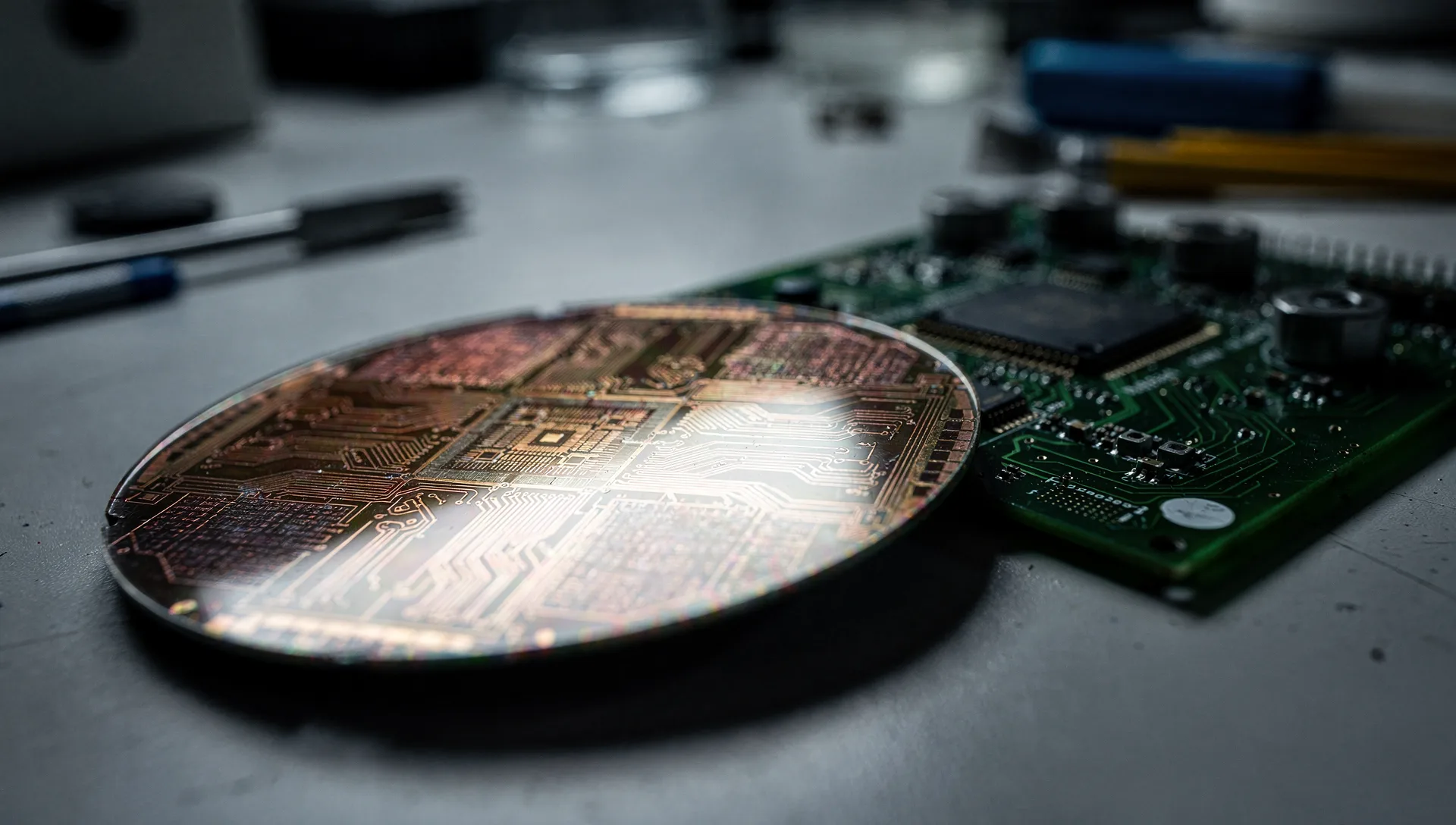
Mapping Your Own Stack Before Someone Maps It For You
- List which layer each vendor relationship actually sits in. A cloud contract is a compute relationship; a foundation model license is a weights relationship; a data-processing agreement is a data relationship. Treating all three as one AI vendor relationship hides which layer carries which exposure.
- Track control regimes separately by layer, not by country. Compute is governed by export administration rules that changed twice in 2025 alone; weights are effectively ungoverned by any export authority today; talent is increasingly governed by the exporting country's own exit controls, not by the importing company's policy.
- Treat grid capacity as a geopolitical risk input, not an engineering afterthought. A data center's power supply is now a geostrategic dependency on the same order as a chip export license, and Goldman Sachs' own projection puts most U.S. grids behind data center demand within four years.[^2]
- Assume today's map expires. The Diffusion Rule lasted four months before rescission,[^1] and Beijing's tolerance for open-weight releases is a policy choice rather than a settled principle, so a stack map built once and left alone is already going stale before the next review cycle. For the product-level decisions this forces, see The Bifurcation Checklist for Product Teams.
This is technology-sector exposure first, but the split applies to any company building on a model it does not train.
Fortius Intel note: The company that can name which of its AI vendors sits in the compute layer, which sits in the weights layer, and which sits in the talent layer is answering a question most risk registers have not yet learned to ask. What happens when two of those layers move in the same quarter, in opposite directions?
Sourced from U.S. Bureau of Industry and Security guidance summaries via law firm client alerts, Goldman Sachs and Belfer Center power-demand estimates as reported by Forbes, Stanford HAI's AI Index as reported by TechCrunch, and reporting on China's AI talent travel policy.
Footnotes
About the author
Shekhar Attri, Co-Founder & CTO. An Indian Army Special Forces veteran with 21 years of service and a gallantry medal, Shekhar's corporate security advisory work spans Singapore, India, the Philippines, and the UAE, alongside PhD research on machine intelligence under incomplete information.