
Field Notes
What Insurance Markets Price Before Analysts Publish: War-Risk Premiums as a Geostrategic Intelligence Signal

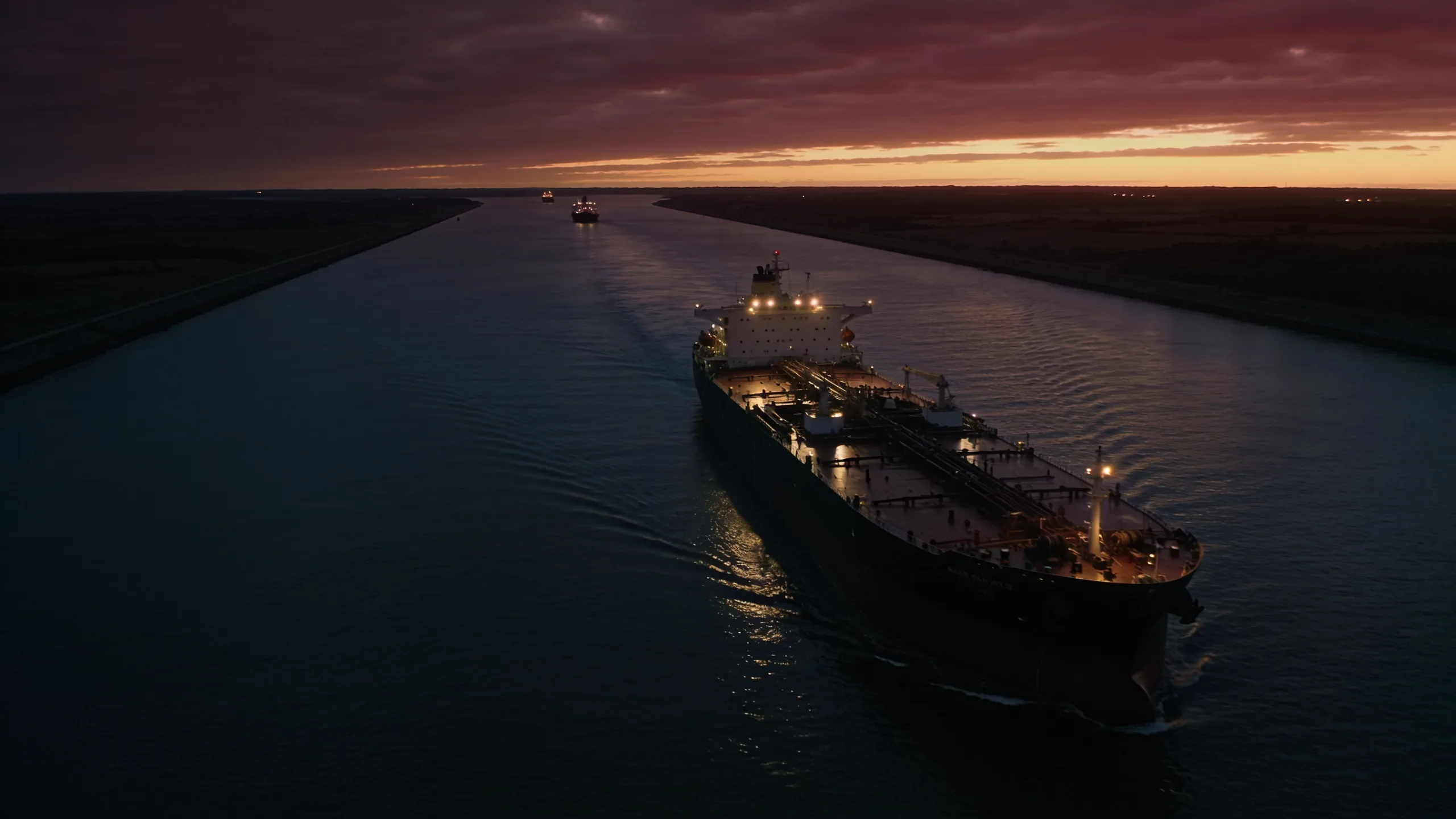
On March 1, 2026, within 48 hours of US-Israeli airstrikes near the Strait of Hormuz, Lloyd's of London repriced war-risk coverage for transit vessels: standard premiums moved from 1 percent to 5 percent, and US-, UK-, and Israeli-flagged vessels faced rates of 15 percent per voyage, translating a $200 million vessel's per-transit insurance cost from $2 million to between $10 million and $14 million. Five P&I clubs (Gard, Skuld, UK NorthStandard, London P&I Club, and the American Club) issued war-risk cancellations on March 2, effective March 5. Analytical reports flagging the geopolitical risk arrived over the following days; the insurance market had priced it first.
Why War-Risk Pricing Is a Geostrategic Intelligence Product
War-risk underwriters do not comment publicly on threat assessments. They publish their positions through pricing, and those positions reflect calibrated, real-money assessments of threat probability by analysts with direct financial exposure to being wrong.
- Repricing speed has compressed with each conflict. The 1990 Iraq-Kuwait conflict produced a sixfold premium increase in ten days; the 2003 Iraq invasion produced a fourfold increase in two weeks; the March 2026 Hormuz disruption produced a fivefold increase in 48 hours.1 The compression reflects improved underwriter access to intelligence inputs, not faster events.
- P&I club circulars are dated, public documents. The five clubs that issued war-risk cancellations on March 2 are not marketing communications. Each specifies the geographic scope and effective date of suspension. They are the output of an internal risk assessment available on the same day they are issued.
- JWC Listed Area additions signal cumulative threshold crossings. The Lloyd's Joint War Committee adds territories to its listed areas when cumulative risk crosses a defined threshold. A JWC addition directly triggers premium adjustments for all vessels in the affected zone. The list is public. Additions are observable before related events generate media coverage.
- Maritime premiums surged above 1,000 percent in some segments within the first week. That is not a market adjustment. It is a forward estimate of probability-weighted loss, produced by institutions with decades of conflict exposure and direct financial accountability for being wrong.1

The Signal Taxonomy and What It Tells Non-Shipping Companies
The March 2026 repricing moved through a pass-through chain that reached companies with no maritime operations. Most of them did not see the signal; they saw the result.
- The pass-through sequence runs from insurance to consumer price within days. Lloyd's repricing raised tanker operator costs, which raised charterer costs, which raised commodity trader margins, which raised refinery input costs, which raised wholesale and retail fuel prices. US gasoline moved from approximately $3.00 per gallon to $4.30 per gallon. California exceeded $6.00. Brent crude briefly reached $126 per barrel from a base of $72 to $83.2,3
- Baltic Dry Index divergence from spot crude signals rerouting, not demand shifts. When BDI diverges from crude pricing during a conflict period, vessels are rerouting via the Cape of Good Hope, adding 12 to 14 days to transit. That additional time adds directly to landed input costs for any manufacturer dependent on commodity or component imports from East of Suez.
- Sovereign CDS spreads widened before diplomatic statements on March 1. For Gulf states within the conflict zone, credit default swap spreads moved ahead of any official communications. The CDS market and the war-risk market were in alignment by March 1. Published geopolitical risk assessments were not yet in circulation.
- BIMCO advisories follow Lloyd's repricing by 12 to 24 hours. The sequence of JWC addition, Lloyd's repricing, then BIMCO advisory to shipowners is reliably ordered. A risk function monitoring the first signal in the chain gains approximately two days of lead time on any geopolitical risk event in that corridor over one that waits for the advisory.

What a Market Signal Monitoring Layer Requires
These signals are publicly available. The barrier is not access but having a monitoring structure that connects them to the functions making relevant decisions.
- Signal-to-function mapping is the first step. Hull war-risk pricing is relevant to logistics planning. P&I club circulars are relevant to contract and cargo risk. JWC listed area additions are relevant to insurance procurement. Baltic Dry Index divergence is relevant to commodity and input cost forecasting. Each signal maps to a function with a specific decision to make. Assigning signals to decision owners before an event converts monitoring into an operational input.
- Threshold triggers should be defined before the event. War-risk premiums moving more than 50 percent in any 48-hour window warrant escalation regardless of whether published commentary has appeared. Defining the threshold in advance is what separates a monitoring layer from a news feed.
- Cross-referencing war-risk with sovereign CDS reduces false positives. Either signal moving alone can reflect market noise. Both moving in the same direction within 24 hours constitute a compound signal with materially higher predictive weight. The March 1 alignment between insurance pricing and CDS markets was not ambiguous.
- Board-level reporting requires the pass-through translated, not just observed. The March 2026 signal chain was visible March 1. A geopolitical risk monitoring layer in place could have provided logistics cost estimates, commodity exposure quantification, and hedging window timelines by March 3. Companies dependent on published analyst reports received that guidance after the relevant decision windows had closed.4
Meridian Intell note: War-risk premiums are not a perfect proxy for escalation probability. On March 1, 2026, they were the most accurate proxy available by a margin of at least 48 hours over any published assessment. Risk functions that treat insurance market signals as a monitoring layer, rather than as a consequence of decisions already made, gain a material lead-time advantage on the next disruption.
Methodology: Analysis draws on Lloyd's of London war-risk pricing data, P&I club circulars from Gard, Skuld, UK NorthStandard, London P&I Club, and the American Club, BIMCO shipping advisories, and publicly reported commodity and fuel pricing data. All cited sources are publicly available.
Footnotes
1 JMRP / Lloyd's List / Lloyd's Market Association, War Risk Pricing and the Hormuz Disruption, March 2026; Lloyd's List, Hormuz War-Risk Premium Surge, March 2026. Available at lloydslist.com.
2 The Guardian, P&I Clubs Issue War-Risk Cancellations as Hormuz Tensions Escalate, March 2, 2026. Available at theguardian.com.
3 Reuters, Fuel Prices Surge as Hormuz Disruption Ripples Through Supply Chain, March 6, 2026. Available at reuters.com.
4 Lloyd's Market Association, Joint War Committee: Listed Areas Update, March 23, 2026. Available at lmalloyds.com.
About the author
Jay Bimbrah, Co-Founder & COO. A former Scotland Yard counter-terrorism investigator, Jay has advised EMEA tier-1 banks and Lloyd's market firms on distinguishing real exposure from theoretical risk.